

This 2-2-4 Rule Slashes Health Hazards From The Leftovers In Your Fridge
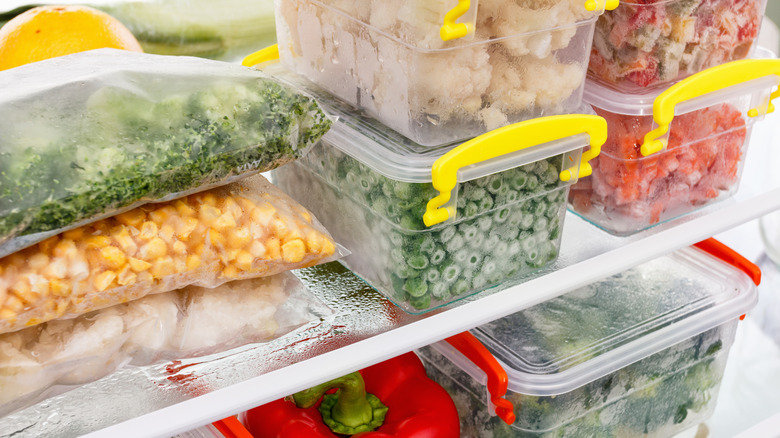
If you love hosting dinner parties for your family and friends or tend to cook food in big batches, then you're most likely familiar with the struggle of having to deal with a massive amount of leftovers. But storing leftovers can be quite tricky if not done right. The USDA says that most leftovers can be safely kept in the fridge for three to four days. However, once they pass that mark, the risk of harmful bacteria (like salmonella, E. coli, and listeria) growing inside increases significantly.
So before you commit any of the storage mistakes that are ruining your food, here's something you'll definitely find useful: the 2-2-4 rule. And no, this isn't some strange soccer formation, but rather an easy, practical guide to store and refrigerate your food, while at the same time keeping it fresh and edible for as long as possible.
That said, if you're curious about what the figures stand for, the first two refers to the maximum number of hours the food can stay outside, at room temperature, before it needs to be refrigerated. Meanwhile, the second two is about storing the food in two-inch deep containers to ensure faster and more efficient cooling. The four indicates the number of days that food can stay in the fridge before it's no longer safe to eat. Following this simple approach can make a huge difference in your daily routine. Not only can it help you save some money, but it can also reduce food waste and spare you the mental battle of having to figure out what to cook the next day or two.
How the 2-2-4 rule will keep your leftovers safe
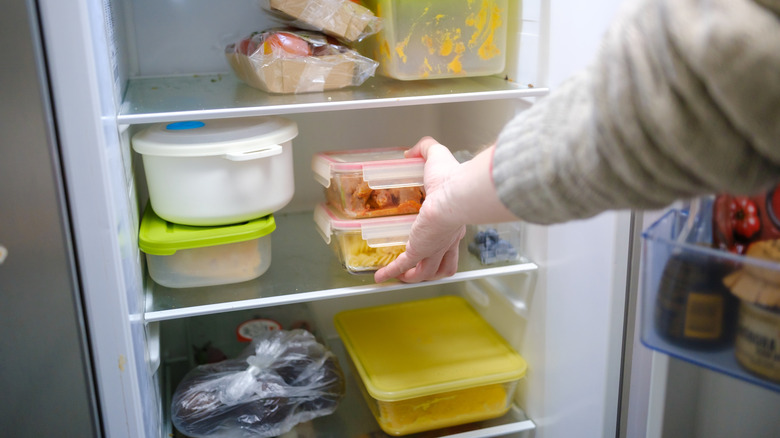
Whether folded into a delicious breakfast burrito, simmered into a comforting, soul-soothing soup, or added over a homemade pizza, leftovers can always lead to new and exciting dishes. This is why the 2-2-4 rule is an important step you should never skip when freezing them. Refrigerating the leftovers within two hours of cooking will actually prevent one of the biggest food safety mistakes by keeping them out of the danger zone. This is the temperature range of 40 to 140 degrees Fahrenheit, which promotes the growth of foodborne bacteria.
At the same time, splitting the leftovers into smaller servings and storing them in shallow containers which aren't deeper than two inches will help them cool evenly and quickly. With that in mind, be sure to always store the food in airtight containers, as they limit exposure to oxygen and moisture, and thus extend its shelf life.
Ultimately, food can be stored in the fridge for up to four days. After this period, harmful bacteria will likely start to develop, even if you've done everything right and kept the fridge at its optimal temperature range between 35 and 40 degrees Fahrenheit. In general, most foodborne bacteria don't alter the food's smell or taste. This means that the safest way to know whether your food is still safe to eat is to keep track of when you stored it. Labeling the container with the storage date can actually be quite helpful. And if in doubt, don't take the risk and simply throw it away.