

The Step You Can't Skip To Safely Use Your Oven's Self-Cleaning Feature
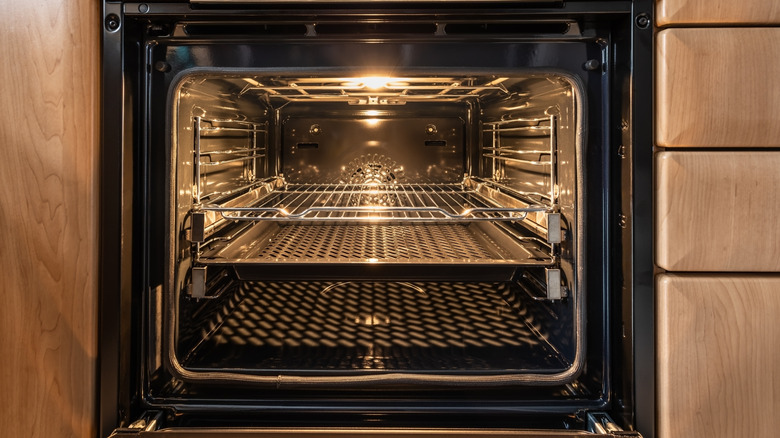
Is the inside of your oven looking a little worse for the wear? You're not alone. Over time, little bits of food — like pie filling that's bubbled over, pizza cheese that's fallen off of the crust, and rogue french fries — can make their way to the bottom of your oven, resulting in a stinky, burnt-on mess. If your oven has a self-cleaning feature, it's easy to turn it on and let it go to work — but it's key to make sure your area is properly ventilated before you start (and in many cases, it's as easy as turning on your range hood fan).
Ventilating your kitchen is key to help you stay safe and comfortable while your self-cleaning oven heats up and does the hard work of un-gunking its interior. Proper ventilation helps the heat and fumes created during the cleaning process escape your home. To ensure your kitchen is properly ventilated as your oven heats up, you'll want to turn on your range hood fan, and you might need to open a window as well. If you're finding that your kitchen (and the rest of your home) are still filling up with smoke or a tough-to-deal-with smell, you might also want to place a box fan in a nearby window (set to pull air outside) to help gasses make their way outdoors and reduce the heat in your kitchen.
How the self-cleaning feature of your oven works — and how proper ventilation can help you stay safe
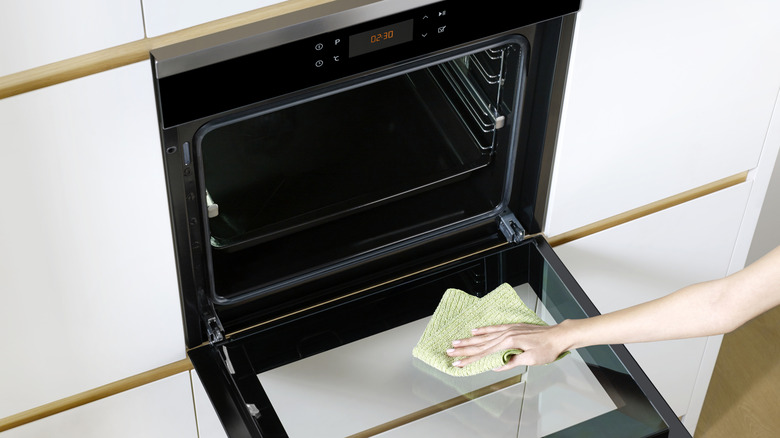
Understanding exactly how a self-cleaning oven works makes the importance of good ventilation clear. A self-cleaning oven can hit temperatures as high as 800 degrees Fahrenheit as it works to burn away stuck-on food and grease. When your oven self-cleans, it's not just making it easier to wipe food residue away — it's actually turning debris into ash. Think about the smell of a campfire or grill — that's similar to what's going on inside your oven during a self-cleaning cycle. Although your oven will stay locked shut during the cleaning and cooling processes, it's not airtight, and some gasses and fumes will inevitably escape.
While it can be tempting to leave your house while your oven self-cleans (we get it — it's stinky), you'll need to stay put. Proper ventilation makes the process more bearable, and it's especially important if you have four-legged friends, as they can get irritated by the smells associated with self-cleaning ovens more easily than we do. Running a self-cleaning cycle in your oven fairly often (every four to six months is typically a good guideline to follow) can help to curb a heavy amount of buildup, and can make the process a bit more pleasant (you'll still need to take ventilation precautions, even if your oven isn't super dirty). After your oven's self-cleaning cycle comes to an end, let it fully cool, then wipe out the inside with a damp cloth and enjoy your clean-as-new oven.