

Here's How Much Protein Is In A Serving Of Shrimp
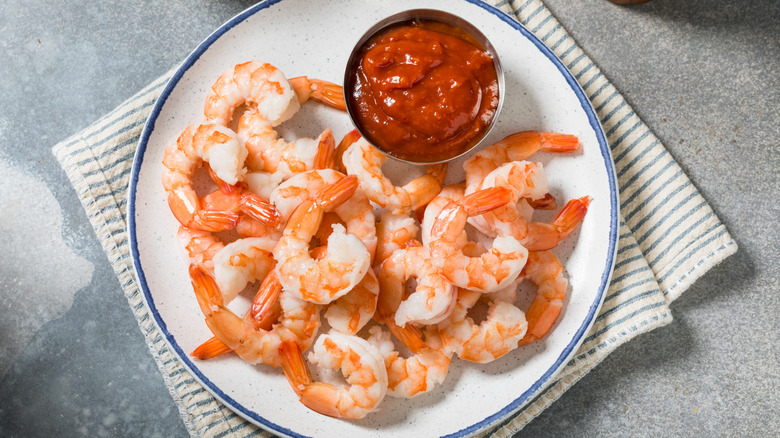
If it seems you're being pushed to consume more protein than ever these days, it's not just your perception. The Department of Health and Human Services and the Department of Agriculture introduced a new food pyramid on January 7, 2026 that puts protein in an elevated position, with new recommendations doubling the previous suggested daily amount from 0.8 to 1.2-1.6 grams per kilogram of body weight per day. If you love seafood, and in particular shrimp, you may be wondering just how much protein is packed into them if they're so small. It turns out they're not only tasty, but also one of the more protein-rich types of seafood.
Considering shrimp are primarily composed of protein and water, they can be a great way to up your protein. One serving of cooked shrimp is considered to be 3 ounces (84 grams), which averages out to about nine medium-sized shrimp. This amount delivers about 21 grams of protein, per the FDA. The tiny crustaceans also offer a number of other health benefits. They're packed with omega-3 fatty acids, selenium, iodine, and zinc. They're also low in calories (only 84 per serving size) and contain only 1.5 grams of fat (and no saturated fat), making them an excellent protein source for individuals watching this macronutrient.
How does shrimp compare to other types of protein?
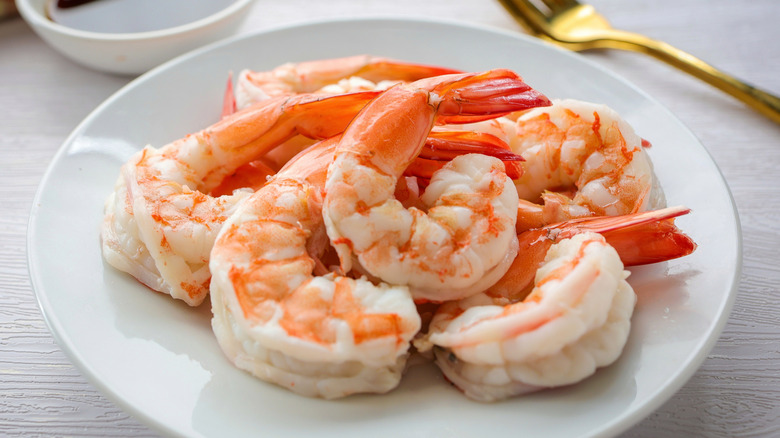
Shrimp are packed with protein and nutrients, but how do they compare to other common sources of protein? A serving size of six large scallops, another shellfish, has about 27 grams of protein, but shrimp has a slight edge (if you're trying to limit carbohydrates) in that it has basically no carbs compared to the 5 grams in scallops. Salmon is slightly higher in protein than shrimp, with 24 grams per serving and also zero carbohydrates. A 3-ounce chicken breast offers up 25 grams of protein but is higher in calories than shrimp, averaging 170. A 3-ounce round-eye steak comes in at around 24 grams of protein, with the same calorie count as chicken breast. However the steak contains 8 grams of fat (3 saturated) to shrimp's 1.5 grams.
Shrimp can be a worthwhile addition to your meals when you want a protein boost, especially because it works in a range of different types of cuisines. Give it a Mexican twist by making grilled shrimp tacos with avocado-corn salsa. Or try a shrimp and eggplant stir-fry. But if you want to eat it on the regular, one of the shrimp cooking mistakes you should avoid is leaning only on recipes that call for breading, heavy, creamy sauces, or frying. There's a range of other cooking methods for shrimp dishes that yield delicious results (with less saturated fat, too, if that's of concern to you). Instead, consider experimenting with grilling, sautéing, or steaming your shrimp for a tasty boost of protein.