

5 Reasons You Should Avoid Buying Precut Fruit At The Supermarket
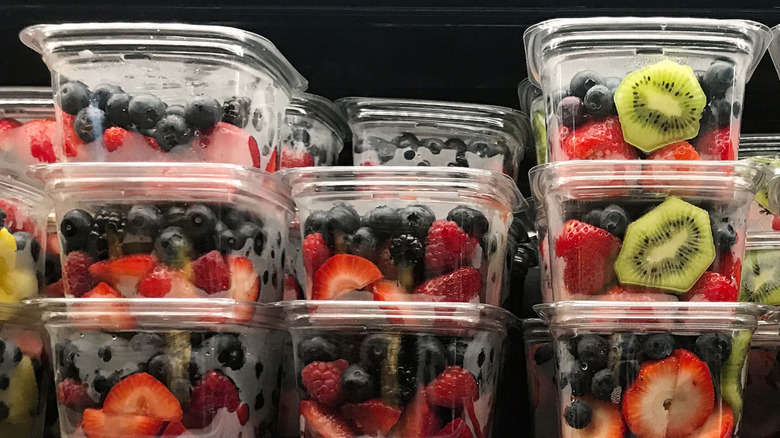
The little trays of precut fruit in the produce section are so tempting, aren't they? It can be a pain to chop up fruits, especially those with harder rinds like watermelons and pineapples. You know that choosing from the precut section will run you a bit more — someone did have to take the time to wash, peel, slice, and package the fruit for you, after all — and it seems like a smart choice if you're in a hurry. Precut fruit is undeniably convenient, but there are several reasons why it's a better idea to take the time to chop up your fruit yourself.
It's not just about the price, though that's certainly a significant factor. Precut fruit simply doesn't taste as good as fresh fruit, and it's not as good for you, either. So you may want to think twice before picking up a container of sliced fruit next time you're at the grocery store. We'll take a deep dive into why that is.
Precut fruit is usually more expensive
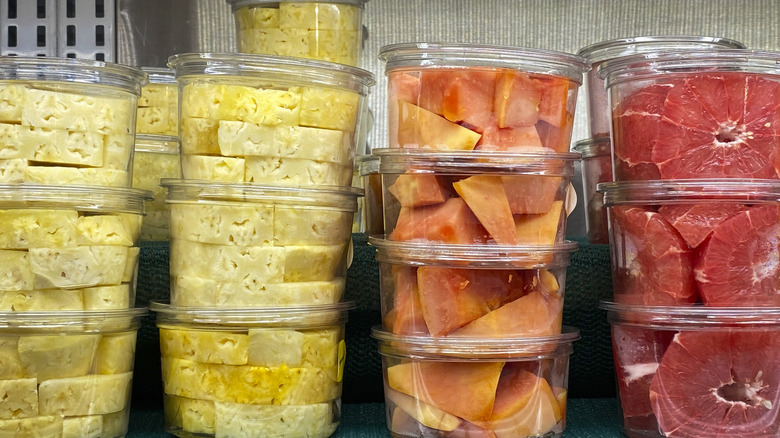
The most obvious reason it's worth skipping precut fruit comes down to cost. At Walmart, a 10-ounce container of pineapple chunks will run you $3.72 (exact price may vary depending on location). On the other hand, a whole pineapple, which might weigh between 2 and 5 pounds, costs around $2. According to the Academy of Nutrition and Dietetics, you can typically expect to get a 50% yield from a pineapple, meaning a 3-pound pineapple will yield about 1 ½ pounds of edible fruit. Clearly, it makes more financial sense to purchase a whole pineapple and take the (admittedly annoying) time to cut it up in your kitchen.
When you buy precut fruit, you're not just paying for the fruit itself. You're also covering the cost of the store's time, equipment, and container. Taking a little bit of time to prep fresh fruit once or twice a week can help make it easy to grab ready-to-eat snacks from your fridge, without requiring you to pay the hefty price of buying it precut from the store. While it's certainly understandable to want to pay for convenience sometimes (no judgment here), you're better off spending your convenience dollars elsewhere.
The risk of foodborne illness increases with precut fruit
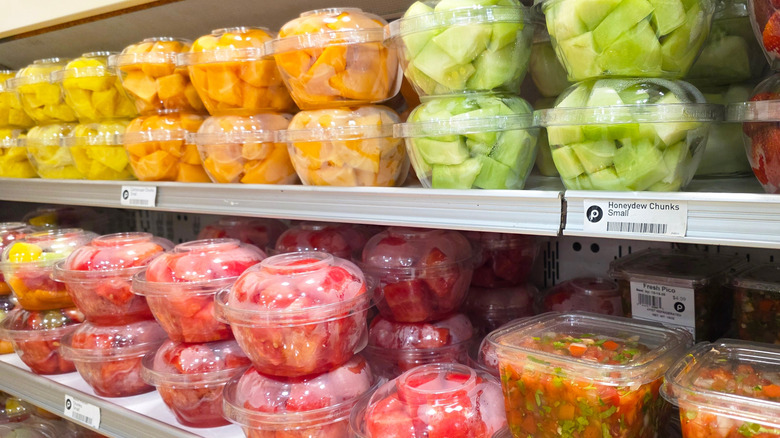
The skin of fruits and vegetables doesn't just provide fiber and other nutrients — it also acts as a protective coating that can help keep bacteria out. When you buy fruits that have already been cut, that protection has already been broken, increasing your chances of bringing home foodborne illness-causing bacteria. Fruit slicing at a processing plant or grocery store is typically done in large quantities. This means that if a single fruit is contaminated with illness-causing bacteria, multiple pieces of sliced fruit could be affected.
Recalls over recent years have shown how dangerous precut fruit can be, especially for vulnerable populations, including pregnant women, children, and the elderly. In September 2025, a company issued a recall of sliced melon due to concerns of Listeria contamination. A similar recall of sliced fruit cups was issued in November 2023 by Kwik Trip due to Salmonella-related concerns. When you wash and slice your fruit at home, you're in control of keeping your fruits (and your kitchen) clean, so it's easier to prevent cross-contamination issues and tell when it's gone bad.
Precut fruit spoils faster than whole fruit
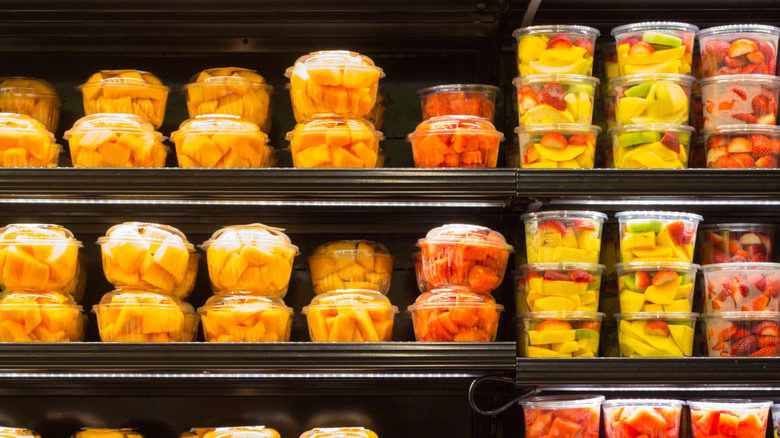
When you buy precut fruit, you aren't getting the whole picture. Processors can cut off pieces of fruit that are beginning to spoil, leaving you none the wiser that your fruit is on its last leg. In addition to missing out on visual cues, you won't be able to pick up on the scent that your fruit is starting to go bad, as it's tough to smell through a plastic lid.
Even if it's at its peak when it's sliced and packed, precut fruit is going to spoil faster than if it were left whole. When fruit is sliced, it loses moisture — fast. This makes it impossible for the fruit to retain its best taste and nutrient density. The increased surface area is exposed to air and microbes, which speed up the spoilage process. Once the skin has been sliced, the amount of time you have to enjoy fruit is limited.
Precut fruit can contain chemicals
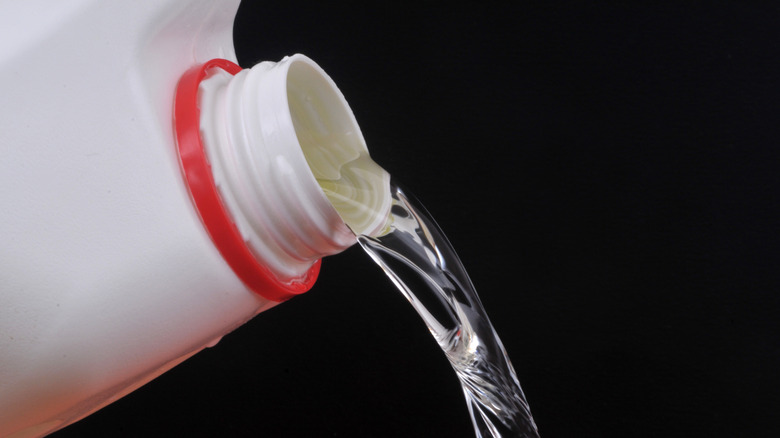
Some grocers use chemicals to firm up precut fruit. This can help transform fruit that's about to go bad into a better-looking piece of produce, making the cut fruit bowls more enticing. Calcium chloride is often used for this purpose, and while it's okay to ingest in small amounts, many shoppers might prefer to enjoy chemical-free fruit that isn't firmed up to trick them into believing it's fresher than it really is.
While we don't have hard-and-fast proof of this one, a TikTok user who says he's a former produce manager revealed a particularly dark secret of the world of precut fruit. In a viral video, TikToker @darksidesmiley said that after working behind the scenes, he's never again ate a precut produce bowl. In the video, he says, "What they do is take the fruit that's about to be bad, no matter what the fruit is. And in order to get it in there and have it stay in there and not go bad while it's in there, they soak it in bleach water."
Precut fruit doesn't usually taste as good as the fresh stuff
No matter how you slice it (literally) whole, fresh fruit usually tastes better than the presliced stuff you get in the grocery store. When you choose and cut your own fruit, you also get to choose your desired level of ripeness, allowing you to create a fruit bowl that you'll love. Ripeness preferences aren't the only reason why it makes sense to slice your own fruit, however.
When fruit is cut, its texture and taste can change quickly. Compare the snap of biting into a fresh apple with the less-than-snappy bite that comes with presliced apples, for example. Nutrients — like vitamin C — may also deplete more quickly once fruit is cut. You might notice that fruit is less visually appealing after it's been cut, too. Browning can happen quickly, especially if your fruit bowl doesn't contain any citrus components. While this doesn't necessarily affect the taste, it may make you more likely to skip it in favor of other snacks.