

For The Hands-Down Best Vegetable Stock, Don't Miss This Easy Step
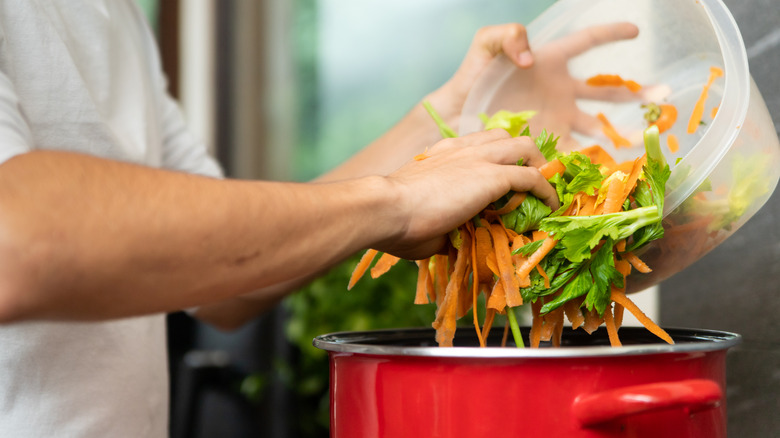
A good stock can level up your soups, risottos, gravies, and sauces. If you've never made stock before, starting with vegetable is the best choice because it's the easiest option when you're just learning. Add vegetables, herbs, and water to a pot. Boil, strain, and store for a variety of cooking needs. That's all there is to it, right? Maybe, but there's one important step that will change the way you make veggie stock forever. If you've made it before, and it ends up a little bland, you're not alone. So, what's the step you're missing? Roasting your vegetables first. This one extra move will give you the most flavorful vegetable stock you've ever made.
Boiling raw vegetables in water doesn't bring out the richness of all the ingredients, so it can make your stock bland and watery-tasting. Roasting the vegetables first brings out the essence of each vegetable, giving your broth the most savory flavors. The dry heat browns and caramelizes the natural sugars and proteins in your vegetables, bringing out a sweet, toasty, and savory depth and intensity. Celery picks up a subtle woodsy edge. Mushrooms develop a smooth and savory umami flavor. You can even smear some tomato paste on a pan and heat until it darkens slightly for a kick of tomato flavor. The result is a stock that tastes richer than one made with just boiled raw veggies. You will taste the difference, and your kitchen will smell amazing.
How to roast your vegetables and which ones to use
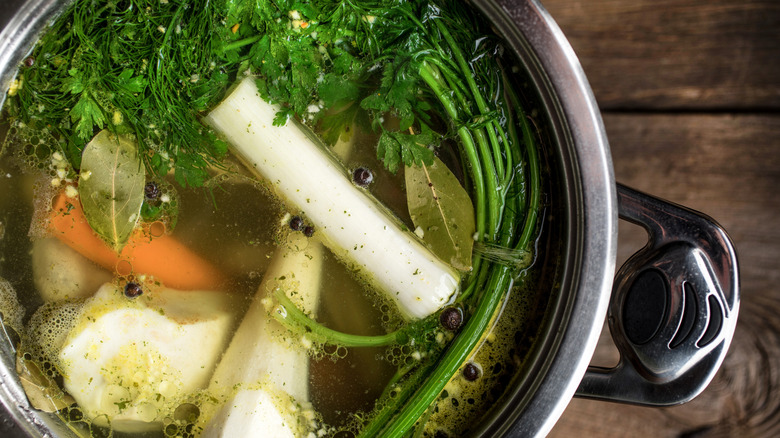
There are some vegetables that work especially great in stock: onions, carrots, celery, leeks, garlic, parsnips, mushrooms, tomatoes (or paste), and fennel. Don't forget your herbs, too. Parsley, bay leaves, rosemary, thyme, and even black pepper can add layers of flavor to your broth. Just don't add them too early in the cooking process. Wait until the end, so the herbs don't get bitter from cooking too long. Also, there are some vegetables to avoid putting in your broth. These include cabbage, cauliflower, peppers, potatoes, and broccoli as they can add a bitterness, gumminess, or cloudiness to it. Zucchini will get too mushy for most tastes, and beets will dye your broth a deep pink color.
Before roasting, chop your veggies into chunks (small pieces will roast quicker). Keeping them the same size will help them roast evenly, but the cuts don't have to be pretty. Spread your veggie pieces evenly on a baking sheet, making sure the pieces have room to breathe. Crowding leads to steaming instead of browning. Avoid adding oil of any kind as you want the veggies to release their moisture so they can brown up nicely. Roasting veggies with oil traps moisture in, not allowing them to caramelize properly. Bake at 425 degrees Fahrenheit for 25 to 35 minutes, and then deglaze your pan with a splash of water. Scrape those brown bits into your pot. Then bring everything to a boil with water, and reduce to a simmer for an hour. Strain and enjoy your flavorful vegetable stock.