

Kitchen Countertops And Floors Look Better When These Factors Align
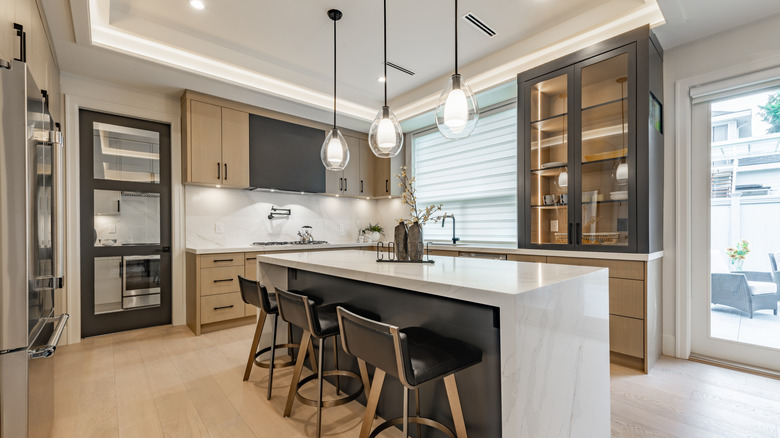
Getting a brand-new kitchen is a dream for every home cook. However, figuring out how to pair the countertops with the floors can be a complete nightmare. Get the shades right and you never want to leave the place. Get them wrong and the kitchen feels totally unbalanced.
In an exclusive conversation, Libby Baker Speight, founder of Baker Design Co., an interior design company located in Santa Rosa Beach, Florida, stated that choosing the right tones for kitchen flooring and countertops matters more than most people realize. "Subtle contrast for flooring and countertops in a kitchen is more pleasing to the eye and lets the food take center stage." Otherwise, according to Speight, the design would overwhelm the space. "Soft natural stones and medium-toned floors [are my] favorite for workhorse kitchens," she said. "They do not show age or stains as much."
On what to know before choosing a kitchen countertop color, Speight recommended opting for shades that would naturally complement the flooring. "Staying in the same shades or tones helps the materials feel cohesive even if you want a little contrast, keeping warm materials with warmer colors and vice versa with cool tones," she pointed out. Warm hues, such as yellow, orange, and red, tend to make spaces feel more social and inviting. At the same time, cooler tones, such as blue, violet, and green, create a calmer atmosphere and can help reduce cortisol levels and even ease anxiety.
Design a kitchen you love spending time in

When asked about how textures and patterns fit into a kitchen's design, Libby Baker Speight shared the ultimate kitchen design advice you need to hear before you're left with feelings of regret. She emphasized that both textures and patterns play a great role in creating depth and visual appeal in your kitchen. "Always love throwing in both to help with not only contrast, but visually breaking all the solid planes of flooring and solid countertops with a patterned backsplash," she said.
However, according to Speight, the kitchen should eventually reflect the owner's personality, as well as its actual purpose. Hence, the design can vary depending on whether the space is meant for daily use or simply for display, entertainment, and takeout. "If the kitchen will be well used... then I select [workhorse-type] materials that can stand the test of time," Speight revealed.
She added that feeling comfortable and happy in your kitchen ultimately comes down to finding the right balance between how practical it is and how it looks. This is often considered the golden rule of kitchen design. At the same time, instead of chasing modern trends, opt for countertop and flooring choices that age well and still feel right years down the line.
Having perspective matters when matching your countertops and floors
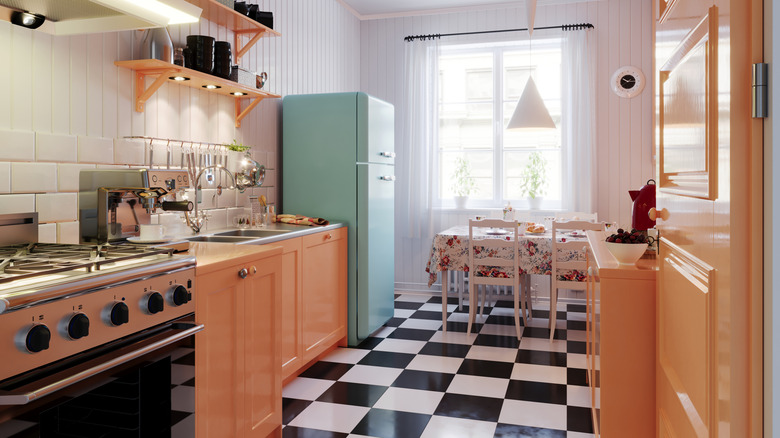
Lack of seating, insufficient storage, poor lighting, and not having enough outlets are among the worst design choices you can make in your kitchen. To avoid potential errors when pairing the countertops and the flooring, it's important to have a long-term vision of how the space would look and plan ahead. In practice, this means considering the kitchen as a whole and seeing how the two elements will come together, rather than going for individual designs. Additionally, one helpful design tip to keep in mind is that the countertop should connect the floor to the cabinets. "Most people don't consider the big picture on those two selections and, in turn, select materials that they like individually and don't consider how they flow together," Libby Baker Speight stated.
"Another common mistake is two very different style materials, for example, a very rustic floor with a high-contrast synthetic quartz countertop," Speight concluded. "They naturally just don't flow well because one is organic and one is very manufactured. It's hard for the untrained eye to blend those two types of materials well." While the contrast between organic and processed surfaces can bring the kitchen to life, if executed poorly, it can also leave it visually disconnected. This type of mismatch is usually difficult to correct without completely replacing one of the two surfaces.