

Neither Soap Nor Vinegar: To Clean Cookware And Crock-Pots, Head To The Laundry Room
We may receive a commission on purchases made from links.
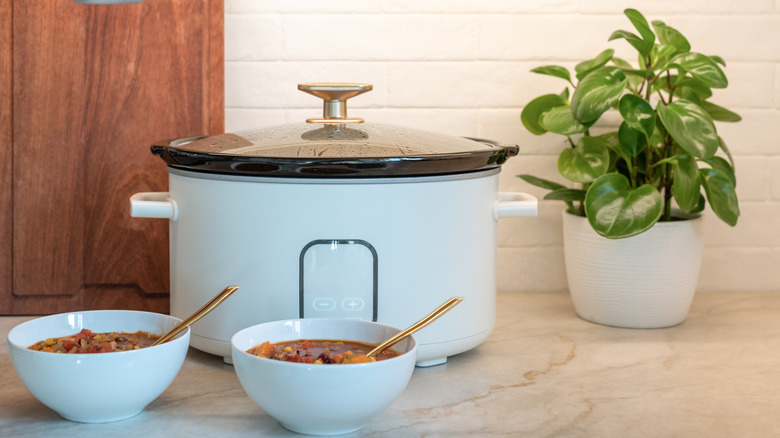
While modern innovations in technology have placed microwaves firmly in the category of kitchen appliances you don't really need, slow cookers have stood the test of time — and will likely continue to do so. That's because, unlike other appliances, slow cookers are famous for producing comforting, flavorful food with very little preparation or monitoring. Plus, there's no comparison for coming home after a long day to the scent of spicy slow cooker beef chili ready to go.
Possibly the only downside to using your slow cooker regularly is that they're kind of a pain to clean, as they're both heavy and oddly shaped. This is especially true in the rare instance that your food burns and sticks to the interior. The same goes for certain types of cookware, like Dutch ovens. Though slow cookers' low cooking temperatures make them fairly burn-resistant, there's still a chance that your overnight apple-cinnamon slow cooker steel-cut oatmeal may scorch and make a mess inside the ceramic sleeve. When this happens, you may think yourself doomed to an endless cycle of soaking, scrubbing, rinsing, and repeating, but there's an easy hack that'll allow you to skip all that. Instead, all you need is a scoop of OxiClean.
This powerful laundry powder known for removing tough stains from clothing is also great at lifting burned-on food residue from inside your slow cooker. Simply sprinkle about 2 tablespoons of the powder into the insert, fill with hot water to cover the burned area, and let it soak for about half an hour, then thoroughly rinse it clean.
Why this works, and how to do it safely
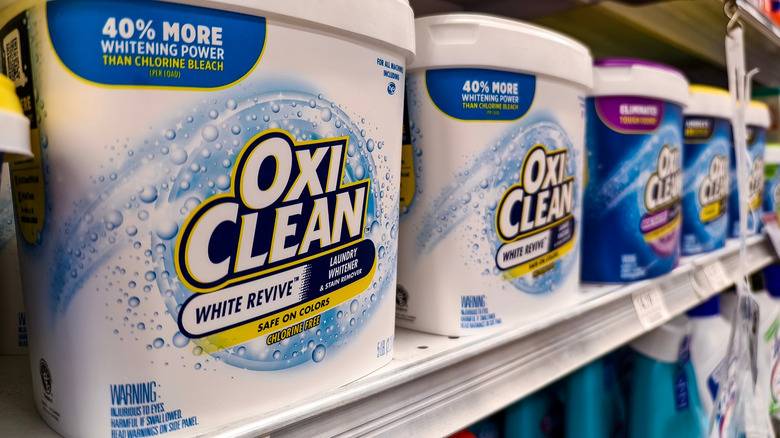
According to its official website, OxiClean powder contains active ingredients such as sodium percarbonate, sodium carbonate, surfactants, and polymer that, when activated with hot water, work together to oxygenate and lift stains from clothing and other fabrics. This process works equally well on smooth, ceramic kitchenware, as the ingredients don't need to penetrate fibers to remove the burnt food — they just lift it away from the surface, allowing you to rinse your slow cooker clean.
However, it's important to understand that OxiClean isn't exactly food safe, as the previously mentioned active ingredients are toxic if ingested, meaning the residue they leave behind on your slow cooker could be dangerous to your health. Once the stuck-on food is cleaned away, it's best to give your slow cooker insert another very thorough cleaning, either in your sink with dish soap and hot water or — preferably — in the dishwasher. The dishwasher continuously rinses the insert throughout the cleaning cycles, so it's likely more effective in removing any lingering OxiClean residue.
Another precaution to note is that you should never mix OxiClean with other products, such as ammonia, bleach, or vinegar. If you're thinking of giving your slow cooker a vinegar rinse to remove the residue, don't! This can cause a chemical reaction to create peracetic acid, which is extremely caustic. OxiClean is also slightly corrosive to metals, meaning residue may damage your slow cooker's base if the insert isn't rinsed properly, so be sure to be extremely thorough and use this hack only when needed.