

The Hands-Down Best Roasted Vegetables Don't Make This Common Mistake
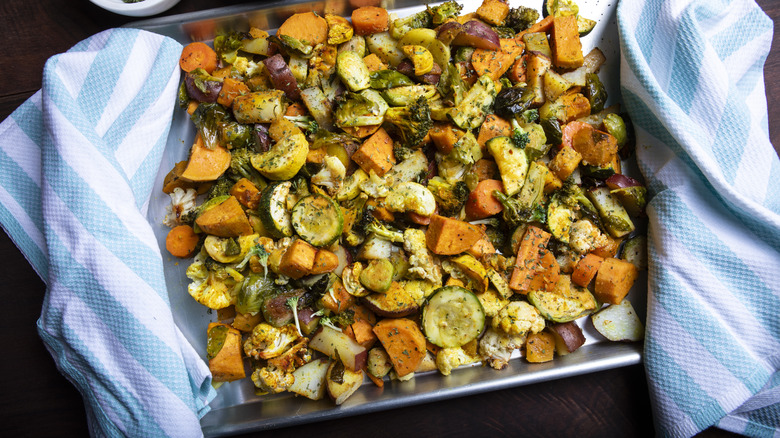
Roasting vegetables feels like one of the easiest things to do, which is exactly why it goes wrong so often. You toss everything with oil and crank up the temperatures in the oven, expecting magic. Then, when it doesn't happen, most people assume the issue is in the temperature or seasoning. But in reality, the problem usually starts much earlier. It turns out that crowding the pan is one of the kitchen mistakes that could be ruining your food. It's surprisingly easy to do as well, especially if you're tossing your vegetables in the pan in a rush. Vegetables release moisture as they cook, so when too many pieces are packed together and overlapping with each other, that moisture has nowhere to go. That's the easiest way to end up with a pan of steamed veggies. While not inherently bad, this is not what you are aiming for when roasting.
So if you've ever taken your vegetables out to discover they are limp and pale, it isn't the vegetables that are going wrong; it's the set up itself. Proper roasting depends on dry heat and exposure, where each piece gets contact with hot air so its surface can dry out and brown. This means that giving vegetables space isn't about presentation; it's a step that determines whether you end up with texture or a tray of soggy veggies.
How to get better results
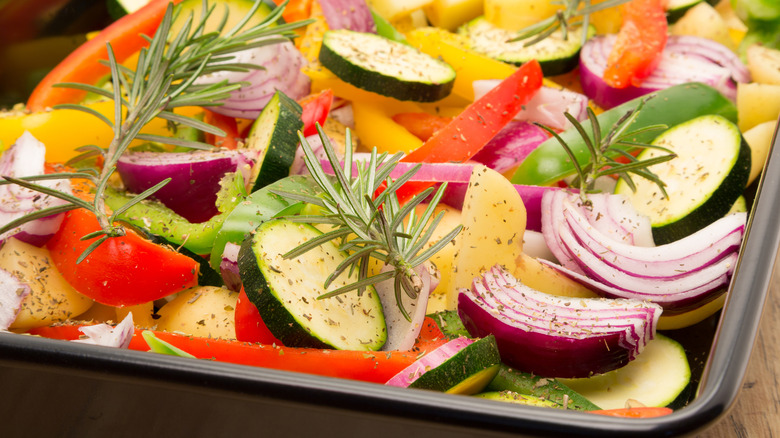
Once you understand why crowding kills the browning process, the fix isn't complicated — but it does require adjusting how you approach the cooking tray. Think about the vegetables as individual pieces rather than a pile, so that means planning for space from the start. The most reliable solution is using more than one pan, which will allow them to roast better and faster than if they were overloaded into one. With two or more pans, the moisture can escape instead of pooling, so you'll be far more likely to end up with the crispy roasted vegetables you want, not steamed ones.
However, if oven space is limited, timing becomes your best defense. All your denser vegetables like potatoes, carrots, and parsnips should go in first, while quicker-cooking vegetables can be added later. Think about size, too — larger chunks take longer to cook and release more moisture before browning begins, so cut your vegetables into smaller pieces if you want them to cook faster. This will increase surface area and help browning happen sooner. It's a simple adjustment, but it changes how efficiently heat works on the tray. Once you realize that crowding is the enemy — not a harmless result of trying to cook many vegetables at once — your roasting game will go from strength to strength.