

Folic Acid Is Man-Made: Here's Why It's Added To Food

You might not have heard of it, but you've more than likely had it over the course of your life: Folic acid, a B vitamin, is a near ubiquitous presence in enriched flour, pasta, cereal, and rice. In fact, as of 1998, folic acid is required to be added to certain staple foods such as enriched grains and cereals in the United States. And as of 2026, California has mandated that most tortillas sold in the state include folic acid. But why? Well, it's a matter of public health and fetal development.
Essentially, folic acid is a man-made version of Vitamin B9, also known as folate. Folate is a micronutrient often found in leafy green vegetables, eggs, beans, and other fruits and veggies. Folate is essential to red blood cell production, breakdown of certain amino acids, and DNA synthesis. Outside of enriched grains, folic acid is most commonly found in prenatal vitamins, as it can help to prevent birth defects such as spina bifida. And therein lies the reason for its status as a mandated additive. Its status as an additive has become a bit controversial in the realm of foods.
While folic acid is an essential part of a pre-natal multivitamin, the timeframe in which it is most effective at preventing birth defects is early in pregnancy, and a folic acid enriched diet is also beneficial before pregnancy to prevent defects. Since many people don't know they're pregnant until later in pregnancy, or might be unable to access sufficient dietary doses of the vitamin, folic acid enriched foods are essential for helping to lower birth defect rates — or at least, that was the theory going into the policy change.
Does folic acid fortification work?

So, has the mandated addition of folic acid helped to reduce certain birth defects? Well, yes. However, the exact amount that it has helped reduce conditions such as spinal bifida is still a bit unclear. In the United States and Canada, for example, cases of neural tube defects (defects of the brain, spinal cord, or spine) — which are linked to folate or folic acid insufficiency – have fallen significantly since folic acid was added to the food supply. According to a 2008 Harvard Health Publishing article, the exact number ranges anywhere from 25% to about a 50% decline in cases, which is significant. This being said, while folic acid enrichment certainly played a role in this, there are likely other reasons that also factored into the reduction, such as other public health measures and more widely available vitamin supplements.
Just because exact results can't be specified from this public health policy doesn't mean it hasn't been successful, however. It is just one piece in the puzzle of public health, and solutions often come in layered approaches. There is, however, one area in which folic acid fortification hasn't proven to be quite as successful. While the fortification is a great part of a prenatal care plan, another prospective benefit isn't quite as definitive.
Folic acid is also known for reducing homocysteine, an amino acid that can damage and harden arteries, potentially leading to strokes or heart attacks. However, while average homocysteine levels have decreased in the United States as folate levels have risen, medical trials have not found a clear cut connection to folic acid fortification preventing cardiovascular disease or attacks. That said, trials conducted have focused on patients who already had heart disease, and most of whom didn't have the types of high levels of homocysteine that would normally be linked to heart disease. Further research is still needed on the topic of whether folic acid enrichment has helped prevent the development of heart disease. All of this to say, if you're hoping to improve your heart health, there's a lot we still don't know yet.
An enriching history
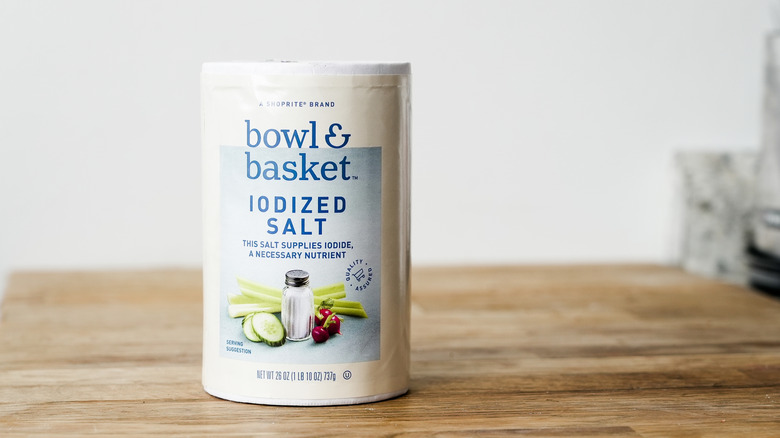
While the idea of adding nutrients to foods where they are not naturally occurring may seem newfangled, it is actually a tried-and-true method of addressing public health concerns. For example, iodized salt was first introduced in 1924 to address health issues linked to iodine deficiency, including goiters, which causes swelling of the neck and was widespread at the time. Iodine is an essential nutrient for thyroid health, but wasn't widely available in many Americans' diets at the time. Adding iodine to salt, a cheap staple available to most people, helped to reduce the health issue. And iodized salt is still widely available today, even as more consumers are asking themselves which salts are supposedly the "healthiest" options.
Another coup for widespread vitamin enrichment? Vitamin D in milk. In the 1930s, many children suffered from rickets, a disease which weakens the bones and can cause issues, particularly with legs and wrists. Rickets can be genetic, but it is most commonly caused by caused by a Vitamin D deficiency. To address the widespread incidence of rickets, the United States began to fortify milk products to include more Vitamin D. Because of this public health effort, nutritional rickets has drastically decreased in the United States. These, of course, are just two examples of a broader effort over the past century to improve public health through the enrichment of staple foods, to largely successful results. And though folic acid may not be a nutritional magic bullet, it has helped prevent a large number of potentially deadly congenital health issues.