

Why Mulch Is Essential For Gardens In The Fall And Winter
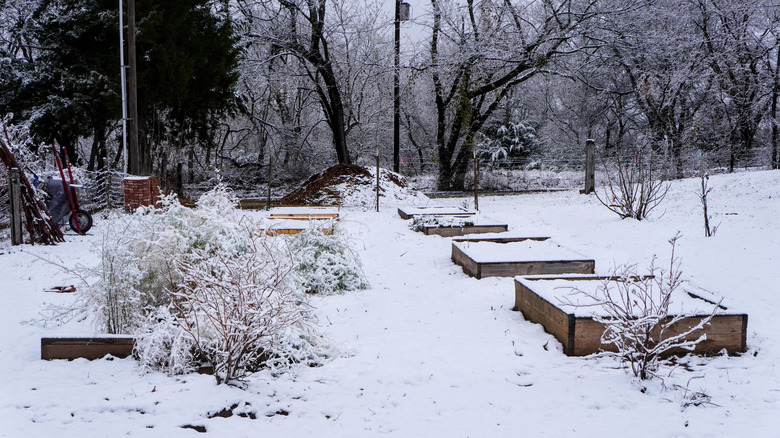
Just as you would prepare your garden for a healthy, vibrant spring, you need to take the proper steps to shut it down for winter. Overwintering may be one of the more overlooked tasks for some gardeners, but organic mulch can protect gardens from harsh winter weather. Many plants can't withstand temperatures below 32 degrees Fahrenheit on their own, and mulch helps them survive by preventing water in their roots from freezing.
However, it's also important not to use too much mulch, which can suffocate your plants. Trees and shrubs can usually handle 4 inches or more of mulch, while a 2- to 3-inch layer suffices for smaller, more delicate plants. Insulating your soil with straw or other mulch, such as organic materials like bark, woodchips, or leaves from your yard, will also protect worms and other tiny microbes that work in your garden. Whether you have garden beds or are planting directly in the ground, mulching is essential to prevent soil erosion by slowing water runoff and shielding your precious soil from rain and snow. Plus, over the winter months, those inches of organic mulch will slowly decompose and return nutrients to the soil, setting your spring plants up for a healthy season.
What you should use for winter mulch
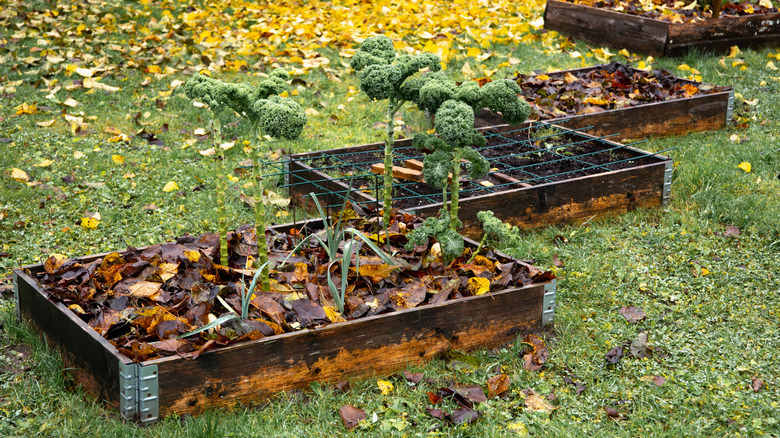
Pine straw, (non-dyed) wood chips, and even thin fabric can protect your garden from cold temperatures, but fallen leaves and grass clippings can make for an especially healthy mulch. Fall leaves are a great source of nutrients for your garden bed and will eventually break down into the soil. Because fallen leaves are high in carbon, the nitrogen in grass clippings balances the mulch as the leaves decompose over winter and early spring.
Consider picking up a soil tester or a simple Mason jar hack to test your soil's pH level. Carbon helps slow decomposition, while nitrogen helps speed it up, so you'll generally want a carbon-to-nitrogen ratio of around 30:1. If you're worried about not having enough nitrogen in your mulch, you can supplement the grass clippings with nitrogen-rich fertilizer, or you can use your compost to balance your winter mulch mix. Do this in winter, and thank yourself the next spring when you find your beds ready to go for another prolific season.