

Here's How To Grow Sweet Strawberries Indoors And Enjoy Them Throughout The Year
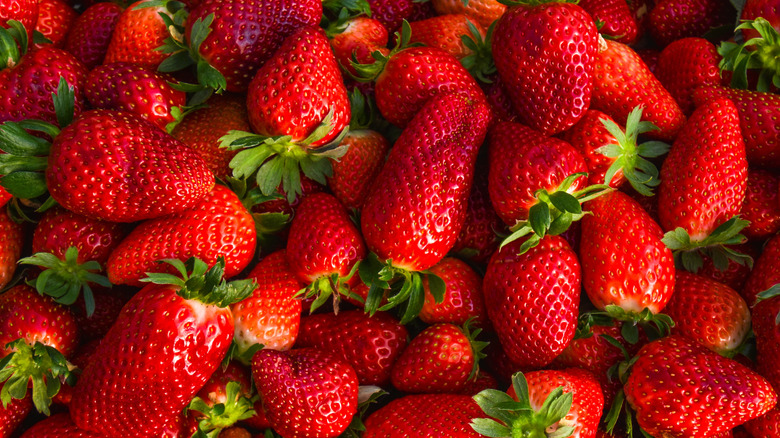
Growing your own food carries many benefits, from lowering your grocery bill to having your favorite fruits and veggies ripe and ready to go throughout the growing season. There's also something to be said for stocking your freezer with essentials you should keep on hand, especially if they come directly from your own garden. Of course, growing your own food means prepping for a somewhat lean fall and winter. To weather this fallow time, you can either supplement your stock from the grocery store or transfer your gardening efforts indoors.
This is advantageous with fast-growing spring produce like strawberries. Though there's some debate about whether it's best to grow strawberries in the garden or in a pot, the truth is they can thrive in both under the right conditions. Provided your strawberries receive the proper TLC, there's no reason you can't enjoy their sweet freshness all winter long. The trick is to place them in the sunniest, warmest part of your home and dedicate that area to creating the ideal conditions for strawberry plants to flower and produce fruit.
To do this, you'll likely have to supplement sunlight from your windows with grow lights to ensure they get about 12 hours of full light per day. They also like loamy, well-drained soil, as strawberries are extremely prone to root rot. However, you have some leeway when it comes to temperature — anywhere from 65 to 75 degrees Fahrenheit should be just fine, especially for cold-hardy alpine varieties.
The importance of pollinating your strawberries
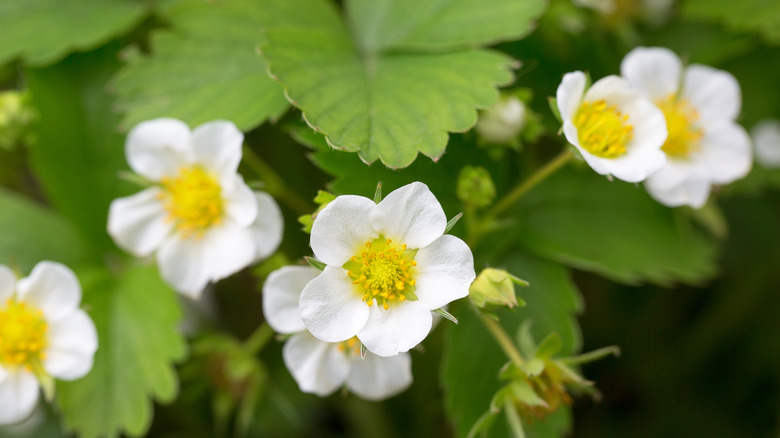
As mentioned, cold-hardy alpine varieties of strawberry plants are more likely to thrive over the winter indoors. Additionally, many of these plants are also everbearing, meaning they'll produce several batches of fruit per growing season. Ozark Beauty, Strawberry Renaissance, and Albion are just a few cold-hardy, alpine, everbearing varietals that will yield a healthy crop of strawberries over the winter, provided they're properly tended. However, these suggestions are far from the only types you can successfully grow indoors, so it's worth talking to an expert at your local gardening center for more information.
The biggest issue with growing strawberries indoors is the lack of natural pollinators, e.g., the birds and bees. Strawberries won't pollinate themselves, so it's up to you to use a fine-tipped liner paintbrush to gently sweep yellow pollen from each flower stamen into the pestle at the center of the blossom. This may seem like a tedious task, but you can break it up by pollinating one plant per day or by enlisting the help of friends in exchange for a basket of fresh strawberries in the middle of January.
Once you're ready to harvest, simple glass jars will extend your strawberries' shelf life. Provided the strawberries are nice and dry, they'll remain fresh for days. Of course, that's assuming they don't make their way into smoothies, parfaits, and homemade jams before they even make it to your fridge.