

Ditch The Cream Cheese And Try This Ancient Cheesecake Variant Instead
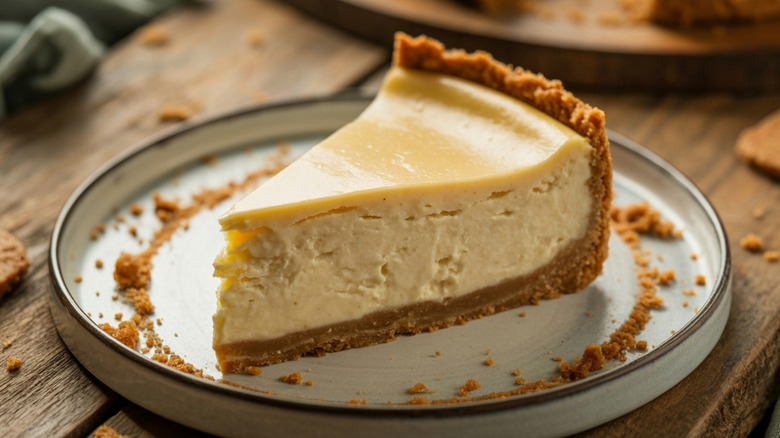
Ricotta isn't brash or loud — this ingredient does not gush or brag. Instead, it's gentle and in some ways, quaint, passing those qualities onto the recipes it features in. Ricotta cheesecake is no different. It's light in a way that makes its New York cousin look overly indulgent and just too much in every way. Instead, smooth and creamy ricotta imbues the dessert with a gentle sweetness that whispers of pastoral kitchens, sheep's milk, and cooks who believed dessert did not need to be a sugar brick to prove itself.
This cheesecake began long before graham crackers or springform pans. In its earliest form, the dessert was served at ancient Greek celebrations as far back as 2000 B.C. Ancient Roman cooks adapted these older recipes, adding eggs and sometimes a crust to create honeyed cheese loaves for feasts that involved far more dramatic entertainment than a quiet dinner party. Later, Byzantine kitchens adopted their own variations. The basic formula stayed simple: fresh cheese, eggs, a little sweetener, a little heat, and patience. When ricotta spread through Italy, every region invented its own cheesecake logic. Some versions came perfumed with citrus. Some went bare. Some turned up for Easter. Others appeared whenever the household needed a soft, clean treat that did not glue the tongue to the roof of the mouth.
A ricotta cheesecake feels airy but not fragile. It carries none of the dense seriousness of cream cheese. It is an ancient idea that tastes surprisingly modern, making it a worthwhile dessert to bring to life today.
Ricotta makes a cheesecake feel weightless
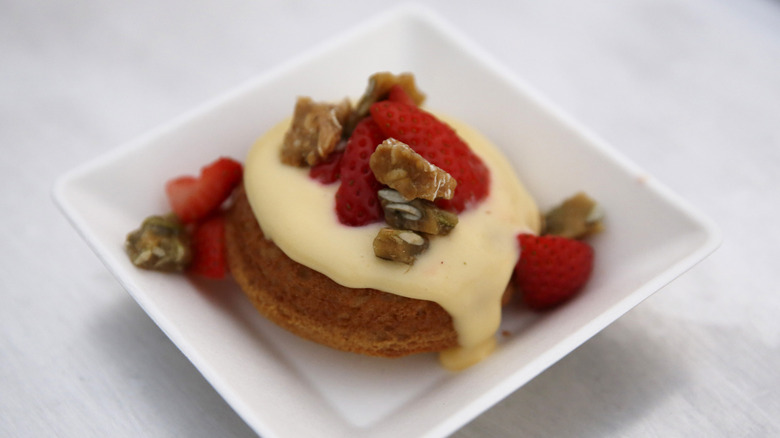
Ricotta changes the entire script in this dessert. When blended, it forms a batter that holds air beautifully. The result is a cheesecake that feels almost buoyant. It slices like a cloud. It melts without leaving a dairy brick lodged in your chest. Plus, ricotta is easy to work with. No hot water bath needed. No anxious crack monitoring. Drain it if it looks watery. Blend it until it becomes a silky daydream. Add eggs, citrus, maybe a bit of Costco's vanilla extract, and the mixture turns glossy enough to make people stare.
The flavor lands differently too. Cream cheese delivers tang and weight. Ricotta offers freshness that leans toward springtime. It makes the lemon pop brighter. It makes berries behave like they finally met the dessert they deserved. Even the crust feels optional. The cake stands comfortably on its own. This is dessert minimalism for people who still want pleasure.
The history helps explain the vibe. This cheesecake comes from a world where desserts had jobs: finish the meal, lift the spirits, soothe the body after heavy courses. Ricotta accomplishes all of that without shouting. It is an ingredient that belongs to fields, not factories. When baked slowly, it rises just a little and settles into a tender cushion. Try it once. The cream cheese block in the fridge may start feeling like an artifact from a louder era. Ricotta becomes the ingredient that shows every type of cheesecake does not need drama to taste unforgettable.