

Canned Cold Brew Doesn't Hold A Candle To Fresh. Here's Why
We may receive a commission on purchases made from links.
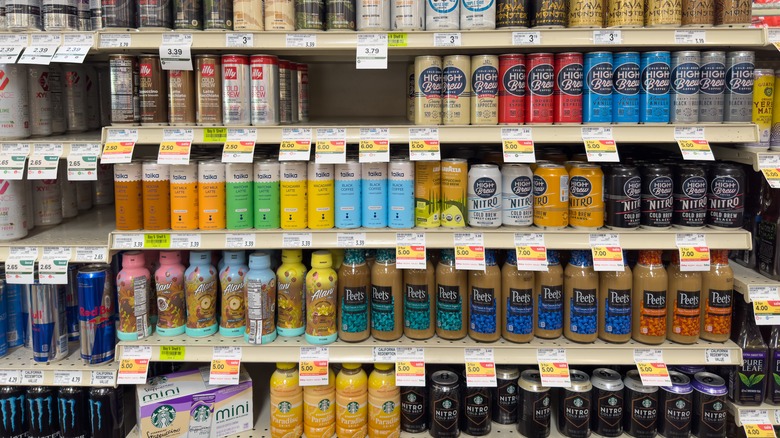
If you're a serious coffee drinker, then it's likely you discovered cold brew sometime in the last decade as it exploded in popularity, and it might have even changed your life. Cold brew isn't just another name for iced coffee – it's brewed totally differently and has a distinctly different taste despite both being served cold. While you can brew it at home or order a fresh, chilled cup at many major coffee chains, it's also quite common to consume cold brew from a can. Dozens of major and smaller independent brands sell canned cold brew coffee at grocery stores, so it's never been easier to get a buzzy caffeine fix on the go.
However, many consumers notice that canned cold brew's flavor pales in comparison to the fresh stuff. To find out why that is, Chowhound spoke with Matt Woodburn-Simmonds, an ex-barista and founder of Home Coffee Expert. "The FDA requires canned cold brew to be pasteurized, which significantly alters the taste," he explained exclusively to us. Pasteurization uses heat to reduce harmful pathogens in food and drink, which extends the shelf life of cold brew but can interfere with its fresh flavor. "There are often other preservatives added to ensure it is safe to drink and can be stored for a long time, but these can give the cold brew a slightly synthetic flavor," Woodburn-Simmonds said. To avoid that chemically "off" taste, be very picky when buying canned cold brew, or better yet, learn to brew it yourself.
For the freshest flavor, brew your own cold brew
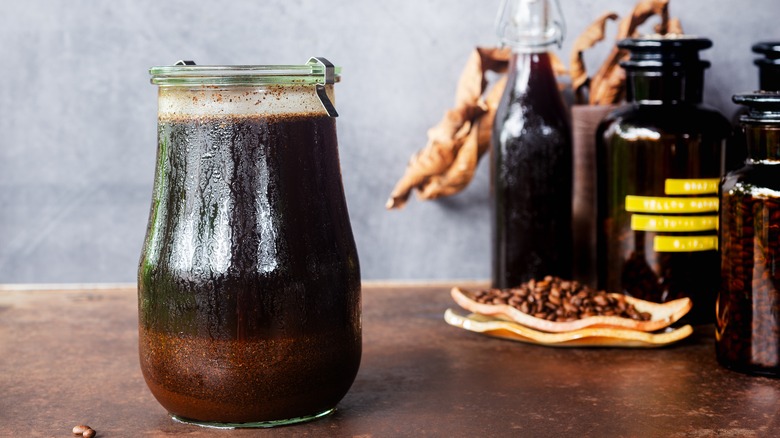
If the thought of shelf-stable and preservative-filled canned cold brew suddenly sounds unappealing, we don't blame you. Maybe you've been wanting to learn how to make cold brew at home to save money and perfect the flavor, but the process sounded too intimidating. Thankfully, Matt Woodburn-Simmonds shared a simple method for making a robust batch of cold brew in the comfort of your own kitchen.
He favors using 4 cups of water for every 1 cup of coarse-ground coffee (preferably French press grind or coarser) and storing the mixture in a tightly sealed glass jar. He advises letting it steep on your kitchen counter for half a day or in your fridge for a full 24 hours. Once it's reached your desired flavor profile, you can strain it through a coffee filter or cheesecloth. "Using this ratio gives a wonderfully rich and intense flavor," Woodburn-Simmonds said, adding, "The super slow extraction from putting your cold brew in the fridge really helps to mellow the acidic notes."
If waiting over 12 hours for a cup of coffee doesn't work for you, there is another option. According to Woodburn-Simmonds, "Using a vacuum sealer can be an amazing way to make cold brew in minutes instead of hours." Some, like the FoodSaver Mini, are even designed to work with Mason and other canning jars. This method does require more active work, including several stages of vacuuming to remove carbon dioxide, but it's a great way to get cold brew in a flash if you don't mind a bit of extra prep.