

Does This 2,000-Year-Old Roman Painting Show Pizza's Ancestor?
For almost as long as humans have existed on this planet, we've been obsessed with making bread and putting stuff on top of it. We even have artistic evidence of this tradition, the most recent of which was uncovered in Pompeii in 2023. A detailed rendering painted on an ancient wall (a home that was next door to a bakery) depicts what appears to be a silver tray with a goblet of red wine and a number of food items, including a round disc of bread covered in toppings that looks suspiciously similar to modern-day pizza.
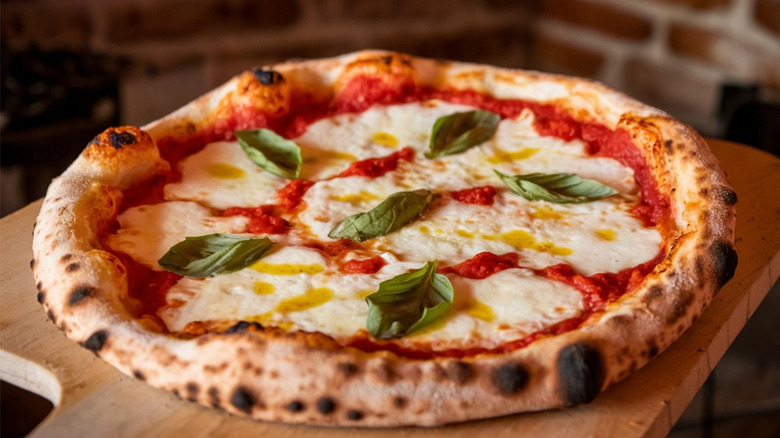
Despite appearances, experts of the Pompeii archaeological site believe the flatbread shown in this exciting find is most likely not pizza. For one thing, the fresco was painted well before Italy invented pizza (with a huge influence from the Greeks), not to mention tomatoes and mozzarella weren't yet available. Without marinara sauce and a layer of melty, stretchy cheese, even the tastiest flatbread can't properly be called pizza.
Additionally, further analysis of the painting showed the foods placed on top of the round bread are most likely sliced fruit — archaeologists identified pomegranate and maybe dates. Also identified were spices and perhaps pesto, along with other condiments. On the same tray, other dried fruits are seen alongside strawberry trees. It is speculated the bread was simply used as a holding base for food and not meant to be eaten.
What the painting likely portrays
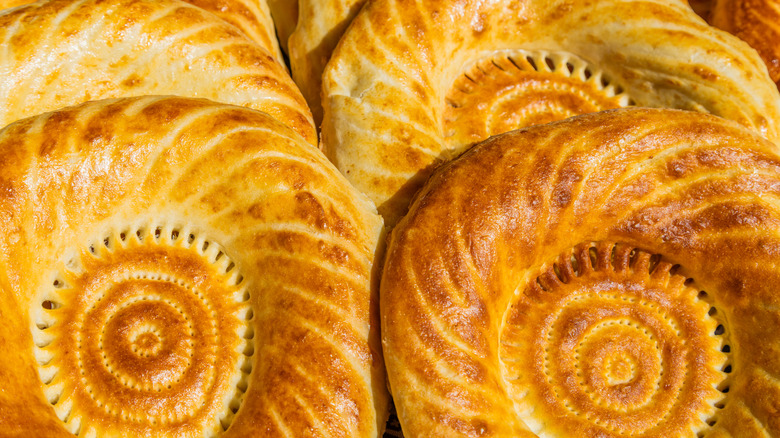
The flatbread displayed in the fresco closely resembles stacks of bread rounds painted in a scene on the inside of the House of the Baker (another dig site in Pompeii), according to archaeologist Farrell Monaco (via BBC). These flat round cakes — called placoûs by the Greeks and adorea by the Romans — were baked with a raised crust around the outer edge; another detail that makes them similar to modern pizza.
However, instead of pepperoni and cheese, these depressions were usually filled with sliced fruit — as the fresco shows — or with a type of fruit coulis. The dough itself was likely made from emmer wheat, honey, and oil. Especially when prepared with coulis, the Romans frequently used these rounds as offerings to glorify those who received it, though it was also likely consumed as a regular part of their diet. In fact, Monaco shared a recipe for replicating the bread that might be topped with the same expert-approved ingredients you'd put on your homemade focaccia.
If you decide to make this delicious-looking ancient dietary staple at home, top it with figs to honor the ancient culinary ancestor of pineapple pizza, along with garlic moretum, a soft, pesto-like, cheese spread shown in the fresco between the wine and flatbread. The spread is a combination of goat or sheep's milk cheese, lots of garlic, herbs, and olive oil, and it makes a gorgeous complement to a fig's sweetness, or any other fruit you'd like to put on your adorea.