

Please Stop Cooking Baked Pasta With This Shape (It's Ruining It)
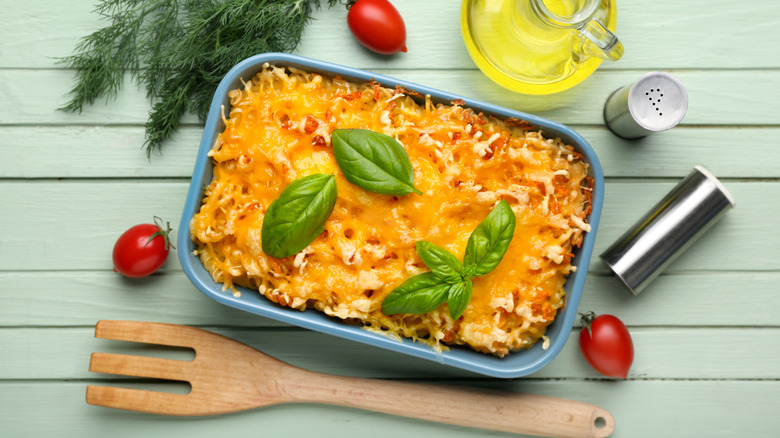
A three-ingredient pasta bake is a popular dish to have on your list of go-to comfort meals. Not only are pasta bakes easy to prepare in large batches for guaranteed leftovers, but they are also a great contribution to a potluck or when hosting a gathering. All you need to do is layer all the components — pasta, sauce, vegetables, and protein — and let the oven do the rest of the heavy lifting to create an indulgent, saucy, and comforting meal. While it might seem that this straightforward approach should be hard to ruin, it turns out there is one pasta shape that could be the culprit for a subpar forkful of baked pasta, and it also happens to be one of the most popular choices of pasta bakes: siti.
This may come as a surprise, but there is a perfectly logical reason why ziti isn't the best choice. Its smooth surface allows the saucy goodness to slide off, and because of that, when you go for your first bite, you get less sauce than you should. Instead of ziti, you'd be better off using pasta shapes that can hold on to the sauce, like those with ridges, nooks, and crannies. For example, rigatoni is slightly larger in diameter and includes ridges that do a much better job of coating every pasta piece with sauce. Even our own cheesy baked "ziti" recipe swaps in rigatoni for a more flavorful bite.
Choosing the pasta shape for baked recipes
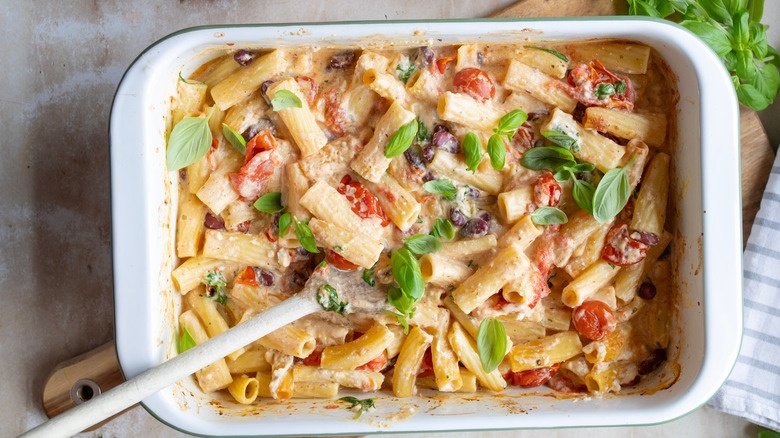
The shape of your pasta will determine how you cook it and which sauce you'll serve it with. Ziti is primarily used for a limited set of baked dishes, whereas more popular shapes, such as rigatoni and penne rigate, are used in various sauces and recipes and can also be baked. Whether you use ziti or another pasta, quality is another factor that can define your baked meal.
If the goal is to have the sauce adhere to the pasta properly, it would be worth spending a couple of extra bucks for bronze-cut pasta. The extrusion process makes the pasta more porous and better poised to soak up the sauce. Bronze-cut pasta also has extra starch, which helps sauce and protein stick to even the smoothest ziti.
Clearly, pasta shapes with crevices and porous surfaces are a perfect match for creamy, chunky, and texturally rich sauces, but what about the smooth and slender types like spaghetti and capellini? Their narrow and elongated shapes are excellent when tossed in light, oil-based sauces or a basic tomato sauce without too many additional textural components, which makes for an Instagram-worthy pasta twirl shot, wherein every long pasta strand is evenly coated with the sauce. Just keep these long, thin pastas far away from the oven.