

You're Ruining Acorn Squash If You Store It This Way
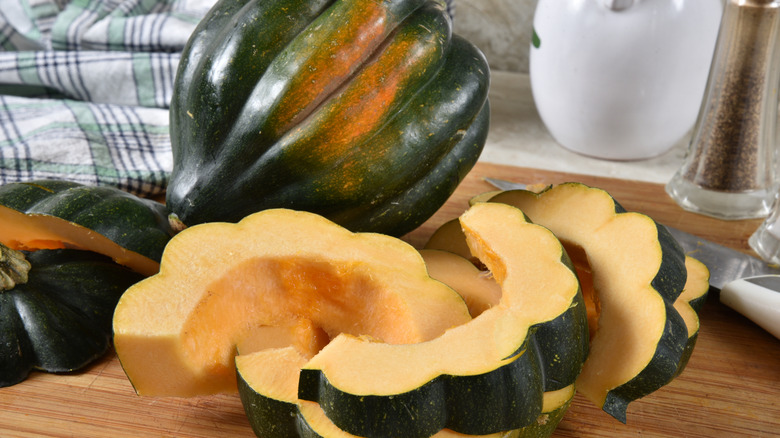
One of the most overlooked categories when it comes to nature's seasonal bounty is winter squash, particularly acorn. While almost everyone has a simple butternut squash soup recipe on hand, acorn squash is often slept on despite the fact that it's just as versatile and delicious. Not only is it hearty and an excellent source of vitamin C, potassium, and fiber, it's delicious — slightly sweet with an earthy undertone that becomes beautifully caramelized when roasted, becoming the perfect vessel for making wild rice and walnut stuffed acorn squash.
Once you learn how to safely slice through acorn squash's tough outer skin, roasting is a simple matter of flipping the slices cut-side down on a baking sheet and letting the heat slowly soften the flesh. However, that's assuming you get to that point before your acorn squash spoils. Despite the fact that acorn squash are hardier than their summer cousins (think gooseneck and zukes), they can get pretty gross from the inside out if you store them improperly. Ironically, this means keeping whole squash as far away from your fridge as possible.
The cold, dry climate inside your fridge won't keep your acorn squash fresh, but rob it of valuable moisture more quickly, shriveling the skin and ruining the interior texture. This rapid desiccation can also invite microbes that cause spoilage. Instead, store your acorn squash in a cool, dark, dry cabinet (between 50 and 55 degrees Fahrenheit) where it can maintain homeostasis and stay fresh for between two and four weeks.
Keeping your acorn squash fresh as long as possible

Another reason the refrigerator isn't a great place for acorn squash is that the climate is so variable. The temperature fluctuates every time you open the door, and the humidity can change depending on what kind of foods are inside. Plus, while cooler temperatures inhibit microbial growth in summer squash like zucchini, they can easily damage acorn squash's tougher skin, which is crucial to keeping the interior flesh plump and free of spoilage.
For proper storage, line an empty pantry shelf or another cool area of your kitchen with parchment paper, and set your acorn squash in rows with several inches of airflow space around each one to help inhibit microbial growth. Check on them every day or two, rotating them to ensure the side resting on the paper doesn't become damaged and start to rot. After your acorn squash are cut or cooked, you can store them tightly wrapped in cling wrap or in an airtight container in the refrigerator for about five days. Cooked acorn squash can also be stored in the freezer in vacuum-sealed bags for about three months.
Of course, the fresher your acorn squash is, the longer you'll be able to store it. Homegrown squash can stay fresh for many weeks longer than their store-bought counterparts. When buying from a store, find the freshest one by looking for squash that's heavier than it looks with dry, waxy skin free of mold, knicks, or bore holes.