

For More Flavorful Homemade Pizza Crust, Make Sure You Follow This Step
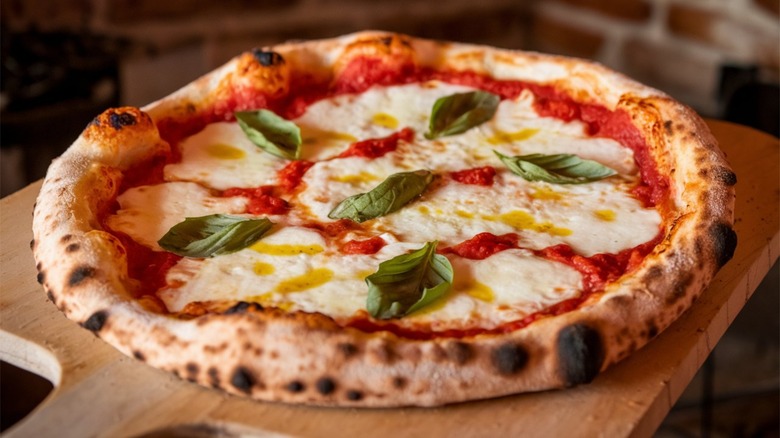
A light, fluffy homemade pizza Margherita and your favorite Netflix show sound like the perfect Friday night combo. Except first, you need to nail that crust, which is pretty much the part where most home cooks tend to fail. Some might say it's because you're overloading it — after all, too many toppings will ruin your thin crust pizza and leave you disappointed. However, Fel Cassieli, founder of Crispy Heaven Bakery, a European-style restaurant located in SoHo, New York City, believes that to truly get that perfectly crispy bottom and airy middle, there's another important detail you shouldn't overlook.
In an exclusive talk, Cassieli revealed that cold fermentation is the one step you should never skip for the best pizza crust. "I always prefer long, cold-fermented dough because it brings a special flavor," she told Chowhound. "The dough has time to rise for several hours or days and develops a very good structure due to slow gluten development."
With cold fermentation, the dough is typically kept in the fridge between 34 and 45 degrees Fahrenheit. During this time, the low temperature slows the activity of yeast and gives enzymes more time to break down the dough's starches and proteins. And even though the process can sometimes take up to 72 hours, it makes the dough significantly bubblier, chewier, and softer than the one you'd get at room temperature. "It takes time, but the results are amazing," Cassieli said. "The dough, after baking, comes out very crispy but also creates nice open air pockets, which is perfect for my pizzas."
Poolish is the secret behind the perfect pizza crust
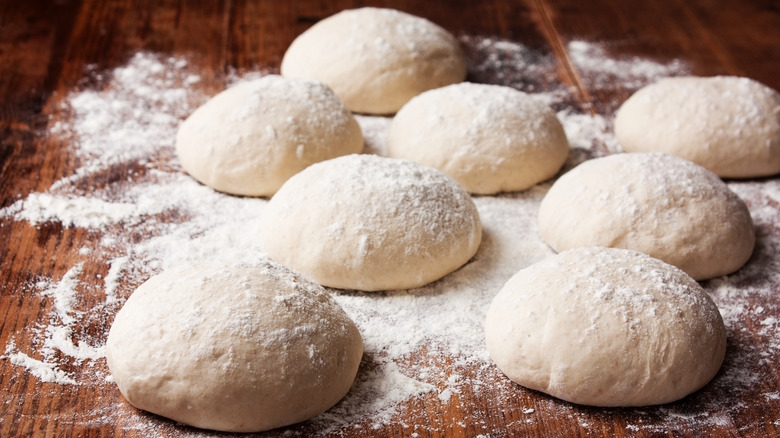
Fermentation times differ depending on the type of pizza you're making. However, Fel Cassieli suggested that she prefers a poolish base that ferments in the refrigerator for nearly a full day. "When we mix the final dough with the poolish, I prefer to leave it in the refrigerator overnight for about 20 hours," Cassieli said. "After shaping the dough, I put it back in the refrigerator to rise slowly before baking for another four hours — so in total, about 40 to 45 hours."
Poolish is a loose, hydrated dough that combines equal amounts of flour and water. It's either used as a starter or a preferment and contains only a small amount of commercial yeast. On how it affects the texture and flavor of pizza crust, Cassieli said it gives it a unique texture, leaving it crispy after baking while forming light, airy pockets inside. "The middle of the pizza is super thin but not saggy (after putting tomato sauce and toppings)," she explained. "The flavor from the poolish is very special, with even nutty notes, but still very simple."
When asked to share some tips and tricks, as well as what mistakes to avoid when making poolish, Cassieli revealed that the process is surprisingly easy. "Poolish is so simple that there are not many things that can go wrong," she stated. "Always make sure to have the right amount of ingredients and find the sweet spot when your poolish is ready to use."
Combine cold and warm fermentation if you're short on time
While Fel Cassieli noted it's possible to adjust fermentation time according to your preference, she stressed it's essential to keep the temperature consistent. "Make sure that the temperature is always the same — that is super important," she pointed out. Fermentation temperature is just as important as the temperature you bake your pizza at in the oven. "The container you put the dough in should be sealed so no air can get in (to prevent the dough from drying out)," Cassieli continued.
If by any chance you're in a hurry, she recommended using both cold and warm fermentation to speed up the process. "In case you need to bake in a short amount of time, you can combine these two options," Cassieli suggested. "Especially after shaping the pizza balls, you can proof them at room temperature."
Sticking to the same fermentation time is very important if you want consistent dough quality. On top of that, dough that has been left to ferment for a longer period is often more flavorful and easier on the stomach. "I always try to follow the same timing, but sometimes when you're in a rush, you can do warm fermentation," Cassieli said. "I think the most important thing is to have a perfect poolish, and from that, you can do anything."