

Stop Skipping This Step When Cooking Frozen Shrimp For Tastier Results
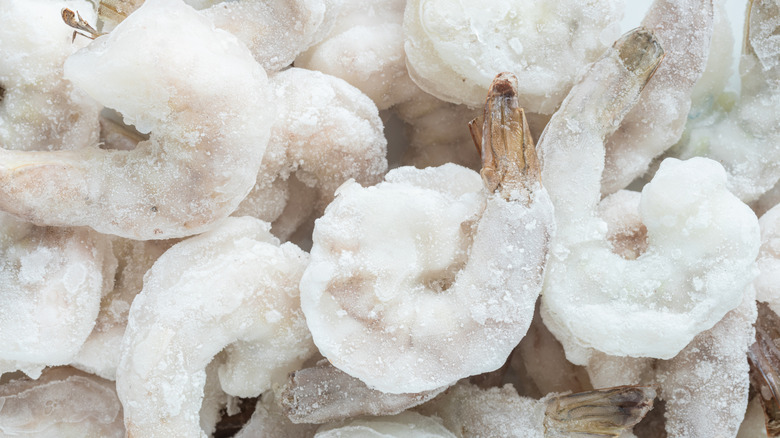
If you're in the market for a low-maintenance, high-protein powerhouse, look no further than frozen shrimp. A single 3-ounce serving is packed with around 20 grams of protein with very little fat, and comes with ample amounts of essential nutrients like iodine and omega-3 fatty acids. It's easy to grab just what you need from a bag and keep the rest frozen, and you can toss it right from the freezer to a hot pan and have dinner ready in a flash. If you really want to make a meal that's restaurant quality, however, you might want to slow down and stop skipping the thawing step if you're planning to cook your shrimp in the air fryer or marinate it. We had an exclusive chat with Robert DiGregorio, the director of seafood quality at New York City's Fulton Fish Market, who explained that frozen shrimp won't absorb as much flavor as thawed shrimp.
"When delicate shellfish like shrimp are frozen they typically have a water glaze applied to protect the seafood," said DiGregorio. "That icy layer prevents the marinade from actually reaching the flesh, so you won't get that flavor you're hoping for." It'll just season the icy crust, which melts away when the shrimp is heated. "I typically only recommend marinating thawed shrimp," he advised. Fortunately, you don't have to wait forever for your shrimp to thaw. "The good news is that shrimp are small and defrost quickly, especially if you run them under cold water. That glaze melts away as they're thawed," DiGregorio said. From there, prep is simple. He advised patting the shrimp dry before marinating them. "Once thawed, a quick 15 minutes in a marinade is all it takes," he said.
Shop for untreated shrimp
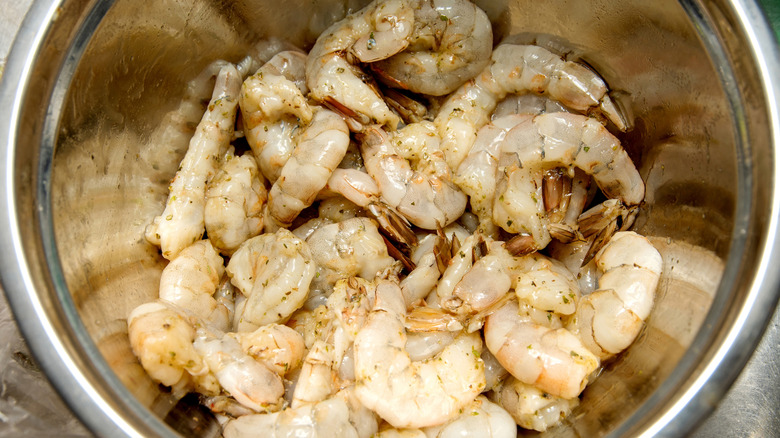
Not all frozen shrimp are created equal, either, when it comes to processing before they're frozen. Robert DiGregorio, who's affectionately known as Bobby Tuna, says that some shrimp is treated with sodium-based solutions that can retain water. This, he explains, means there's less opportunity for marinade to soak into your shrimp, even when they're thawed. "Because of that, I recommend buying untreated shrimp (like the ones we sell at Fulton Fish Market) or shrimp with minimal added solution," he said.
When you're out shopping for frozen shrimp at the grocery store, look for packages that say that they're untreated or "chemical free." Make sure to read the ingredients list and buy packages that only list "shrimp." Any products that list sodium tripolyphosphate (STPP) or other preservatives will have that water retention problem DiGregorio warned about. STPP is a chemical that makes seafood look more firm and glossy, so it's often used to make soft shellfish like shrimp and scallops look more appealing on store shelves. Solutions like STPP are considered safe to eat, but the water retained in the fish can result in mushy, rubbery, watery shrimp once it's thawed. Not only that, you'll pay more for the water weight, so there's no sense in buying treated shrimp even if they're cheaper and look deceptively tastier than untreated shrimp.
You can still build flavor in unthawed frozen shrimp
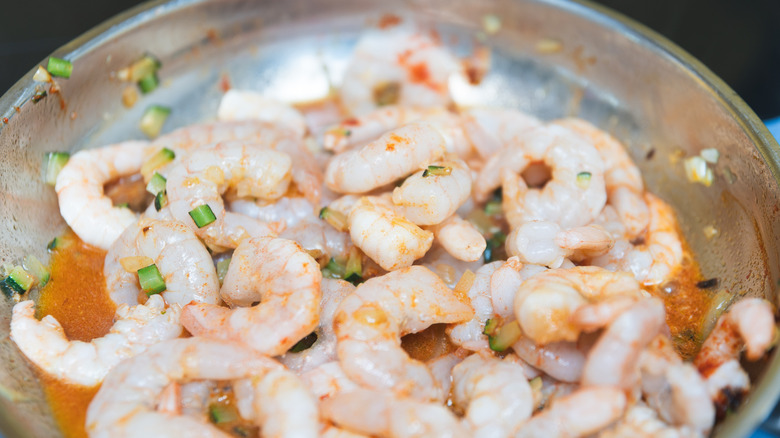
Although it's quick and easy to thaw frozen shrimp and then marinate it, sometimes there are those nights when you just don't have the time or energy to take that extra step. While there are a lot of mistakes you can make when cooking shrimp, don't beat yourself up over cooking from frozen, because it's still pretty easy to make tasty shrimp on the fly either on the stove or in the broiler. There's plenty of opportunity to build flavor during the cooking process even if the shrimp aren't preseasoned. The key to cooking delicious, well-seasoned shrimp from frozen is to give them a little time in the heat for the frozen glaze to cook away before adding any flavorings or marinade.
Robert DiGregorio said, "If you're cooking straight from frozen, you can always add flavor as you go by tossing them in a pan with olive oil, garlic, herbs, or a squeeze of citrus near the end of cooking for that same punch of flavor." Depending on what you're cooking, you might not need to marinade your frozen shrimp in the first place. "If I'm making something quick like a stir-fry or tacos, I usually skip the marinade altogether," he said. "Instead, I season the shrimp right in the pan with garlic, spices, and maybe a splash of white wine or a squeeze of lemon at the end. Because shrimp are small and cook fast, you can build just as much flavor this way as you would with a marinade."