

This Stunning Reclaimed Wood Project Makes Your Range Hood Look Custom
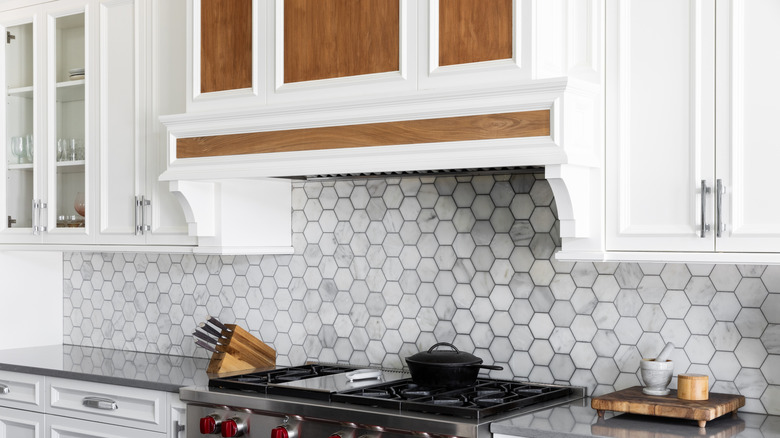
Though range hoods aren't strictly necessary in a functional kitchen, they certainly help you maintain a cleaner, safer space. Equipped with a series of fans and ducts underneath the familiar slanted metal awning, range hoods help remove hot, moist air from your kitchen to keep you more comfortable. It also prevents the oils and odors within that moist air from clinging to other surfaces in your kitchen, ensuring your cabinets remain grime-free for longer after a cleaning, as scrubbing your cabinets too often can damage the finish.
Less moisture and grime in your kitchen also lowers the chances of attracting pests or developing issues with mold. While you'll still have to degrease your kitchen's surfaces with Dawn dish soap every once in a while, you'll definitely see less buildup and have fewer cleanliness issues if you opt for having a hood. Of course, this creates a new problem, as most range hoods are big, clunky, metallic affairs that really only gel with sleek, modern decor styles.
That's where a bit of creativity comes into play. Many reclaimed wood suppliers have an abundance of antique wooden furniture and planks that can't be used for furniture because they're too warped. However, these pieces can quickly and easily become a cover for that unsightly metal range hood, transforming it into a dreamy, cottagecore focal point. Vintage headboards, china hutches, or any other pieces with embossed and carved details create a particularly stunning finished product. Even stained wood planks produce absolutely gorgeous results.
Finding and finishing reclaimed wood for your range hood
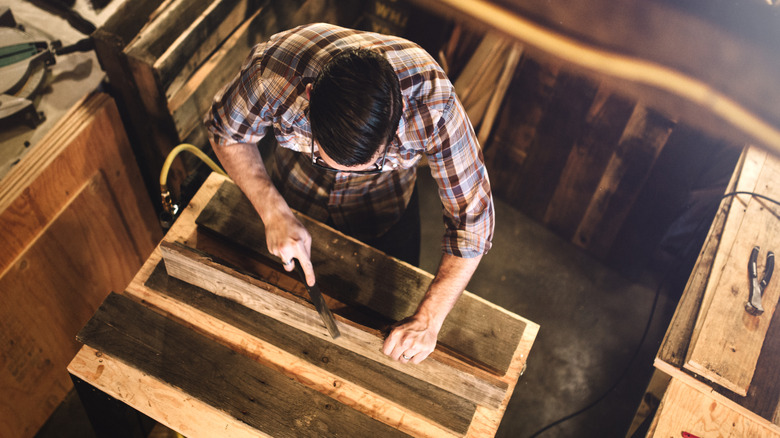
Of course, the first task is finding reclaimed wood that will work for your range hood. You'll want to look for pieces made from sturdy, harder varieties of wood, as they'll be more moisture-resistant and last longer. Maple and oak work well, as do other woods with a similar grain and hardness. You'll also want to make sure the pieces you get aren't too warped, don't have a ton of cracks or fractures, and are free of mold, mildew, or pests. Anything with obvious, unexplained discoloration or lots of bore holes probably isn't the best choice.
The second thing to keep in mind is protecting your range hood from the inevitable moisture that will rise from your stove. The best way to do this is to adhere to building codes and make sure your range hood is installed at the recommended distance above your stovetop to prevent excess condensation from collecting on it. You'll also want to apply several coats of clear varnish or polyurethane to seal it against moisture damage since it will be exposed to some vapor and sealant will help it remain beautiful and intact for longer.
Despite the use of reclaimed wood, this is a larger project that can eat up much of your kitchen decorating budget. Fortunately, there are plenty of beautiful and inexpensive DIYs, from creating a beautiful kitchen accent wall with a vintage sheet to using pretty, thrifted kitchenware as decor.