

Pastry Chefs Use This Secret Trick To Give Chocolate That Glossy Shine We All Love
We may receive a commission on purchases made from links.
If you've ever peered into the window of a specialty chocolate shop, you've likely been mesmerized by the perfectly shiny finish on some of the pieces. There is an entire world of chocolate confectionery techniques that will leave most of us mere mortal chocolate lovers wide-eyed, and one of those methods is using acetate sheets to create that exceptionally glossy mirror effect on the surface of professionally made chocolates.
For those who don't know, acetate sheets, such as YQL's cake collars, are ultra-thin, flexible pieces of food-grade plastic that bakers use to wrap ultra-fancy cakes and give baked goods a beautiful shine. To learn more about this important industry tool, Chowhound spoke with Nicole Patel, the founder of Delysia Chocolatier and 2025's Best Chocolatier in the Americas with the highest honor, Six Star Award: Grand Master Chocolatier.
Patel exclusively shared that you can achieve similarly glossy results with different devices, like parchment paper, which will achieve a matte finish; silicone mats, which will provide a satin finish; and polyethylene film, which provides a shiny finish. Still, acetate is usually the better option. "Acetate provides a very glossy, mirror-like shine to the chocolates. At Delysia Chocolatier, it is our preferred choice as it provides a highly polished, professional look," she said.
How home chefs can avoid issues while working with acetate
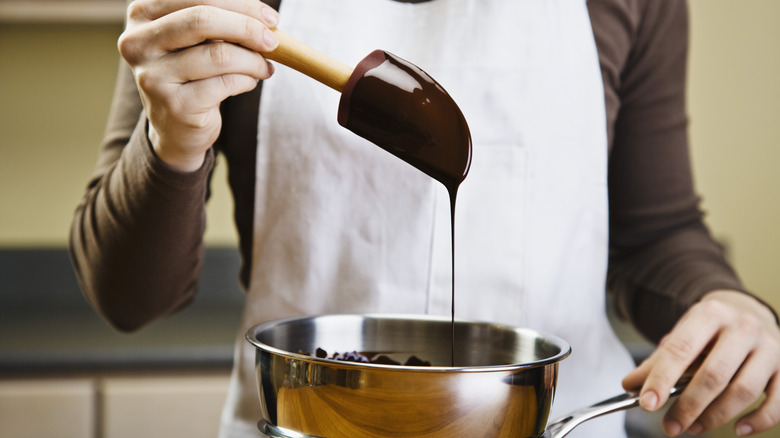
According to Nicole Patel, acetate helps perfect the aesthetics of chocolate, but it's not a cure-all solution. "Acetate only amplifies the chocolate finish you already have. So, if the cocoa butter doesn't have stable sugar crystals (the goal of tempering), streaks, bloom, and dullness will appear. The acetate won't fix that." To get the best results, Patel reiterated the importance of working with quality chocolate and following the best tempering advice, especially if you're new to baking with chocolate.
There's so much chefs need to know about baking with chocolate and using acetate, but Patel indicated that the most common issues home chocolatiers face when working with this tool are marred finishes, bubbles, streaks, dullness, and breakage. Luckily, most of these problems can be avoided with a little patience and care.
For example, only handling acetate sheets by their edges will avoid fingerprints being left on the final product, while streaks resulting from untempered chocolate can simply be a sign of rushing the process. Bubbles, too, form when chocolate is poured too quickly, but can be remedied by a gentle tap, which will reduce the trapped air. Likewise, if the chocolate is sticking to the acetate, it is a sign that the liquid was not fully cooled before attempting to peel the acetate away. It takes time to make chocolate come out smooth and rich, but the stunning results are worth the time investment.