

The Trick To Deveining Shrimp Like A Pro
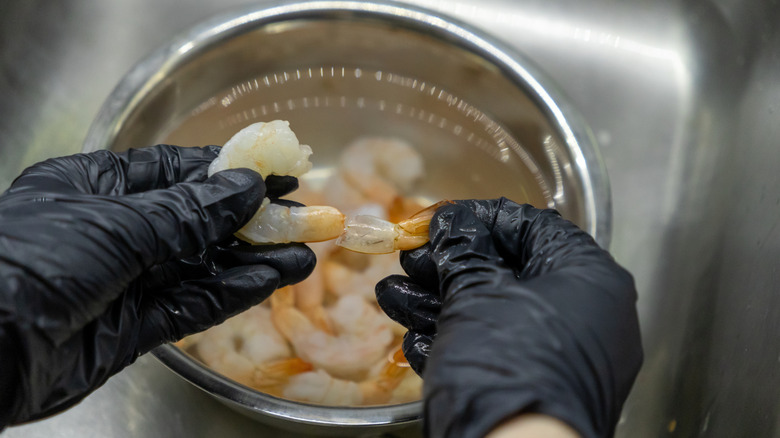
Whether you're preparing a creamy tomato-and-basil shrimp pasta, a rich, flavorful, Spanish-style paella, or even a spicy lemon garlic butter sauce for great grilled shrimp, nothing quite beats the delicate sweetness and savory depth that shrimp brings to each bite. But, if you're cooking shrimp at home, there's one thing you shouldn't overlook: The dark vein that runs along the shrimp's back.
If you're wondering what that is, it's actually the shellfish's digestive tract. While it isn't harmful, it's probably nothing you want on your plate because it's bitter, tastes sandy, and doesn't look appetizing at all. This is where a process called deveining steps in. Chef Justin Mosel, director of culinary at Rubio's Coastal Grill, a restaurant chain specializing in Mexican food, revealed in an exclusive conversation with Chowhound that there's a clever trick that can help any home cook master the shrimp deveining process with ease.
"As for the vein, here is the hack: Holding the shrimp so you are looking at the side or profile, using a wooden skewer, stab through the top of the shrimp under the vein, then pull up slowly and the vein comes out in one piece," Mosel explained, adding that the next step involves rinsing the shrimp and allowing it to strain. He elaborated that while plenty of tools can simplify this process for home cooks, "all one really needs is a paring knife and a disposable wooden skewer."
How to peel shrimp (and why you may not want to)
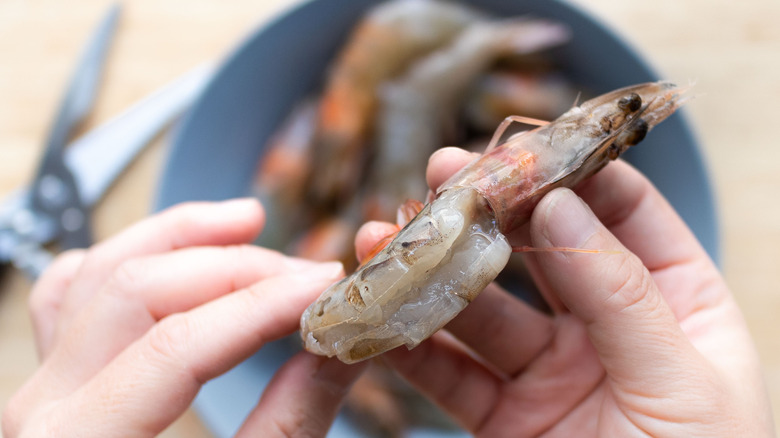
Since the secret to delicious air fryer shrimp starts before you even cook them, chef Justin Mosel suggested that it's smarter to buy shrimp that's already peeled and deveined, especially if you're looking to cut down on prep time. However, deveined shrimp usually cost more due to the extra labor and skill involved in the cleaning process. "I highly recommend purchasing shrimp that has been both peeled and deveined; otherwise you are in for a cumbersome task," Justin Mosel emphasized. "However, if you insist, using a paring knife, make a short incision on the back side of the shrimp and run the blade down from the head to tail." Once the shell is open, all you need to do is peel it back.
Keep in mind that discarding the shells might just be one of the shrimp cooking mistakes you should avoid. Believe it or not, shells can be surprisingly tasty if prepared right. According to Mosel, shrimp shells can add some great flavor and texture to certain dishes. "Leave the shell on after removing the vein when making chili crisp peel-and-eat shrimp or Southern-style peel-and-eat shrimp," he suggested. On the other hand, if you're looking to experiment a bit, fry the shells until they're beautifully crisp and top them off with a couple of seasonings, such as cilantro, garlic, chopped rosemary, or a pinch of chili flakes.