

For Steaks Cooked To Perfection Every Time, Try The 3-3-2-2 Rule
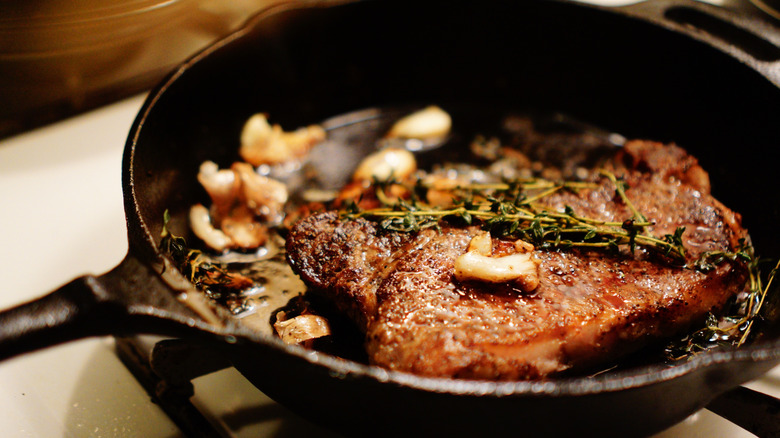
You can aim for a specific recipe, a certain flake salt, and the perfect herb complement (along with a butter bath), but don't let anyone tell you otherwise: the most crucial science behind searing or grilling a perfect steak is the Maillard reaction. Simply put, that means "browning" or, technically, the blending of the sugars and amino acids in the meat under high heat. That crust gained from even cooking in a good, heavy pan is where all the flavor comes from. Luckily, there's no reason to be intimidated by pan-searing a steak well; and accomplishing it is easier than you think, thanks to critically acclaimed Chicago chef Rob Levitt, who wrote an article for The Takeout to give a lesson on the 3-3-2-2 method.
Basically, the 3-3-2-2 method is a way to easily internalize the cooking times of a steak to achieve that sought-after medium-rare temperature of 135 degrees Fahrenheit and the delicious flavor that comes from a perfect crust. Levitt explained the 10-minute cooking method as follows: Heat a pan over medium heat, and add a dribble of cooking oil. Lay the steak in the heated skillet, and let it cook undisturbed for three minutes. Flip the steak to the other side, and sear for an additional three minutes. Then, flip it back to the original side, letting it cook for two minutes, and finally, flip it one more time to let it cook that last two minutes. He then says you should pull the steak and let it rest for five minutes, but the method is decidedly not called "3-3-2-2-5." Yes, it really is that easy to cook a perfect steak. Just make sure you salt it beforehand.
Not all steaks sear the same
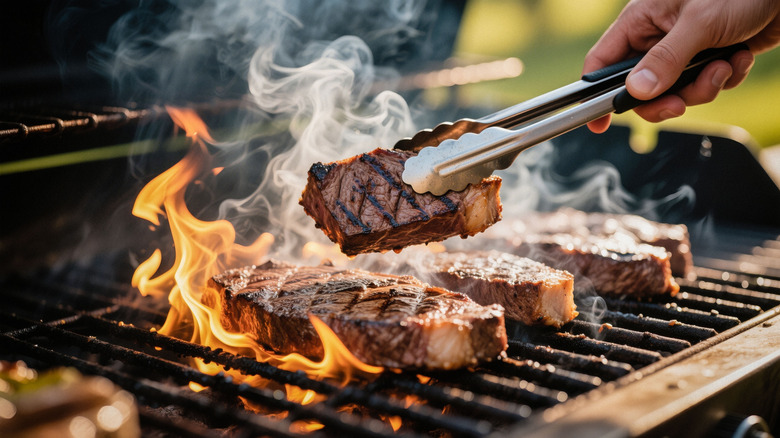
Searing meat to induce the Maillard reaction isn't exclusive to steak. You should be doing this on most of your proteins, if not all. Keep in mind that those huge steaks won't necessarily be the easiest thing to sear, even if you follow the 3-3-2-2 method. Cooking super-thick cuts could cause them to warm unevenly, resulting in dryness on the outside with an undercooked interior and completely ruining your steak. Stick a thermometer in there to ensure it's at the proper temperature, of course, but you should also consider cutting large steaks in half so you can pan-sear them more easily and achieve an even, juicier cook. Or, you could try the reverse sear method, which means you'll cook the meat on low heat in an oven, then finish it off with a pan-sear at the end.
Your choice of steak cut can also significantly impact your cooking. A lean cut has less fat, so it will need a low and slow cook to break down the connective tissue into a tender bite. For cuts with thick fat caps, you'll want to make sure to render those down in the pan or on grill grates with high heat. Remember, this will then impact the overall heating of the piece of meat and its internal temperature. The tenderest steak cuts like ribeye, which have a high fat content, are a little more forgiving, depending on their thickness. However, they can become tough if you overcook them.
Static Media owns and operates Chowhound and The Takeout.