

Don't Toss Those Sad-Looking Grapes! Turn Them Into Raisins Instead. Here's How
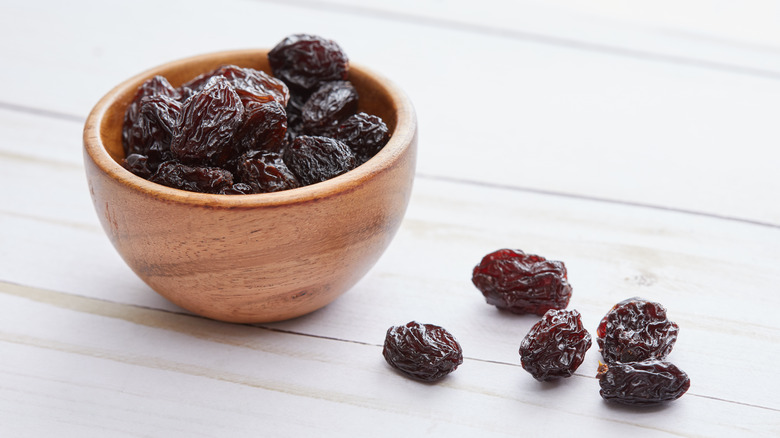
It's fall season, and you know what that means — an endless supply of fresh grapes to snack on. Honestly, though, how can anyone say no to grapes? Whether white or red, they're sweet and juicy and carry just the right amount of tartness to make you want to reach for another handful each time. But let's imagine you headed to the supermarket and saw over a dozen varieties on display. Surely you must have wondered if it's ever actually okay to sample grapes at the grocery store, but regardless, that didn't stop you. And now you're left with a pile of grapes at home that you have no idea what to do with.
Freezing them is almost always a good option because with the right storage and temperature, they can last up to a year. However, things completely change the moment they start spoiling. There's no reason to despair, though, because it only takes a little bit of effort to prolong their shelf life and turn them into incredibly sweet, caramelized homemade raisins. While it might sound complicated, the process of turning grapes into raisins is, in fact, quite simple — all you need is a functional oven, a baking tray, and some parchment paper to spread them on.
Make sure to preheat the oven to 225 degrees Fahrenheit. Maintaining a low oven temperature is important to prevent the grapes from burning. Meanwhile, always remember to remove the fruit from their stems and throw away any grapes that are damaged or overripe.
The science behind slow-drying grapes in low heat
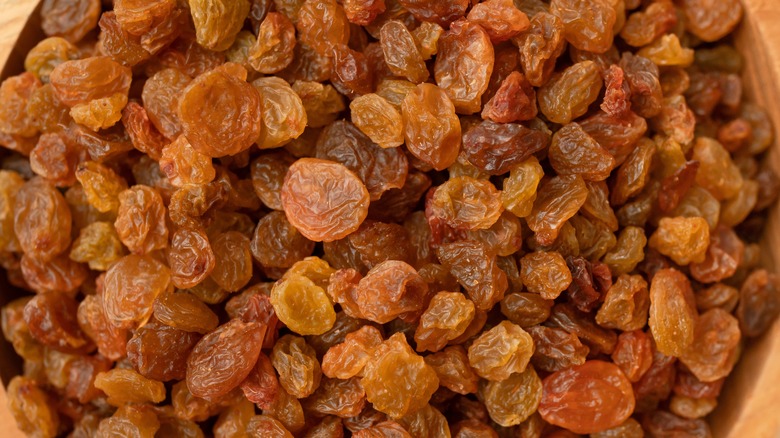
If you've ever thought about microwaving grapes, please don't. Not only will you fail in your attempt to get raisins, but you'll also start a mini explosion, creating a fire hazard, and we're pretty sure that's something you'd rather avoid. There's actually a scientific reason why slow-drying them in the oven (or out in the sun) makes a lot more sense — and it involves a process called dehydration. However, before placing the fruit on the tray and putting them in the oven, make sure to use baking soda, the one pantry staple that will thoroughly clean grapes.
Once the grapes are in the oven, the steady heat will slowly draw out the excess water through physical changes known as osmosis and evaporation. This will ultimately change both their texture and flavor, and you'll soon notice them begin to shrink and wrinkle while concentrating their natural sugars, flavor compounds and nutrients as a result of water loss.
Keep in mind, though, that making raisins takes plenty of time and patience. It can take up to two days before they're ready. If you do commit to making your own raisins, however, it's important to check on them every once in a while and give them a slight toss so that they don't stick to the tray. Once the time is up and your raisins are ready, you can either enjoy them as a quick snack on their own, prepare a delicious batch of oatmeal raisin cookies, or add a handful into your morning cereal bowl for an extra boost of flavor.