

Ever Wonder Why Walmart's Ice Cream Sandwiches Don't Melt? Here's The Deal
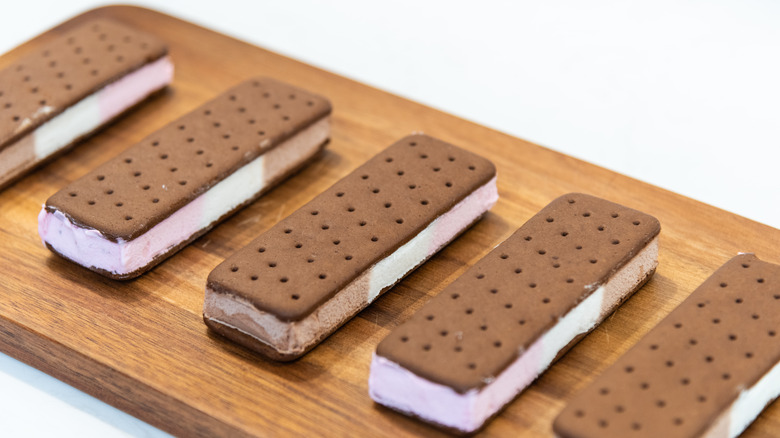
Walmart's Great Value ice cream sandwiches have a way of popping up in videos that claim they "don't melt," which makes the brand sound mysterious at best, and suspicious at worst. The truth is much less dramatic and quite normal for commercial ice cream. The filling is formulated to melt slowly and neatly, not to defy heat. Stabilizers and emulsifiers, often small amounts of gums such as guar or cellulose gum, give the mixture structure as it warms; they thicken the watery part of the ice cream and keep ice crystals small. So instead of quickly turning into pudding, it softens into a foamy mass that looks like it is "not melting," even though it is.
Formula choices also play a role here. Melting behavior changes with fat level, air (overrun, meaning how much air is whipped in), and solids. A budget sandwich can keep its shape longer by leaning on stabilizers and higher solids, while a premium, higher-fat scoop may pool faster but taste richer. None of this is a red flag, though; it is simply how manufacturers make ice cream that won't melt during a warm car ride. Now that we've addressed the claim and the brand at the center of it, let's break down the science plainly and compare this style of ice cream to the premium ice cream brands you might buy by the pint.
How ice cream sandwiches compare to premium offerings
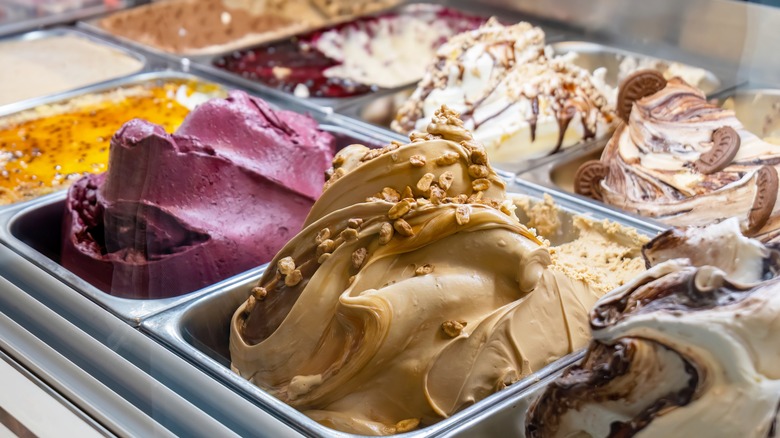
It's important to note that technically, ice cream is a frozen foam. It is a tight weave of ice crystals, fat globules, tiny air bubbles, sugar, and water. Stabilizers add a touch of thickness to the watery parts so crystals stay small and the foam does not crash when it warms. Emulsifiers help fat globules connect into a network that braces those air bubbles. Together, they make the melt slower and tidier. That is why an ice cream sandwich filling can sit in the sun and slowly deflate instead of instantly turning into a milky mess.
As for where fat fits in the equation, more milk fat generally means a sturdier fat network and a slower meltdown, which has been shown in dairy science research. But brands can still trade levers. For example, a product with less fat can still hold shape if it leans on stabilizers. That is why budget sandwiches and "frozen dairy dessert" cones often seem to "resist" melting, while some premium ice creams may quickly turn puddly. Different recipes, different melt signatures, but the same basic science.
If you prefer fewer additives, look for short ingredient lists or make your own homemade ice cream. Simpler formulas often soften faster in warm air, though custard-style versions with egg yolks may hold a bit better. These versions are delicious, but they will melt faster once they hit warm air, which is exactly what you would expect without stabilizers doing the heavy lifting.