

How Martha Stewart Turns The Humble Cabbage Into A Flavorful Fall Side
Cabbage is perhaps seen as something of a workhorse vegetable: Useful and sturdy, yes, but not particularly glamorous. However, Martha Stewart shows that with a few well-chosen ingredients (nothing too difficult to wrangle), cabbage can shine in a way that feels comforting and deeply flavored. Case in point: Her braised red cabbage with caramelized apples, an embodiment of fall on the plate.
Stewart showcased the dish on an episode of her PBS show "Martha Stewart's Cooking School," browing wedges of apple and onion in butter and sugar, drawing out their natural sweetness. (Perhaps one reason this dish is so tasty is the fact that it uses a substantial portion of butter and sugar.) When cooked down with red cabbage (cut into eighths) and apple cider vinegar until nearly fork tender, the end result is a sweet but tart side dish that Stewart recommends serving with white meats like roasted chicken or fish, as well as pork (although it's debatable whether pork is actually a white meat).
There are a couple more techniques and ingredient pointers to make sure this dish really shines. Stewart goes for Granny Smith apples, as they have a tartness that will contrast better with the cabbage — just make sure they're peeled and cored. When cooking, be sure to wait until the apples start to brown a bit: This means you've entered the caramelization stage, and you'll be getting all the sweet, toasty flavor benefits that come with it.
More of Stewart's cabbage pointers
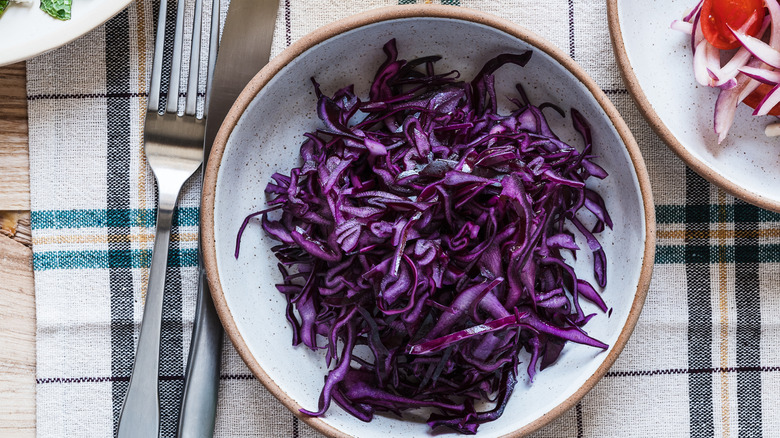
Martha Stewart has a few guiding principles when working with cabbage. Firstly, you should always include acid (this could be vinegar or another bright element — think about the way you'd also use vinegar in coleslaw), as this sharpens its flavor. In the case of red cabbage, it also helps the veggie retain its color (without vinegar, it can turn an unappetizing gray shade).
When preparing cabbage, Stewart suggests rinsing it and removing the tough outer leaves. It can be tough to cut, so make sure your chopping board is secure (a damp towel placed underneath can help) and steady the cruciferous vegetable with one hand when cutting. For the wedges in this dish, she suggests removing some but not all of the tough core of the cabbage, so that they still hold together.
It shouldn't come as much surprise that the braised red cabbage here is hardly the only suggestion Stewart has for this veggie. If you're not feeling the marginally more hands-on approach of braising (or it's just too soggy for your tastes), Stewart has also praised roast cabbage, which she brushes with oil and seasons with salt, pepper, and either fennel or caraway seeds for a herby hit. She cooks them for around 40 minutes until they're mostly soft with some crispiness around the edges. Just bear in mind that there are many varieties of cabbage out there, and some work better than others depending on the dish in question.