

The Most Important Tip For Making Sausage With Unforgettable Flavor
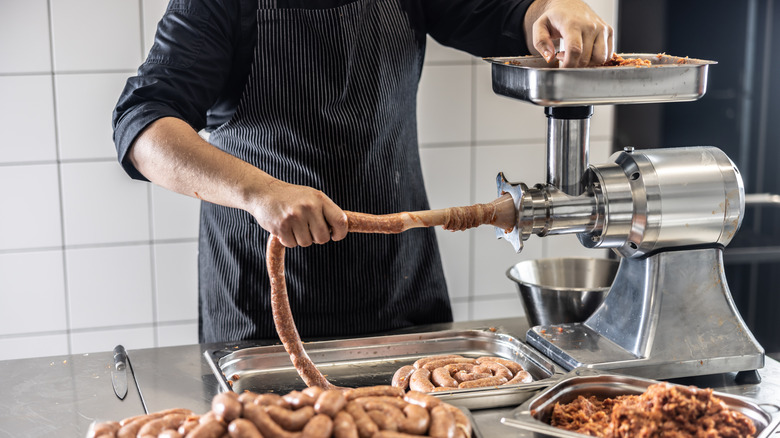
The humble sausage is a true kitchen titan and spans every echelon of the culinary world. From a crafty way to make the most of less-desirable (or less commercial) parts of an animal to cut down on waste, to the rarified air of some of the best restaurants in the world, the simple act of stuffing ground meat in a casing has been the beginning of some of our most-beloved dishes. But, whatever sausage dish you're making, be it the iconic British bangers and mash (a favorite of rock legend Dave Grohl) or a refined boudin blanc, the quality of your ingredients is paramount.
To find out more, Chowhound spoke to Nathan Abeyta, founder of Deep Cuts Dallas Custom Butcher Shop. For him, the most important aspect of making sausages is the meat itself. "For us here at the shop, the No. 1 factor is definitely the quality of the pork that we use that goes into the sausage," he told us exclusively. "We exclusively use heritage-breed, pasture-raised pork for all of our case cuts and sausages." Pasture-raised pigs are raised in open environments and fed diverse, natural diets that lead to a richer, more layered, and mature flavor. Using this high-quality pork provides a depth of flavor that the seasonings you add enhance, not cover up. They also tend to have a better balance of textures, with a good mixture of meat and fat. This results in a juicier, more consistent final product.
The reason most home sausage doesn't hit the mark

There's an idea that sausages can be made with just about anything, and that it's a good idea to use them as a way to repurpose cheaper, low-quality cuts of meat. There's some truth in that, admittedly: Sausage is a great vehicle for those less-desirable cuts, as well as trimmings that you wouldn't otherwise eat on their own. It's a useful way for restaurants and home chefs alike to cut down on their waste. But, for the very best flavor, it's worth paying a little more for some premium ingredients — even if it's higher-quality versions of those same off-cuts. But why does paying a little more make so much of a difference?
"It has to do with the quality of care put into the raising of the animal and the quality of food it consumes," Nathan Abeyta told us. "Commodity pork is raised in small, cramped, and inhumane environments while being fed a poor corn-and-soy-based diet along with fillers." They say you are what you eat, and the same goes for animals; if a pig is fed bland food, it impacts how flavorful its meat is. "This diet will lead to rapid growth of the animals but will not impart the deep, mature flavors of an animal that is well-fed on pasture," Abeyta explained. Ultimately, the flavor of premium pork speaks for itself. Once you try heritage-breed sausage, you immediately understand the difference.
How to upgrade your sausages at home
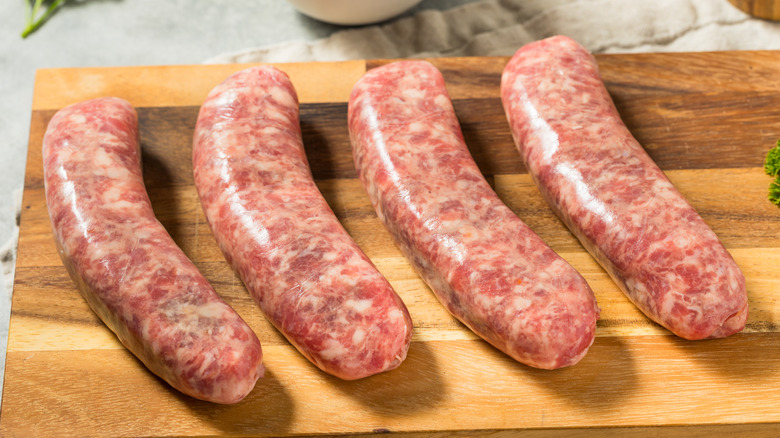
If you're after a way to make the absolute best sausages at home but aren't sure where to start, doing a bit of research before heading to the grocery store is a good bet. Knowing what you're looking for can help you make sure that what you're buying is a quality product. This was echoed by Nathan Abeyta when we asked him the same question: "This step just takes proper research ahead of time to make sure that your grocer [or] butcher is bringing you high-quality, humanely raised options for purchase." Talk to your butcher if you want to find out more. They're specialists; if you ask, chances are they're more than willing to tell you about the provenance of the meat you're buying and help you choose the right option for your needs.
Many butchers offer premade sausage meat (great for the time-pressed home cook) or ground heritage pork, ensuring you can get exactly what you need to make the best possible homemade sausages (even if you don't have your own meat grinder). You can also ask them for casings if you fancy trying your hand at stuffing your own sausages. Mix in your own spices and seasonings, such as paprika, cumin, or even fennel for an Italian twist, with that premade sausage meat and you've got an easy way to make sausages that feel truly homemade — with a little less mess to clean up!