

The Iconic Iced Tea Brand That's Kept The Same Price Since 1992

Fun fact: Since 1992, one of the best canned iced tea brands, Arizona, has proudly stamped the 99-cent price on its iconic tall boy cans. But here's the catch — retailers can charge however much they want. That's why, at some locations, you'll pay as much as $1.59 for a refreshing Arnold Palmer.
While outside forces have occasionally threatened to change the brand's longtime suggested 99-cent price, the New Jersey-based company's CEO, Don Vultaggi, is doing everything he can to eat (or in this case, drink) the extra costs to keep the drinks priced low. Even if, according to the New York Times, with inflation, the cost of a can of Arizona Iced Tea should be upwards of $1.99.
On the Today Show, Vultaggio stressed to host Savannah Sellers that he doesn't want to raise the price of his tea. "We're trying to hold the line. Right now, no. We have no plan to [raise prices,]" he said. The value of a dollar isn't lost on this CEO. He said he understands that rising prices can make a big difference. But if customers occasionally have to tighten their belts, why shouldn't he? "I grew up in Brooklyn, and I worked for $1 an hour. I respect the value of $1. And I'd say, if I can help people who do that and give them a refreshing beverage for an affordable price, why not? And since I can afford to do it, why not continue to do it?" he said.
How tariffs are impacting Arizona Iced Tea
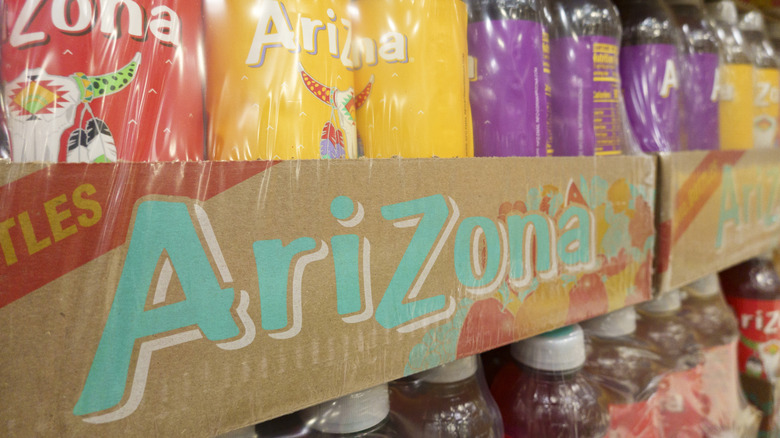
We know Arizona Iced Tea, which isn't actually from Arizona, doesn't want to raise prices, but we also know tariffs are going to hit Arizona hard. The aluminum and steel tariffs the White House recently announced doubled from 25% to 50% in June, and 20% of Arizona's aluminum comes from the United States' northern neighbor, Canada. Most of the aluminum used in America is recycled, but Don Vultaggio explained to the Today Show that cans are still costing about 40% more per year. He's absorbing that cost and has a plan to keep the debt-free company succeeding under a newfound margin. "The way I can get some of that back is by increasing volume, increasing the top line, the sales of the company, and we've been doing that successfully. That's a good way to offset costs," he said.
Of course, if the tariffs continue and the volume Arizona sells doesn't offset the new manufacturing cost, the dreaded price increase may actually occur. Vultaggio lamented as much to the New York Times. "At some point, the consumer is going to have to pay the price. I hate even the thought of it. It would be a hell of a shame after 30-plus years," he said. The world has changed a lot over the last three decades, but Arizona's price hasn't. Hopefully, we can keep that cost constant as the tariffs continue.