

How To Repurpose Your Overcooked Salmon
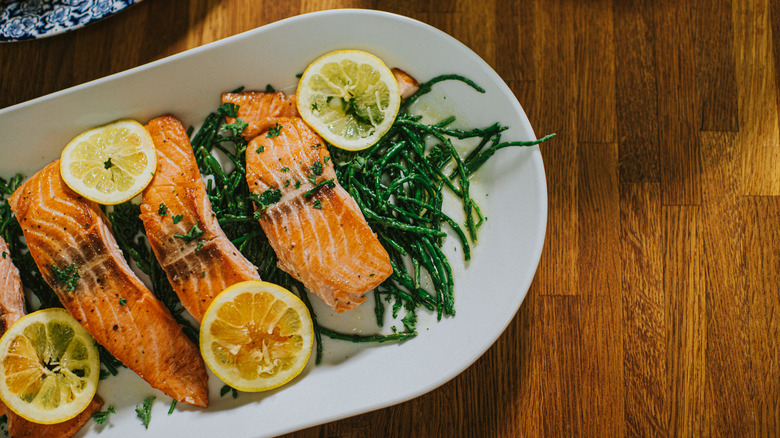
Cooking salmon to perfection can be a little tricky. Finding the sweet spot, where it's still raw and bright pink, but not so cooked that it becomes tough, can take some practice. Thankfully, all hope isn't lost if you accidentally overcook your salmon. Lei Jiang, chef de cuisine at The Fulton by Jean-Georges, a seafood-focused waterfront restaurant in New York City's South Street Seaport, spoke exclusively with Chowhound about how you can repurpose overcooked salmon into something delicious.
It turns out that you have a few different options if you find yourself with some overcooked salmon on your hands. Jiang recommends creating a simple salmon rillette to add moisture, vary textures, and create a dish that will leave no one the wiser that your salmon cooked for just a bit too long. "Gently flake the salmon and mix it with crème fraîche, chives, dill, a little lemon juice, and some black pepper. Spread it on lightly grilled sourdough bread for an easy and flavorful treat," he recommends. You can also add a bit of homemade aioli to flaked salmon to create a lemony spread that will help you make the most out of overcooked fish.
More tips to avoid overcooked salmon
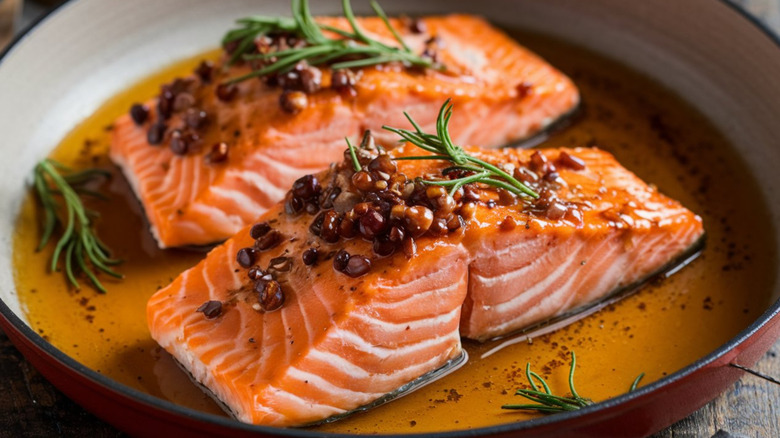
Of course, it's best if you can avoid overcooking your salmon in the first place (taking a look at a complete guide to cooking salmon can be a good place to start if you're new to the world of cooking seafood at home). Chef Lei Jiang recommends thinking of salmon like you would a steak — creating a delicious salmon dish isn't as simple as throwing it in the oven and forgetting about it until the timer goes off. "Carryover cooking and resting are key," he says. "Many people don't check the temperature of salmon, but I find it's best served medium-rare, so the center stays tender." If you're using a meat thermometer, you'll want to aim for an internal temperature of 120 degrees Fahrenheit for a perfectly-cooked medium-rare salmon. Be sure to check the temperature early — overcooking is one of the most common salmon mistakes.
Just like when you're cooking steak, it's key to remember that salmon will continue cooking after you remove it from the oven, pan, or grill. "When I cook salmon, I often take it off the heat slightly underdone, just a short rest on the plate can bring it to perfect doneness, depending on how hot your pan or grill is. Remember, fish isn't as forgiving as beef or chicken, so a little attention goes a long way," Jiang says. If you're serving salmon to guests, be sure to ask them about their preferred doneness level, just as you would when serving burgers or steaks.