

Before You Make A Skillet Brownie In Your Cast Iron, Make Sure You've Done This
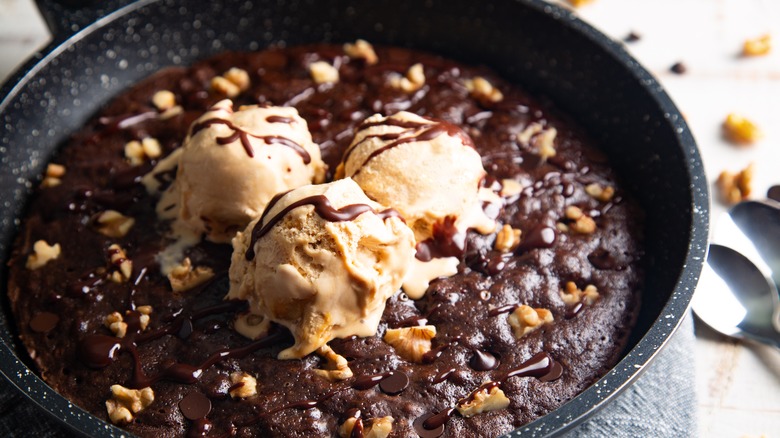
A cast iron skillet is the ultimate kitchen workhorse. You can sauté, fry, bake, or braise just about anything in this heavy metal pan — and we're not just talking about savory foods. Still, if your cast iron skillet is your one-stop shop for dinner and dessert, you'll want to make sure you properly clean it between uses. This helps prevent the flavors of a savory dish from transferring into a sweet one.
For example, let's say you just made a delicious batch of fried chicken in your cast iron skillet. This tried-and-true recipe involves boiling seasoned and floured chicken pieces in oil, shortening, or lard. Once you're done cooking and dispose of any excess oil, you realize you want to make a skillet brownie next. You'll need to properly rinse and scrub your cast iron — all without the use of soap — to remove that salty, delicious build-up first. This way, your brownies will taste like chocolate instead of chicken.
How to clean your cast iron skillet
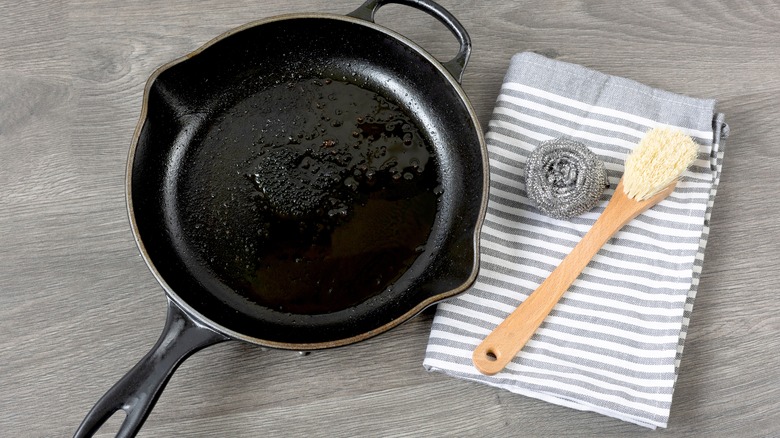
To properly clean your cast iron, follow a few simple steps. First, once the chicken is out and the grease has cooled enough to handle, scrape out stuck-on bits and properly dispose of the grease. (Most folks recommend pouring excess grease into an empty metal can and tossing it out with the trash.) Once your skillet is empty, run some hot water, grab a scrubbing brush, and get to work. For stubborn spots, make a paste out of kosher salt and water for some extra scrubbing power. Once you're done cleaning, dry the cast iron thoroughly and place it on the stovetop over low heat. Rub in a neutral oil like canola or safflower to reestablish the seasoning. That's all there is to it.
Once the pan is cleaned and seasoned, you're safe to use your cast iron to make a skillet brownie, cookie, crumble, or cobbler without fear of any savory flavors transferring over. Just be sure to repeat the same process after making your dessert so your next braise isn't inadvertently sweet.