

You Can Pan-Fry Your Steak Using A Layer Of Salt Instead Of Oil — But Should You?
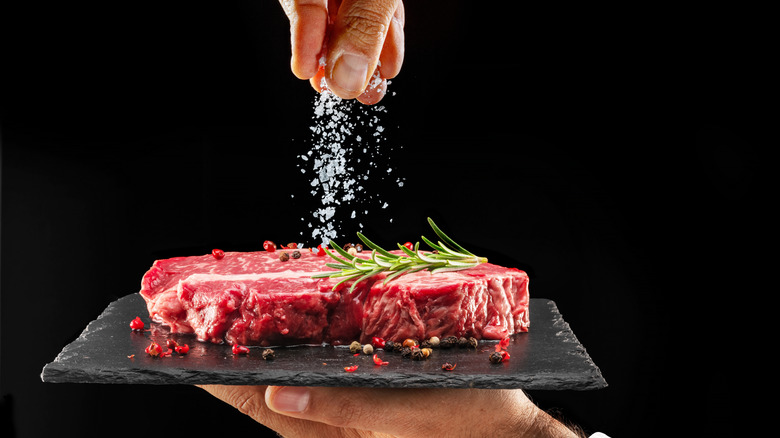
If you're looking for that perfectly caramelized crust when you don't have access to a grill, you should be pan-searing your steak. The steak sears on the outside, creating a nicely caramelized exterior while maintaining that red interior, though you can cook it to your desired temperature. But you might have heard of salt-frying, which occurs when the steak is cooked over a bed of coarse salt in a hot pan rather than directly on the pan's surface.
Sure, it's an option, but according to Pat LaFrieda of Pat LaFrieda Meat Purveyors (which will be serving food at the 2025 US Open), it's not the best option. "Pan-frying directly on a bed of salt is more myth than good technique," LaFrieda exclusively told Chowhound. He says salt actually burns at too-hot of a temperature and adds that "meat may not sear properly since salt doesn't transmit heat evenly like oil or fat."
A better way to use salt with steak

For salt to play the best role, it's worth it to dry brine the steak beforehand rather than cooking steak directly over salt. Pat LaFrieda recommends salting the steak at least 40 minutes before searing it, though you can do it as early as the day before. "This draws out moisture, then reabsorbs for deeper seasoning and better crust," he said. Salting it too close to cooking time could result in a lack of caramelization. LaFrieda also suggests tallow, oil, or clarified butter for getting the best sear and "proper Maillard browning."
If you're interested in trying the salt-fry method, you might be disappointed with the outcome. Since the steak doesn't make direct contact with the hot pan, it results in an uneven sear. Plus, the crust picks up some of the salt as it cooks, leaving a gritty exterior instead of that crispy, flat surface you're expecting. Listen to the steak while it cooks, too, since the sound it makes helps indicate when that crust has reached the perfect texture.