

The One Thing You Never Want To Do When Cooking With Zucchini
We may receive a commission on purchases made from links.
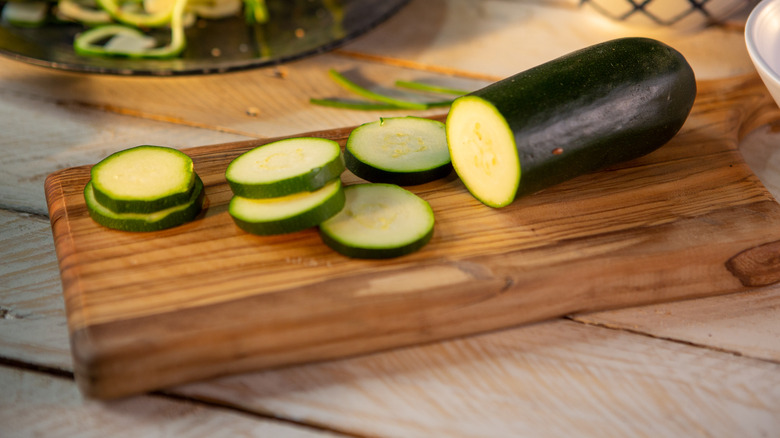
To peel or not to peel, that is the question when preparing and cooking vegetables. While some are obvious, like corn and onions, others can leave you wondering, like carrots and zucchini. When it comes to zucchini, if you want to get the full benefits, do not pass on the skin, according to Jackie Newgent (@jackienewgent on Instagram), a classically trained chef and private cooking instructor who teaches at The Gourmandise School. Chowhound spoke with the registered dietician nutritionist who says the cooked skin not only provides a lovely pop of vibrant color, but also delivers a strong nutritional profile. "The deep green color is a sign of nutritional goodness, including antioxidants," she says.
Rosie Kellett, author of "In for Dinner," agrees, saying she has never peeled a zucchini before. Zucchini skin contains a large amount of its vitamin C and B6, and since it is tender and subtly flavorful, there's really no reason to want to discard it anyways.
Newgent says the only time that you may want to peel zucchini is when you've got an oversized one with tougher and slightly bitter skin. "You may want to consider peeling it depending on recipe use, like for a velvety creamy zucchini soup," she says.
Tips for preparing zucchini
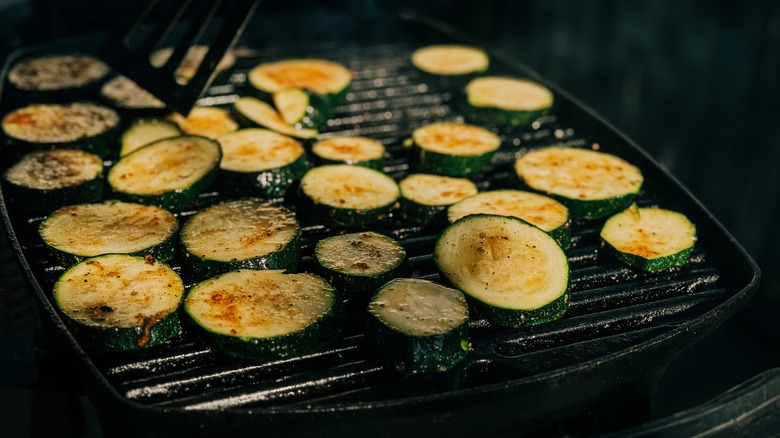
Ideal for adding to pasta dishes and pizza, zucchini is also seriously underrated as a dish all on its own, lightly sauteed with salt and oil. Jackie Newgent recommends pairing it with extra virgin olive oil, garlic, fresh herbs like basil or mint, and lemon. Other vegetables that work well with zucchini are tomatoes and mushrooms.
One of the great things about zucchini is how fast it cooks, making it an ideal vegetable to throw in a dish when you are short on time. One of Newgent's top tips for working with zucchini is not to overcook it (that is of course, unless mushiness is what you are aiming for). If you are adding zucchini to soups or stews, it's best to throw them in at the end, as they will cook up faster than everything else.
"Zucchini is best when quickly sauteed, grilled, or roasted", she says. In fact, cooking zucchini for a short time on high heat may be the golden rule for best results. She adds that it has a high water content, so for dishes where you want to avoid your zucchini getting soggy (like lasagna), it's best to salt it prior to cooking and let it sit for 10 minutes before blotting the excess moisture. This process, otherwise known as making them sweat, may be what makes the difference between a just firm enough bite and a mushy mess when it comes to cooked zucchini. Rosie Kellett agrees that salting and setting aside zucchini is best, especially when frying the vegetable.