

Trader Joe's Pasta Fans Should Know Where Its Capellini Is Really Made
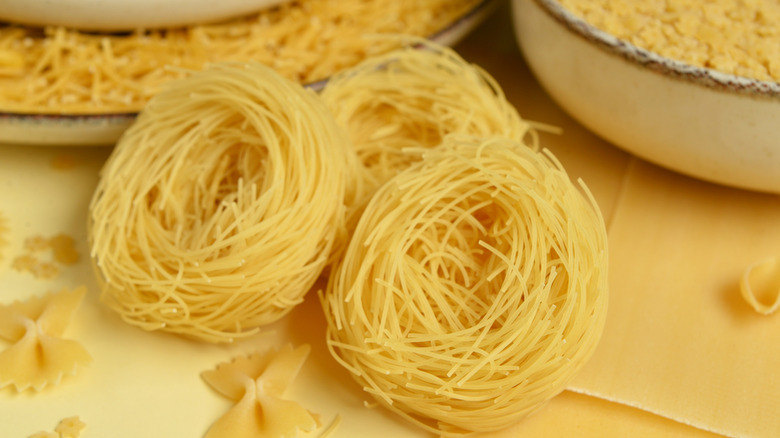
Ubiquitous and classic, spaghetti is nearly synonymous with many of our childhoods, and it certainly has earned its popularity. A reliable crowd pleaser and versatile, cheap ingredient, the thick noodle shape is great — but it's not all that's out there. No, from cinque buchi to corzetti del levante, there's a whole world of obscure pasta shapes that stretch the boundaries of creativity, each giving you a different sensory experience. Trader Joe's is a great place to try out some different pasta shapes to see what you like, but today, we're here to recommend their razor-thin angel hair capellini. Which, by the way, is actually produced in the land of pasta and pizza.
Just outside of Naples, Italy, is a family-owned company using well-known historic pasta-making techniques to make capellini from scratch, sliced into ultra-thin strands, and packaged to be imported to your local Trader Joe's. Coming in at only $0.99 a bag, this is a great way to get quality imported pasta at a decent price point, knowing that the people across the pond who crafted it truly know what they were doing.
Trader Joe's Italian partnership
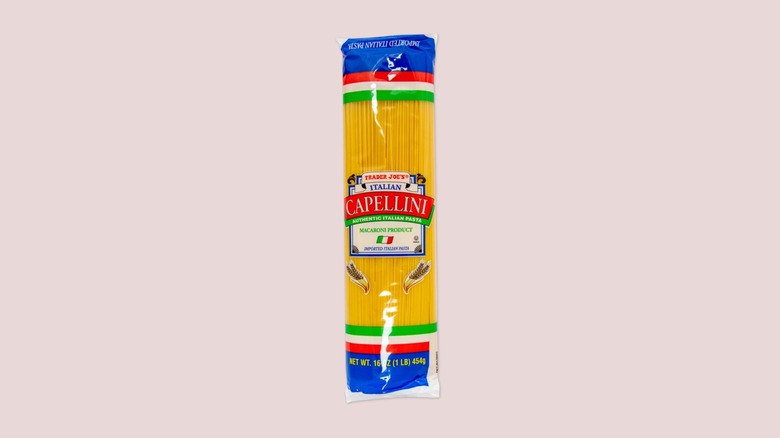
Let's talk about capellini: What is it, where does the name come from, and what region did most people find it in? To begin with, the name comes from the Italian word for "little hairs," which admittedly does not sound very appetizing — but it certainly isn't a misnomer. Although there is some debate over its origins, Naples is generally agreed upon as the birthplace of capellini. Traditional crafters of the pasta recommend pairing it with a light sauce, whether you're going for a simple dinner vibe and add butter and pepper, choose something with a bit more zest, like a light tomato sauce, or want to pair it with another famously Italian item — olive oil.
The supplier uses durum wheat, also called pasta wheat, and golden semolina, a kind of flour with more protein than the usual all-purpose. These ingredients, though simple, are essential to helping the pasta hold its shape, and the firmness also helps ensure you don't overcook your pasta too easily. The grains are then mixed with water to hold them together, and that's it for the dough. Noodles are then shaped and dried. And yes — nearly all of Trader Joe's other pastas are also imported from Italy, including their gnocchi (although gnocchi doesn't technically count as pasta), pappardelle, orzo, and more. The easiest way to find out each pasta's origin if you're curious? Each bag that is imported is clearly labeled as such to let shoppers know.