

The Pan Qualities That Can Make Or Break Your Focaccia
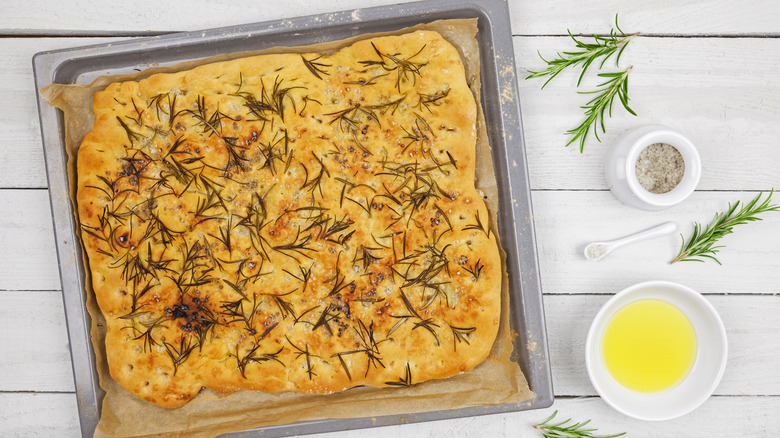
Focaccia is often an early port of call for at-home bakers. It's a simple, flavorful bread that isn't too time consuming and is a great option for a lazy Sunday afternoon or a dinner party amuse-bouche. But, as with almost everything in baking, there are pitfalls to look out for. One of them has nothing to do with the recipe, nor in how the dough is mixed or kneaded: A surprising number of focaccia first-timers fail because they simply use the wrong pan. To find out what we should be baking our focaccia in, Chowhound spoke to Amy Scherber, an expert baker and founder of Amy's Bread (@amysbread on Instagram).
"If someone is using the wrong pan for baking focaccia, the crust may be too pale, the focaccia too thin, or the edges too low," she told us. "It may not be crusty, and the crust may not have a toasty, caramelized flavor. It's usually flimsy and disappointing." To avoid this, Scherber suggests using a pan with sides at least 1 inch high for a traditional focaccia thickness, though you can go thicker. The heaviness of your pan affects the crust, too, since heavier pans conduct heat better and result in a firmer, crunchier bottom while keeping the insides lovely and chewy. If you don't have a tray that fits, consider a cast iron skillet. It's a great option for baking focaccia and chances are you already have one kicking around your kitchen.
What you should look for in a good focaccia pan
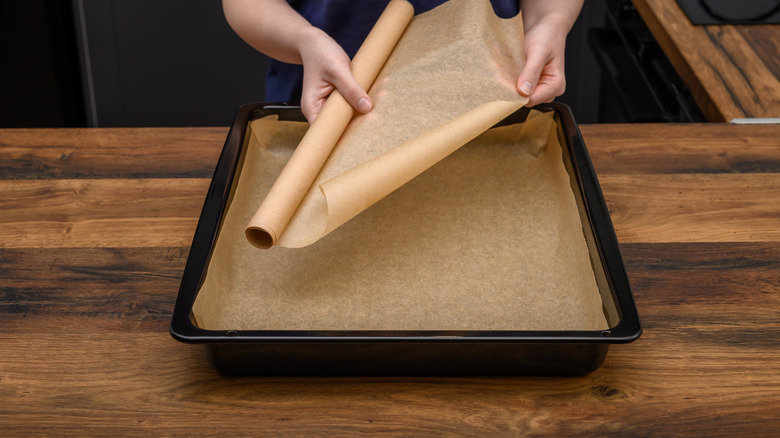
Pan thickness is important, but it's far from the only factor affecting your focaccia. If you're a beginner baker, the good news is you don't need to buy any specialist equipment for your first few loaves — you can get a decent focaccia out of a standard sheet pan. "Standard sheet pans work well and are aluminum," Amy Scherber says. "They must be lined with parchment paper." That parchment stops your bread from welding itself to the pan during cooking (and saves you a lot of washing up, too). "Thicker black pans may be aluminum or steel," she added. You can also use non-stick options for an even easier time baking.
You might not think it, but the color of your pan really does matter. Dark pans are ideal because of the caramelization they help develop. As Scherber explains: "Thickness and darkness of the pan promotes more caramelization of the crust and a fuller flavor with a firmer outside surface." That Maillard reaction is the key to great flavor. "The crust... caramelizes in the darker pan, giving it a rich, toasty flavor, especially if drizzled with olive oil before and after baking." If your pan is light in color, or reflective, consider giving your focaccia a little longer in the oven so it gets enough time to really crisp up on the outside.
How to choose and care for your focaccia pan
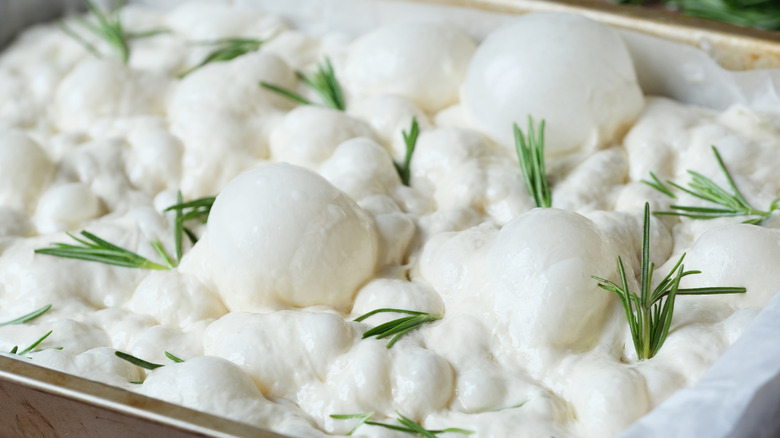
Now that you know what to look for, it's time to choose your focaccia pan. Amy Scherber recommends starting simple: If you're new to making focaccia (or any bread) at home, just use whatever pan you already own! "A standard half-sheet pan" is all you need to begin your bread baking journey. It's only when you start getting a bit more nerdy that you need to consider aspects such as the color of your pan. For the average home cook, a simple sheet pan is all you really need.
Of course, you might find it doesn't get you the perfect, evenly golden-brown result you're after. If so, think about an upgrade. "In that case, I suggest a square or rectangular pan with 1- to 1.5-inch sides," Scherber suggests. Buy one "made of heavier metal with a dark, non-stick surface." It might cost you a little more, but buying a quality piece of cookware is well worth the price of admission, both in terms of bread quality you get out of it and in future-proofing your kitchen. "Investing in that kind of pan will provide years of use," she said, "and the pan can also be used to make pizza." It doesn't just work for pizza; a good pan can do everything from roasting perfect vegetables to baking to acting as a handy prep tray.