

Gnocchi Turning Out Too Doughy? Here's What Might Be Wrong
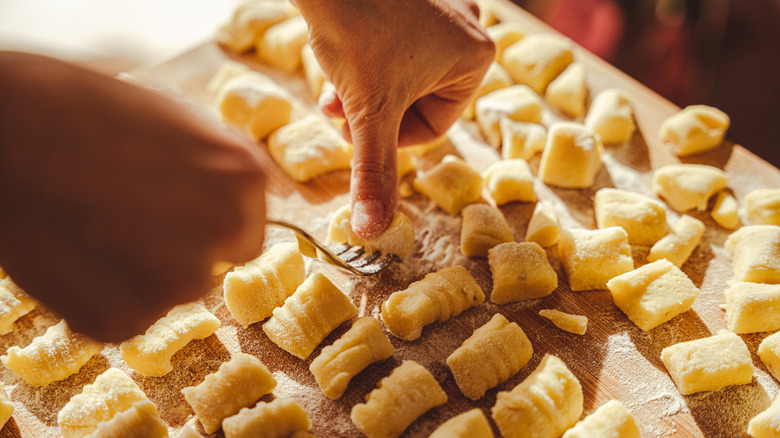
Gnocchi is a deeply underrated pasta — unique in its texture and method of preparation when compared to other popular pasta shapes such as rigatoni, fusilli, or longer shapes like tagliolini (which is great for butter-based sauces). That said, if we're being pedantic, gnocchi's not even pasta at all. It's for this reason, perhaps, that it's not too often seen in home kitchens outside of Italy. That really shouldn't be the case, though, because fresh gnocchi is as easy to make as it is delicious. A common frustration for home cooks who do give this dumpling a go is the texture. Good gnocchi should be light and fluffy — not al dente like other pastas, and certainly not doughy or gummy. But achieving this texture can be a challenge.
To find out more about how to guarantee perfectly pillowy gnocchi every time, we spoke exclusively to Luca Corazzina, chef de cuisine at Olio e Più. According to him, the secret to perfect gnocchi is all in the ratio of flour to potato you use in the dough. If you weren't aware, gnocchi is most often made with potato, which is mashed and added to the dough, giving it that trademark softness and a lovely flavor, but things getting all gummy is usually the result of using too much flour. "Use just enough flour to bring the dough together," Corazzina told us. "Too much and it becomes heavy." That excess flour makes the dough too dense, packing it with gluten and preventing it from taking on the softness that gnocchi is known for.
How to fix your gnocchi dough if it gets too gummy before you cook it
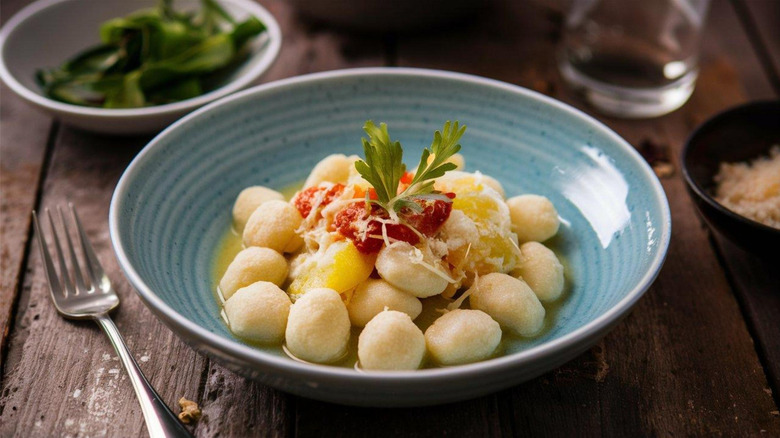
Making any kind of dough is never as simple as following a specific ratio of flour to water. Rather, it's a process of constant adjustment, accounting for things like variation in temperature, humidity, and what grain you're using. So while you can follow as many recipes as you like, the truth is that, to nail gnocchi, you'll have to learn how to make adjustments on the fly. "Gnocchi is a delicate balance," chef Luca Corazzina told us. But how can you salvage gnocchi dough that feels wrong before you cook it?
Usually, if your gnocchi dough's gone wrong, it'll either be too loose and sticky, or tough and dry. Fixing both problems, luckily, is pretty intuitive business. In the case of the former, extra flour gives the dough more structure. "If your dough feels too soft and sticky you can use a little more flour until you can work with it," Corazzina explained. Having dough that doesn't stick is important when it comes to rolling out and shaping your gnocchi, and will help it avoid going mushy once cooked. The chef also warned against kneading your dough for too long: "Make sure you avoid overworking the dough or you will lose its signature pillowy texture!" Too much kneading will develop an excess of gluten in the dough, which will cause it to be tough and chewy, not soft and squidgy like the perfect gnocchi.
How to prevent your gnocchi from losing its texture
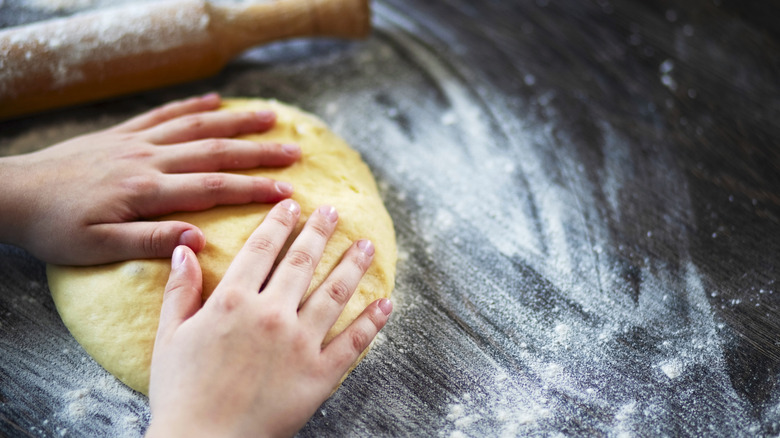
Adding flour is an easy fix for dough that's too loose, and on the other end of the spectrum, things aren't much more difficult. If your dough's gone past shaggy and is getting dry and crumbly, you've probably got too much flour in it. This, similarly, makes it difficult to work with and will compromise the final texture, making for dry, brittle gnocchi. The fix is more moisture, and more fat. As Luca Corazzina explained, "I usually add one whole egg and that helps bring it together without compromising the desired texture." The egg has a wonderful balance of moisture and richness that keeps things nice and soft, where water might just turn your dough sticky and soggy. You can also add olive oil if needed, adjusting as you go until you reach the texture you're after.
To achieve that texture, you should also make sure you choose the right ingredients. While finding flour, potato, and egg doesn't seem all that complicated, using the right variations of each is crucial. For pasta, the go-to is 00 flour, a delicate, fine milled grain that should also be your first choice of flour for gnocchi. As far as the potato goes, find one with a good balance between waxiness and flouriness (though there's debate among Italian chefs as to what is truly the best option). At any rate, with the right approach to making your dough and a keen eye and readiness to adjust as you go, you'll be set up for success.