

Avoid Tupperware Stains For Good With A Simple Oil Hack
We may receive a commission on purchases made from links.
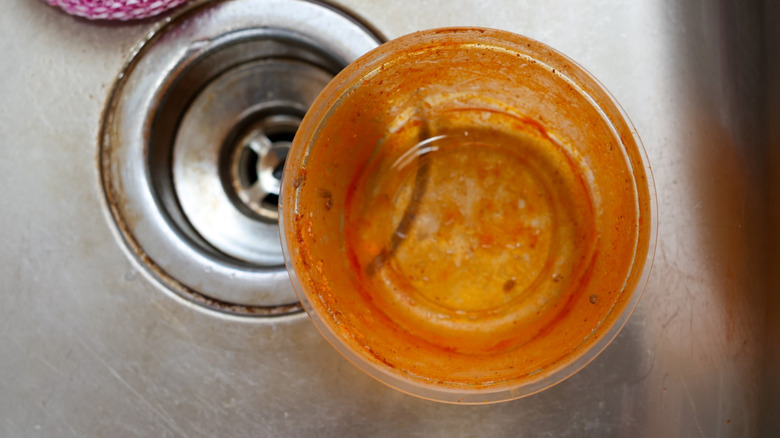
Whether you're not quite there yet when it comes to saving space in your kitchen with glass food storage containers, or you simply prefer less fragile plastic ones, all of us have endured the frustration of seemingly baked-in stains. Tomato based dishes are especially notorious for leaving their mark, as tomatoes are slightly acidic, allowing their pigment to adhere more tightly to the plastic — particularly if you also microwaved your leftovers inside it, enabling the heat to set the stain. Though this issue isn't hazardous to your health, it's hard to know if your containers are truly clean with that translucent red cast inside them.
Since these kinds of stains (sometimes accompanied by lingering smells) seem virtually impossible to remove, the best way to address them is prevention. The easiest method seems to be adding a spritz of cooking oil or nonstick spray to the inside of your container before adding your leftovers. If you're concerned about making your food overly oily, wipe the inside of the container with a paper towel to soak up any excess. There will still be a light film left behind to keep the tomato-y sauce on your spicy slow cooker beef chili from staining your favorite storage container. It's also worth noting that, though tomato-based dishes are the most frequent culprits for these stains, you should also use this method when storing acidic dishes, like Bobby Flay's favorite chicken piccata, or curries containing turmeric and other heavily pigmented spices, such as hot smoked paprika.
Best oils to use + cleaning tips for lifting stains right away
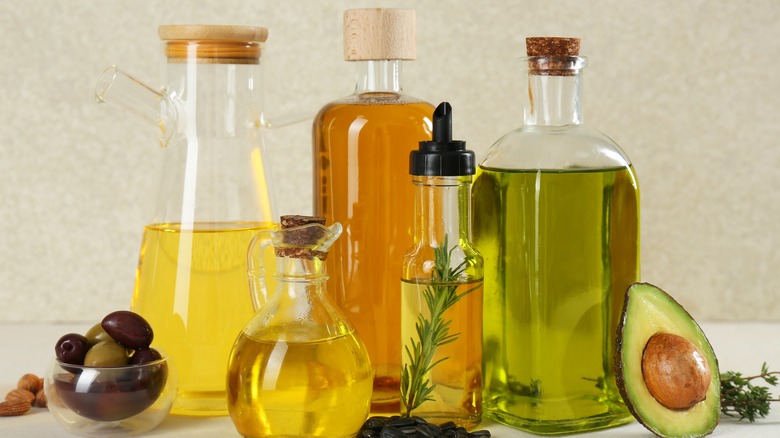
When choosing the best oil for coating the inside of your containers, it's important to consider flavor rather than function. All cooking oils work pretty much the same way (smoke points notwithstanding), so your only consideration is how the flavor of the oil you choose will affect the flavor of your food. Neutral-tasting oils, like canola and avocado, are great for regular use and can be paired with pretty much anything, as they're unlikely to change how the dish tastes once it's reheated.
However, if you want to get creative, you can use this knowledge to your advantage by using oils inside your containers that correspond to your leftovers' flavor profile. Olive oil might be a good choice for most Italian or Greek dishes, while coconut oil could be the best choice for South Asian cuisine. It's best to avoid flavor-infused oils, as they could leave residual flavors and scents in your containers that are just as off-putting as visible stains.
Even with the best of intentions and the cleverest hacks, you may not be able to completely avoid staining your containers. If the worst happens, try to wash your container as soon as you notice the stain to try and keep it from setting. Soak and scrub set stains with warm water and a few teaspoons of concentrated dish soap, such as Dawn Platinum or a comparable generic brand. Avoid abrasive cleansers, as they'll just damage your containers.