

How To Sift Flour Without A Sifter, Sieve, Or Strainer
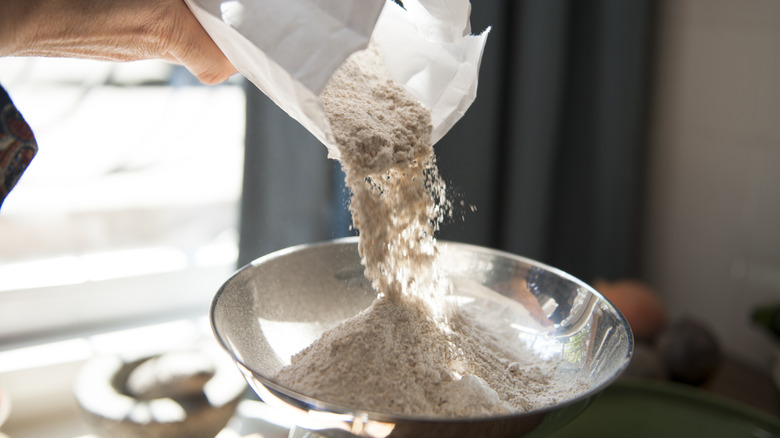
Sifting flour is an important technique used in baking that keeps batter lump-free. The best part is that you don't need a fancy tool to do it. If your sifter is in the dishwasher, or if you've lost your sieve, you're not out of luck. Fortunately, you can just use a whisk instead.
When you whisk flour, you're breaking up clumps while also adding air. Essentially, this mimics the aerating effect of a sifter. Moreover, it mixes your dry ingredients evenly, so if you're adding things like baking powder or cocoa powder to the flour, you're able to break up any clumps and blend them together all at once. Bear in mind that a fork can be used as well, though it won't be as quick or effortless as a whisk. And be sure to use a large bowl and whisk with some energy — the concept is to toss the flour a bit so it fluffs up.
You can take this a step further with the scoop-and-lift technique by lifting the whisk slightly as you stir, letting the flour fall back into the bowl. Doing so creates a light sifting motion without much effort. Remember that the more air you can get, the better your dry mix will blend.
When you need a proper sifter
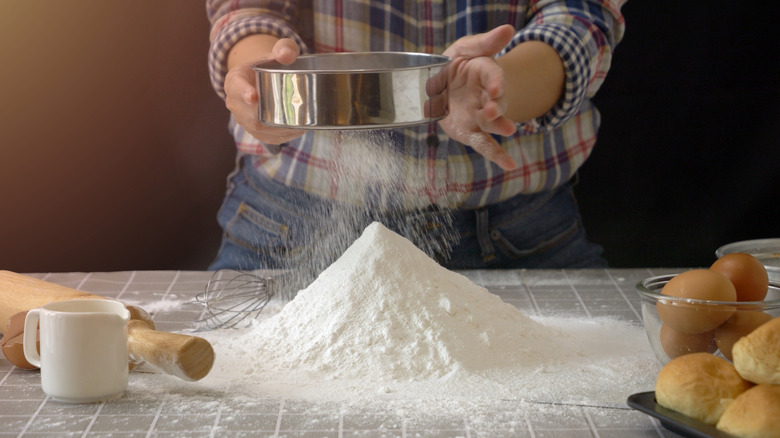
While a whisk is a good alternative, it can sometimes be considered a baking shortcut that can add more time and potentially ruin your dish. Furthermore, there are some cases where a sifter, sieve, or strainer are essential baking tools that are needed. One key reason is to remove impurities. While modern commercial flours are generally refined and safe, whole-grain, stone-ground, or long-stored flours can contain small husks or even insects. Sadly, a whisk can't catch these, but a fine-mesh sieve or sifter will easily remove these impurities.
Another situation is when baking very light cakes, such as angel food or Victoria sponge cake, where the texture matters as much as, if not more than, the flavor. Sifting flour before adding it to the batter will ensure a fine, even texture while maximizing aeration. Although a whisk does a great job aerating, it doesn't compare to a proper shift and falls short when making a light and airy cake.
Finally, if your flour has been stored for a long time, specifically in humid and or compact conditions, it will become dense and lumpy. Sifting the flour will reintroduce air and help the flour blend with other ingredients. While whisking can get the job done, especially if you toss it around, sifting aerates the flour more finely and prevents overmixing, subsequently improving the texture of the finished bake. Whether you opt for a sift, sieve, or strainer versus a whisk depends on your situation.