

The US Law That Makes Sure Our Peanut Butter Is (Mostly) The Real Deal
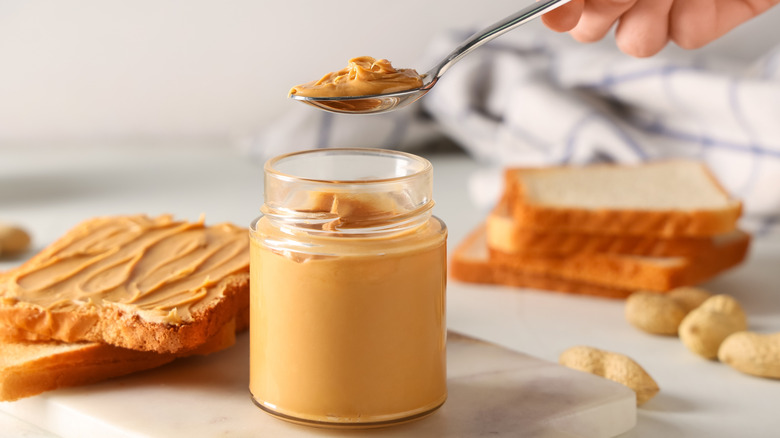
Most of us don't put a lot of thought into what goes into the average jar of peanut butter, as long as it tastes good in a beloved PB&J sandwich. The U.S. government, however, has spent a lot of time analyzing the contents of the spreadable stuff, and just like much of the food you can buy in American grocery stores, peanut butter is subject to some pretty strict rules and regulations in order to be deemed the real deal. The most important standard, according to the FDA, is that peanut butter must contain at least 90% peanuts in order to be labeled as such. This is why sometimes you'll see jars labeled as "peanut spread" on the shelves next to others labeled as butter.
It might seem like a silly detail today, but it wasn't that long ago when peanut butter companies were mixing their product with increasing amounts of fillers and hydrogenated oils to bring up their bottom line. It got so bad that the FDA did a survey in 1959 which found that some products labeled as "peanut butter" were only 75% peanuts. It would take 12 years of legal wrangling between the FDA and the Peanut Butter Manufacturers of America to come to an agreement on 90%, which came to be known as the "Peanut Butter Hearings."
Labels also report fat content and allergen information

Peanut content isn't the only thing regulated on peanut butter labels, of course. In addition to the company labeling if a product is smooth or crunchy (check out our ranking of worst-to-best crunchy peanut butter brands), the FDA also requires that true peanut butter cannot contain more than 55% fat.
In the U.S., all food products are required to list the ingredients in descending order by weight, so if you're not sure what you're eating, turn the jar over and check the list. Peanuts should always be the first item. Labels must also list any allergens, which might be expressed as "may also contain," to comply with the Food Allergen Labeling and Consumer Protection Act (FALCPA). All of the product's nutrition facts must be listed too, including calories, fat, protein, carbohydrates, and nutrients.
Everything else you see on a peanut butter label, however, is voluntary. So if you notice that your favorite jar says "non GMO," "organic," or "low carb," that's great information to have if you're trying to decide which brand to buy and which to avoid, but it isn't required by law. While those claims are often regulated, like organic standards, they don't factor into whether or not the substance in the jar is truly considered peanut butter — at least not in the eyes of the FDA.