

The Must-Try Milk Substitute For Extra Creamy Mac And Cheese
If there's one kitchen staple of yesteryear that deserves a serious comeback, it's buttermilk. Originally a byproduct of churning cream to make butter, the version available in modern grocery stores is actually lightly fermented dairy milk with a sour flavor not unlike yogurt. This fermentation process makes it slightly acidic, which is why buttermilk is used to make classic Southern biscuits. That acidity produces CO2 during the baking process that makes the biscuits puff up and creates those signature flaky layers.
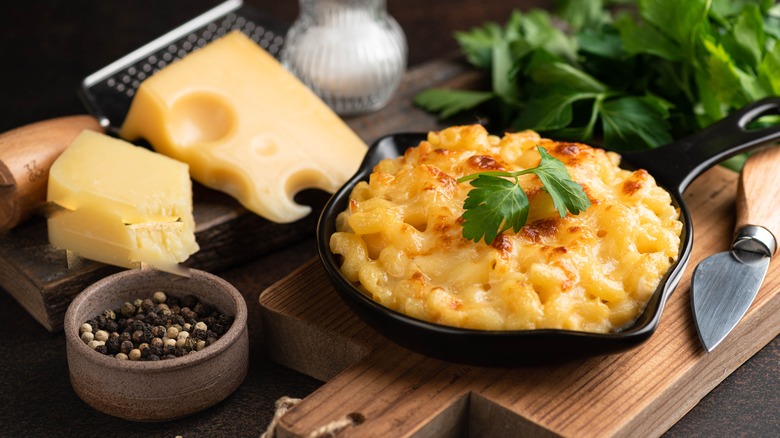
It also adds beautiful tanginess to the end product, which makes it perfect for a range of other uses, from making custard pies and brining proteins to creating extra creamy mac and cheese. Buttermilk may sound like an odd ingredient to use in this dish, but this is actually a marriage made in heaven. Since buttermilk is already thick and silky, it's actually a great substitute for making a traditional roux, meaning it adds flavor and offers a shortcut to a truly delicious end product.
Instead of painstakingly whisking together milk, flour, and butter and hoping the roux doesn't break, you can just stir the shredded cheese of your choice into a cup or two of heated buttermilk. For even more richness, you can add buttermilk to a simple two-ingredient cheese sauce that combines cream cheese and shredded cheddar for the silkiest mac and cheese of your life. The buttermilk's vinegary undertones keep things from tasting too rich, while also elevating the cheesiness of the whole dish.
Building your own buttermilk and additional flavor pairings
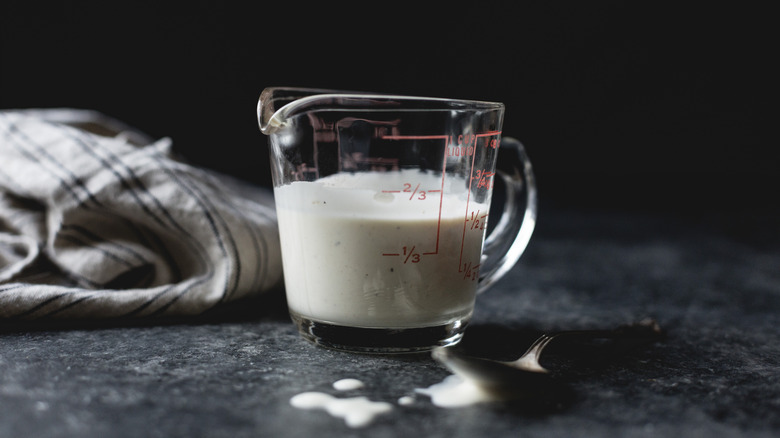
If you'd like to try this hack, but don't have any buttermilk on hand, you can make a decent buttermilk substitute with just two ingredients — milk and an acid like vinegar or lemon juice. The accepted ratio is about one tablespoon of acid for every cup of milk. Allowing this mixture to sit for a few minutes produces many of the same properties as the slight fermentation that characterizes store bought buttermilk. Fat helps produce a creamier, tastier result, so we recommend using whole milk or a fat-forward plant-based substitute, like coconut milk.
Since using buttermilk saves so much time and makes your mac and cheese even more classically Southern, there's no reason not to play with flavors and make this dish as indulgent as possible. Seasonings like smoked hot paprika, freshly cracked black pepper, and garlic salt cut through the richness for a more nuanced flavor profile. Fresh herbs like tarragon and thyme also help bring this dish to life by preventing it from being too one-note and tasting like you're eating a big block of cheese.
The type of cheese you use is also entirely up to you. Whatever you add to the buttermilk will melt fairly smoothly, provided you steer clear of harder cheeses like Parmesan and Asiago — these make better crunchy toppings. Instead, opt for choices like Emmental or Gruyère if you're veering away from traditional cheddar. Pimento cheese also offers plenty of beautiful smooth texture and tangy flavor.