

Costco Cart Etiquette: Where You Should (And Shouldn't) Leave Your Cart After Shopping
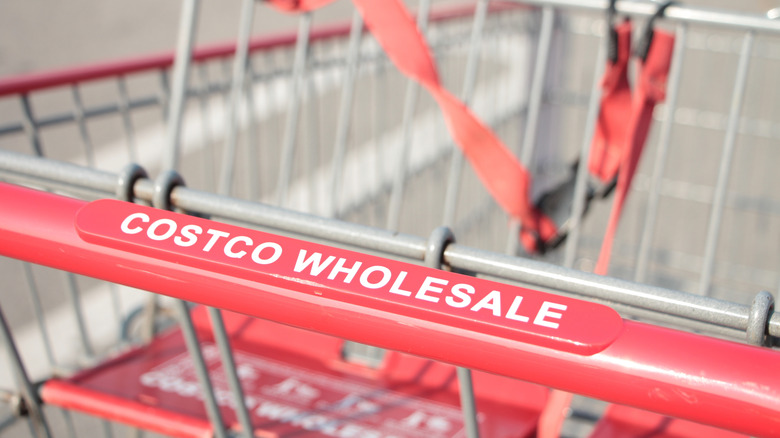
In society, there are behavioral standards in play — a social contract, if you will — just about anywhere you go. While many of these aren't necessarily laws, they are expectations at the very least, and the realms of grocery and retail stores such as Costco are no different. There's an etiquette to follow in just about every aspect of the shopping experience upon entering the establishment. Chief among them stands cart etiquette, and most especially where carts should (and shouldn't) be left once consumers are finished shopping. Put simply, carts should be returned to their designated receptacle, such as a cart corral, or to an associate on retrieval duty. Unfortunately, shopping carts are often left throughout the parking lot, which can create obstacles and possible hazards.
Understandably, navigating crowds at stores like Costco isn't always the most orderly experience, and customers may have an itinerary for the day. To this end, Costco and other stores have added numerous branded cart corrals throughout their parking lots for shoppers' convenience. These wonders of order and ease are clearly marked and have been an integral part of the shopping experience since the 1960s. However, no matter how obvious and inviting they are, cart corrals aren't always utilized. This leads to carts being strewn across the lot, sometimes blocking parking spots for arriving customers; there's also the chance that a stray cart may collide with someone's vehicle. Certainly, shopping carts may not be that heavy, but even Costco employees acknowledge that the warehouse's larger variety could cause vehicular damage when any amount of velocity is a factor.
Despite cart corrals, there are other views of shopping cart etiquette
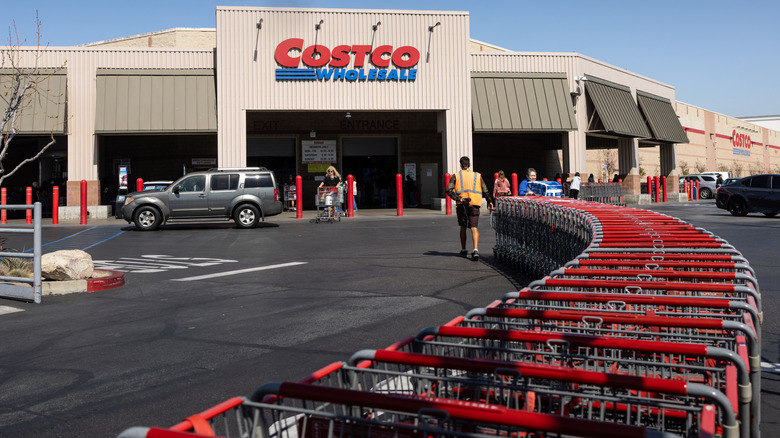
While it's certainly not specific to the warehouse store giant, many social standards are at play when shopping. There's an etiquette to the self-checkout line, like limiting your items, cleaning up after yourself, and not lingering at the station. Other aspects of shopper etiquette cover questions like whether it's okay to sample groceries before buying them, to which the answer is almost always no, unless there's a sampling station present – and there's etiquette to follow when taking free samples as well. Turning the gaze back to a social norm that goes hand in hand with whether one should return the cart to a corral, it's generally agreed that shoppers should never block the aisles or leave their carts unattended.
While there may not be laws or even store policies dictating shopping cart etiquette, it's left to social philosophy and the individual. Here, something known as the Shopping Cart Theory may come into play. Those within the Lawful and Neutral Good spectrum believe that a cart should be brought back to the store and its corral. This respects the social contract in play, returning what was borrowed for the consumer's shopping trip back to its owner. On the other hand, some believe that it's up to the store to collect them. Is that not part of their associates' responsibilities, and why they're trained to operate cart tuggers? Regardless of one's social standards, it can be agreed that cart corrals serve a purpose, and it costs shoppers nothing to use them.