

The Science Behind Why Shrimp Change Color When Cooked
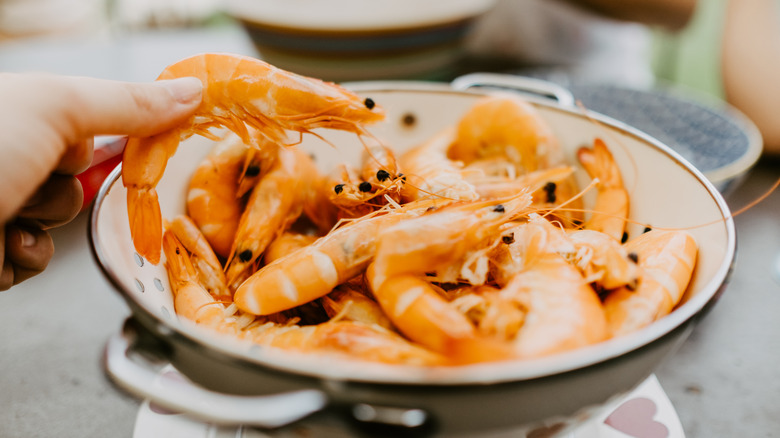
Summer's in full swing right now, and if we're honest, nothing captures the season quite like a bowl of juicy, flavorful and tender shrimp hot off the grill. Top them with some garlic and lemon, and you've got yourself a meal that screams vacation time. If by any chance you haven't tried this amazing combo yet, just give it a shot and you'll soon understand why spicy lemon garlic butter sauce is the cheat code for great grilled shrimp.
So, as you enjoy your newly discovered dish and let your mind wander, whether to how delicious it is or to other creative shrimp recipes (for instance, how the secret to delicious air fryer shrimp starts before you even cook them), you suddenly realize: Shrimp are never the same color before and after they hit the pan. While it might seem like some culinary witchcraft at first, the reality is, it's nothing other than good old-fashioned science.
This color change happens because of a type of carotenoid found in crustaceans' exoskeletons called astaxanthin. Commonly hailed as the king of antioxidants, this potent pigment gives crabs, salmon and shrimp their orange-red color. However, in raw shrimp and other crustaceans, astaxanthin remains hidden. That's because it's tightly bound to a protein called crustacyanin, which gives raw shrimp their grayish-blue appearance. The two form a protein-ligand complex that prevents astaxanthin from revealing its true colors (pun intended), at least until cooking begins. But what is it about cooking that triggers the transformation?
How heat changes shrimp from gray to pink
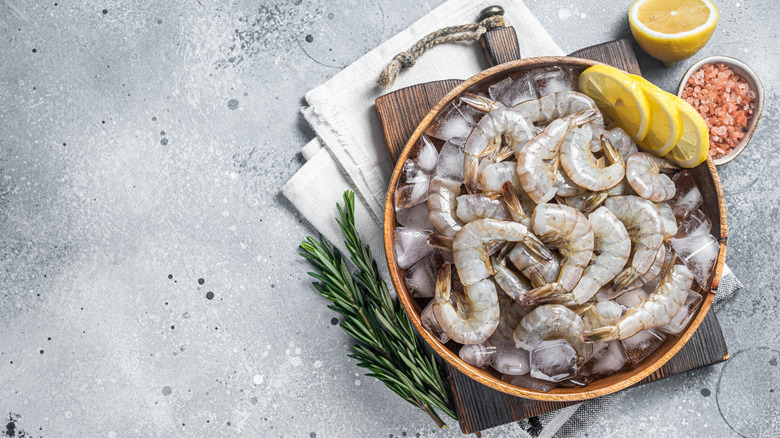
Now, even though crustacyanin exhibits a strong binding affinity for astaxanthin, the two form a stable complex only under cold conditions. Their bond isn't heat-stable and breaks down during cooking. As mentioned, crustacyanin is a protein, and like most proteins, it undergoes an irreversible process called denaturation when exposed to heat. This is similar to how boiling an egg — particularly visible in the whites — as the protein albumin denatures and changes the texture from runny to firm.
Once crustacyanin is exposed to high temperatures and breaks down, it releases astaxanthin from the complex. This allows the red pigment molecules to become unbound and visible. As a result, the once vibrant blue shrimp take on a pink-orange hue, a visual cue that they're ready to be plated. The color change occurs whether you sauté, grill, or boil shrimp to perfection, or even make one of the common shrimp-cooking mistakes.
So, the next time you reach into your freezer and find a bag of frozen shrimp, whether you're craving a bowl of sweet, mouthwatering honey garlic shrimp, planning to impress guests with a restaurant-style shrimp cocktail, or simply trying out an easy yet delicious shrimp pad Thai, just remember to keep an eye on the color. It's the most reliable sign that your shrimp is cooked. If only science classes at school were this fun, right?