

The Right Type Of Tonic For Your Next Espresso Tonic
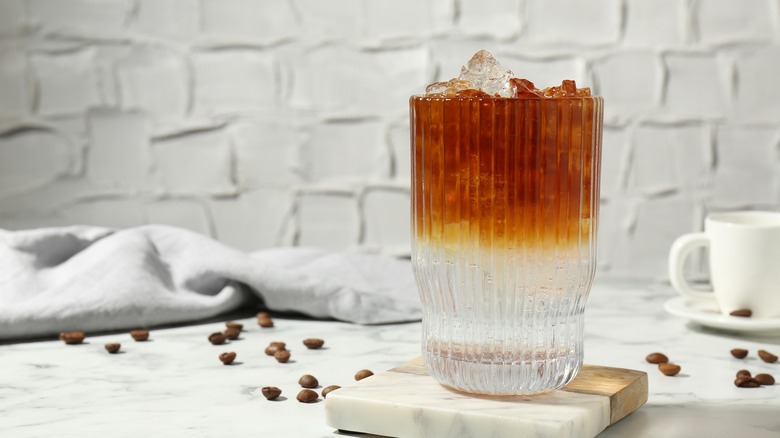
It's an abomination to drink hot coffee in the summer, but sometimes a cold brew or iced latte doesn't quite cut it. Is it possible to make coffee more refreshing, without following a bizarre trend like adding espresso to orange juice? To cool off and balance your strong brew, consider adding some carbonation to make an espresso tonic.
This caffeinated creation originates from Sweden, and its recipe is as straightforward as it sounds. Pour some tonic over ice, add fresh espresso, then add an optional splash of simple syrup or an orange slice garnish, and voilà. But what type of tonic water is best? Chowhound spoke to Andrea Allen, co-founder of Onyx Coffee Lab and former U.S. Barista Champ, to find out, "I prefer to use a high-quality, non-flavored or non-herb tonic water. Fever-Tree is a quality product that can be found widely."
Makes sense — added flavors can really alter how the espresso tastes. With tonic water flavors like berry and yuzu, you can see how these might be conflicting with coffee. If you drink tonic water in a cocktail, you know it's quite bitter – tonic water has medicinal origins after all. Espresso also has bitter notes, and Allen has a piece of advice to ensure that there isn't too much of this taste in the drink, "Tonic is "bitter," so having a higher quality product makes the quinine a smoother flavor experience, which translates directly into the beverage."
Making the perfect espresso tonic at home
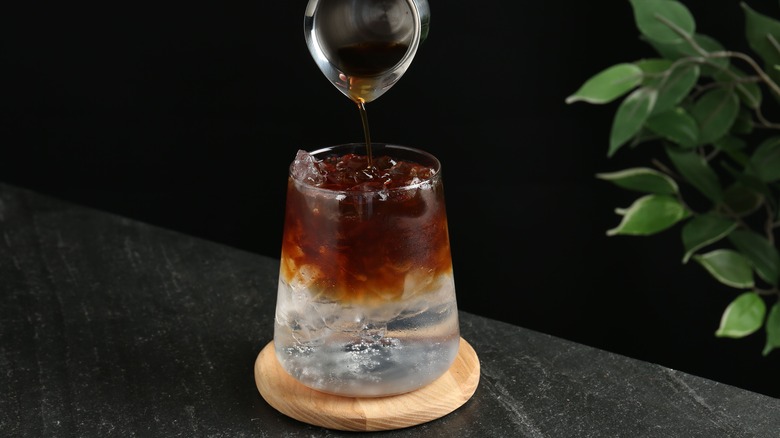
You now know what tonic to use, and a moka pot, espresso machine, or Nespresso machine can be used for the espresso. Fresh is always best; although espresso will still be hot when fresh, enough ice should ensure that the drink does not become diluted. What type of coffee you use is up to personal preference, but lighter roasts with citrusy, fruity flavors typically play nicer with the acidity and bitterness of tonic water. Cold brew can also be used in place of espresso if you want to minimize ice melt.
When espresso tonics are served at a coffee shop, they typically come with the eye-catching separation of the dark brown coffee on top and the clear tonic water on the bottom. To achieve this, make sure to pour tonic water over ice first, and then espresso last. This can be sipped separately like so, with the first few sips super strong and then the taste mellowing out over time, or mixed all together for a more cohesive experience.
As for ratios of coffee and tonic water, this is also up to personal preference. A ratio of three to four parts tonic water to one part espresso is a nice balance, but you could always start with two parts tonic water and increase from there. Like the idea of this drink, but not a fan of bitter? Consider using seltzer or club soda instead of tonic water, as these don't contain the herbal, bitter quinine. For an afternoon sweet treat, plop in a scoop of vanilla ice cream for an espresso tonic float.