

Add A Fiery Kick To Store-Bought Tomato Sauce With This Cheap Pantry Staple
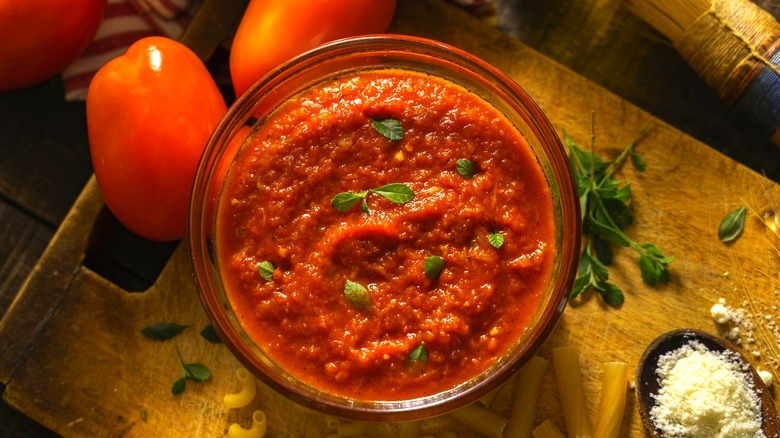
If you're looking for a more flavorful store-bought tomato sauce or even just sprucing up a can full of tomatoes, you probably have the ingredients to make it happen in your pantry. Cayenne pepper seasoning brings balance to a sauce with too much sweetness or saltiness, and it can help mask any unsavory "artificial" tastes. This pepper has spicy and earthy notes that draw comparisons to paprika and chili powder, which pair with the basil and oregano in tomato sauce.
Tomatoes and peppers have been around the world and back again. While many American recipes are riffs on preexisting Italian traditions, several Italian foods owe their flair to the Americas. Tomatoes and chili peppers are native to Central and South America, and they were introduced to Italy during the Spanish colonial period.
There's already a precedent for adding whole, dried, or powdered pepper to tomato sauce, as peperoncino — the crushed and dried chili flake blend, not the sweet yellow chili — that's used in pasta dishes such as penne arrabbiata and aglio e olio. With a pinch of cayenne, you can bring globally adored flavors to your next batch of pasta.
When you should add cayenne to tomato sauce
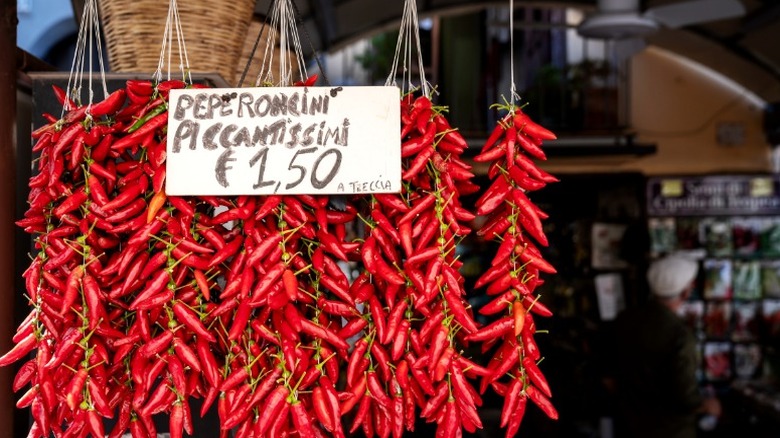
Before you start dusting cayenne on top of your tomato sauce, there's an order of operations for drawing out the best flavors of your ingredients. Seasoning is often a finishing ingredient added at the end of a recipe, but integrating chilis into sauce takes a little finesse. The most efficient way to use cayenne pepper is by giving it something to cling to.
If you're working with a chunky sauce or canned tomatoes, try scooping the tomato chunks into a pan without the liquid at first, and then add the cayenne. This type of direct heat will wake up the cayenne and give the tomatoes a nice roasted flavor. After the tomatoes cook, you can add the liquid back in and let it all simmer until you're ready to toss in the pasta.
If you plan to use other ingredients to improve your store-bought tomato sauce, make sure to add them to the pan in order of how long they take to cook. Onions and mushrooms, for example, require more time than garlic and peppers to cook. Whichever ingredients hit the pan first are the ones worth sprinkling with a small amount of cayenne on. You can add more seasoning as you go, but this is the easiest way to get the flavor to come forward without being drowned by the sauce or adding a cough-worthy amount of pepper. Pasta and tomato sauce is an easy dinner that can be a five-star event with the right pantry staple.