

Is It Safe To Eat Eggs That Have A Blood Spot?

Can we all agree that eggs are incredibly delicious and satisfying? Whether you add a splash of seltzer for the fluffiest scrambled eggs, or skip the oil and use heavy cream for fried eggs with richer flavor and golden edges, it's the versatility that earns them a spot in nearly every culture across the globe. No wonder the average individual consumes about 161 eggs a year.
If you're a fan, and perhaps part of those 38% of consumers who can't imagine starting their day without this flavorful protein, according to a 2024 CivicScience survey, then chances are you've come across a red blood spot in one of your eggs at some point. Believe it or not, these are actually extremely rare, as they appear in under 1% of all eggs. And it's completely understandable if your first instinct was to get rid of it. But eggs with blood spots are not necessarily inedible. Plus, the spot doesn't mean the egg has been fertilized and belongs in the trash.
The U.S. Department of Agriculture suggests that these eggs are actually safe to eat, so there's really no need to throw them out and waste perfectly good food. And if you find them unappetizing, simply remove the spot with a fork or a knife, and continue preparing your meal. But, why do these spots appear in the first place? Well, the reason behind them is simply a tiny blood vessel rupturing on the yolk — though at times it can show up in the egg white too — while the egg was forming.
Why do some eggs have blood spots?
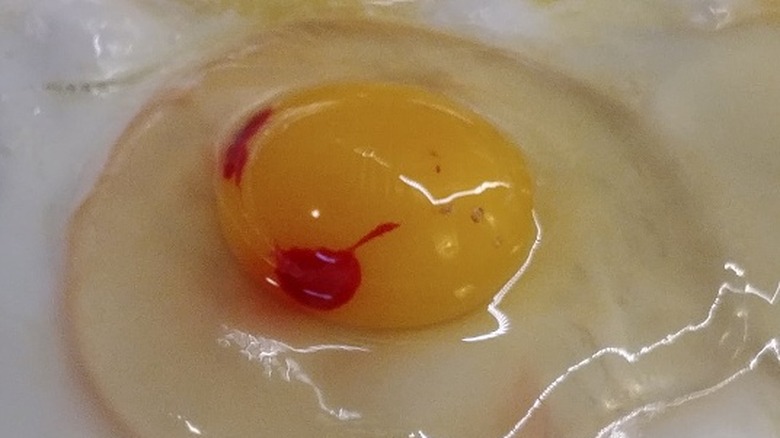
If you've ever found a meat spot in an egg, you probably know it's different from a blood spot. Meat spots are typically small bits of tissue from the hen's ovary or oviduct that get incorporated into the egg. In contrast, the tiny blood spots are simply small traces of blood created when a vessel in the hen's reproductive system happens to break.
These come in different sizes and can appear as little specks or bigger spots — and sometimes, although rarely, they can even spread throughout the whole egg. Moreover, they can be colored from pale red to deep brown. But while the phenomenon is fairly uncommon, its likelihood increases when hens are exposed to lighting and temperature shifts. In addition, although a ruptured vessel is the main cause of blood spots, they can also show up as a result of other factors such as hormonal changes, poor nutrition, or certain diseases in the hen that can impact the egg's development.
To sum it all up, blood spots don't affect the quality of the egg and are considered safe to consume. So if you happen to spot one, feel free to use it and treat yourself to that tasty shakshuka you've been craving lately. However, keep in mind that it's still a good idea to check for any unexpected colors, foul smells, and changes in texture. If you notice one or more of these, don't hesitate to toss the egg and simply grab a new one.