

If Your Dried Chiles Are Old And Brittle, Use This Hack To Liven Them Back Up Before Cooking
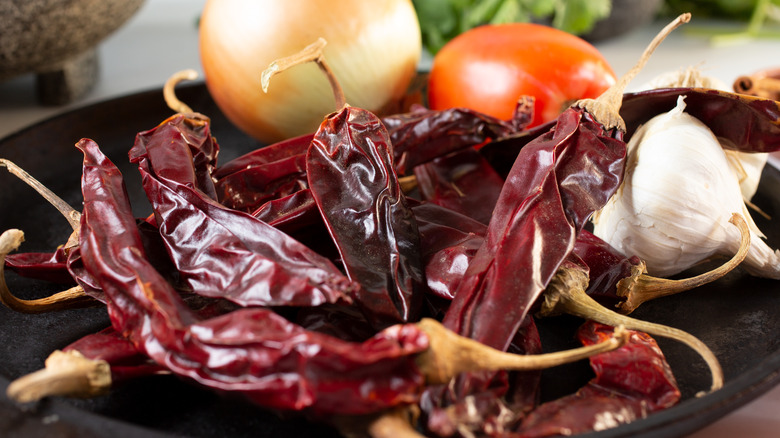
So, you found a bag of dried chiles in the back of the pantry, but they're cracked and as dry as paper. Maybe you wanted to make a delicious bowl of spicy, slow-cooked beef chili, but now you're discouraged. You might think the chiles are old and useless, but do not throw them away yet. Knowing a thing or two about hot peppers can go a long way, and a bit of microwave magic can make even the oldest, crunchiest chiles usable again. And it only takes a few seconds.
Dried chiles aren't "bad" when they get brittle. They've simply dehydrated over time. It's moisture that renders them supple and easy to chop before being cooked. When chiles are crumbly and brittle, they may be a real pain to work with, even with all that concentrated flavor. But if you microwave them for a few seconds, you're basically waking them up.
To test this, put your chiles flat in a single layer on a microwave-safe plate. Begin microwaving in short intervals, only 10 seconds at first. In most home microwaves, it will only take about 25 to 30 seconds total. They're ready when they're pliable and emit that intense smoky chile aroma. Toasted, warmed chiles give off a nutty, earthy aroma that's welcoming. And when they're tender, those flavors blend more easily into soups, sauces, or marinades, giving your dish real depth.
Prepping your chiles for maximum texture
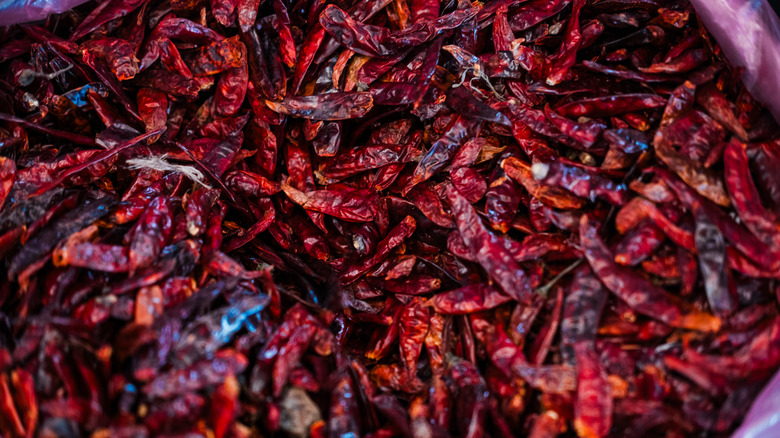
You might be surprised how much of a difference just a few seconds in the microwave can make when chiles are involved. Not only does this trick restore some texture, but chiles can add so much flavor to a dish, without adding too much heat either. You just need to know how to nail the timing. Let's say you don't want to toast the chiles but need them just soft enough to blend, you can microwave them for 15 seconds and move straight to the broth step.
And here's a cool detail: Pliability helps with prep, too. A soft chile is easier to cut into rings to serve as a garnish, or to split open and de-seed without it falling apart. Just remember, the softness won't last forever. Once they are cool, the chiles will start to stiffen again. So, prep them while they're still warm or give them another quick zap if they start to harden. Just be mindful of how hot they get, especially if you're working with fiery types. And be careful: If your chiles are very spicy (like arbol or chipotle), do not overheat. Allowing them to simmer for a long time can release pepper oils into the air and make your kitchen a mini pepper-spray chamber. Old chiles still have plenty to give. You just have to wake them up the right way.