

How Much Instant Dry Yeast You Should Use In Place Of Active
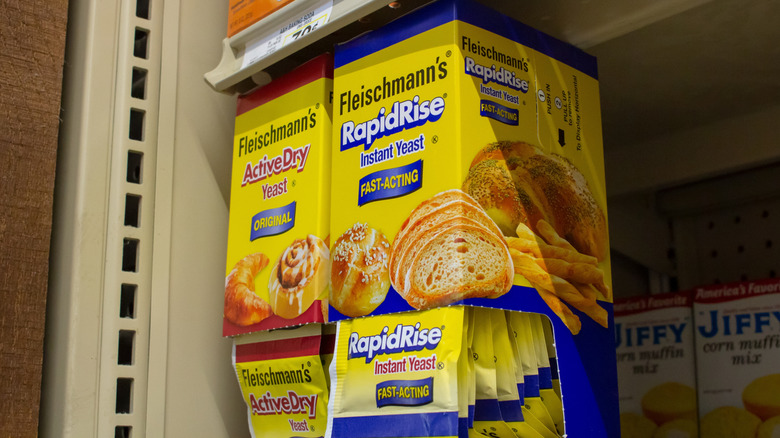
Yeast is the key to soft, springy specialty breads and sturdy pizza crust. It's the reason why dinner rolls are so fluffy, why naan is so light and chewy, and why the many flavors of banana breads have structure that holds up under all those mix-ins. But what happens if you don't have the right kind of yeast for your baking project? Can you substitute instant dry yeast for the active yeast called for in a recipe, and how much should you use to get the same result?
For some expert advice on how to use yeast in baking, we turned to Sheena Otto, owner and executive baker of Sheena's Cocina in Brooklyn, New York. In an exclusive conversation with Chowhound, she said there isn't much of a difference between using active yeast and instant dry yeast when it comes to quantity. "The amounts are interchangeable," Otto said. "You can substitute the yeasts without any issue."
Note that while you won't need to adjust the exact amount of yeast in your recipe, you will need to tweak other parts of the process if you swap the two types. "However, bear in mind that you do not need to bloom instant dry yeast the way you must bloom active yeast, so be sure to adjust your recipe to account for any liquid you would have used to bloom your yeast," Otto explained. "You should add that extra 'blooming liquid' to the rest of the liquid intended for the recipe."
How to make sure your yeast is as effective as possible when you're baking
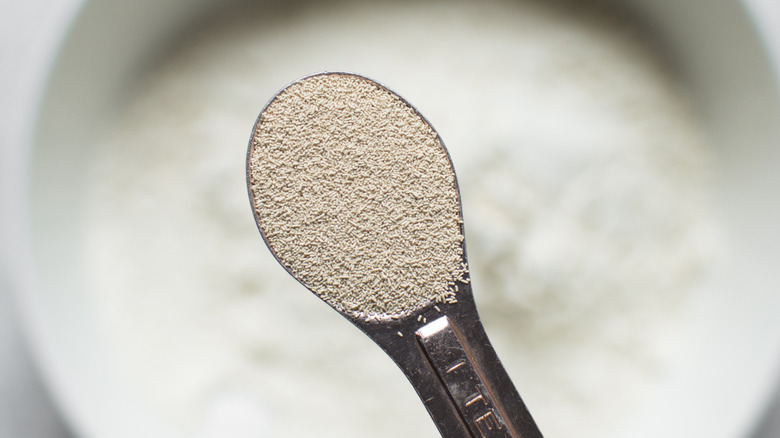
You have to understand a little bit about how yeast works to bake the perfect loaf of bread. A degree in chemistry isn't necessary, but you can dial in your baking if you understand how the tiny organisms in yeast packets make dough rise. Wrong ratios and off temperatures can kill the yeast in your rising dough, leading to flat or dense baked goods.
Using milk or water that's too hot is one of the big ways to sabotage your own baking. Sheena Otto said that she wouldn't use water above 95 degrees Fahrenheit for baking projects, even if recipes call for water that's a little warmer. "When a recipe calls for 'warm water' people tend to use the warm water that comes out of their tap, and sometimes that water is too warm. It makes the yeast too active to be useful in the recipe," Otto said. "If you're making an enriched dough and need to heat milk for the recipe, the same temperature rules apply."
A few other things that can kill the yeast in your baking projects include too much (or too little) salt and sugar, baking soda, honey, and vinegar. Oxygen is also crucial to the blooming process as the yeast grows and becomes active. Be specific about proof and kneading times, and let your dough rest in a warm (not hot) place for rising to let the yeast finish its work.