

The Butter Hack From WWII That Makes A Pound Last Twice As Long
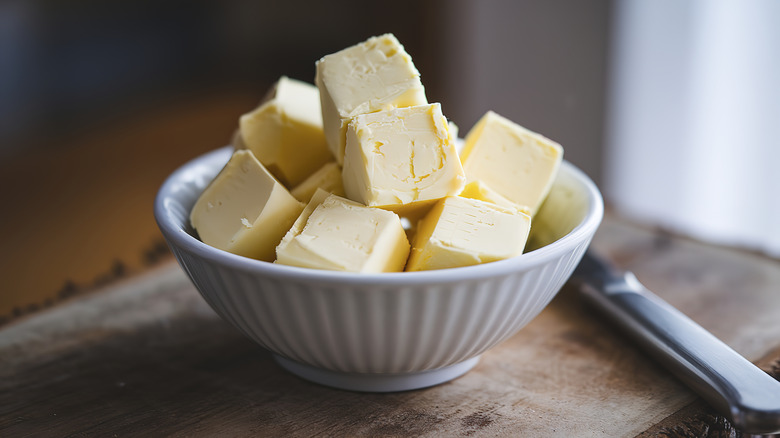
Butter is one of those ingredients you don't want to be caught short on when you need it. Fortunately, often due to necessity, people have created many food hacks. One hack in particular can nearly double the amount of butter in your fridge, and it dates back to World War II. For this wartime hack, you're going to need butter, plain gelatin, evaporated milk, water, and salt to taste. You'll also need a saucepan and a container suitable to use as a double boiler insert, such as a metal, heatproof glass, or ceramic bowl. Or, if you have one, you can also use a dedicated double boiler insert.
Start by cutting the butter into small pieces to help it soften more quickly, then set it aside. Next, grab your saucepan, fill it halfway, and heat the water until it's hot but not boiling. Add your plain gelatin and about a quarter cup of cold water to the bowl (the top of your double boiler). Let it sit for a few minutes to bloom. Then place the bowl over your double boiler and stir gently until the gelatin is fully dissolved. Carefully remove the bowl from the boiler and add 14 ½ ounces of evaporated milk and a pinch of salt, if desired. Set aside. Place the bowl of butter over the hot water in the double boiler and stir gently until the butter is soft but not melted. Remove from heat. Pour the gelatin-milk mixture over the softened butter, and use an electric mixer on medium-low speed to mix until smooth and fully combined. Once combined, transfer the mixture to a container and store in the fridge until it is hard again.
Overall, this mixture is best used as a spread rather than to grease a pan. Nevertheless, this can be a life-changing food hack when you're in a pinch.
What caused butter shortages during World War II
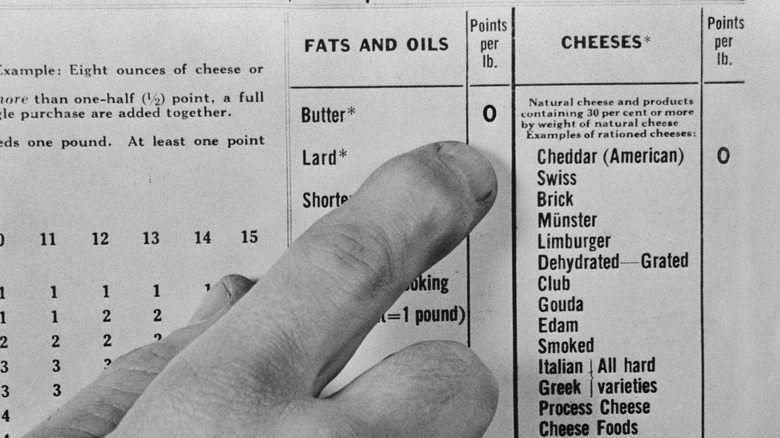
In addition to butter, other fats and oils were rationed during World War II. Advertisements and public service announcements appeared with slogans like "One tablespoonful of kitchen grease fires five bullets," encouraging civilians to contribute.
From 1943 to 1945, Americans received ration books to manage shortages, and housewives were encouraged to save leftover fat from cooking — often storing it in tin cans. Once they had collected a pound, they could take it to their local grocer, who would then turn it over to the government for wartime use.
These shortages occurred partly because global supply chains were disrupted, especially imports of vegetable oils from the Pacific. But the bigger driver was the military's demand for glycerin, which could be extracted from animal fats and used to make nitroglycerin for explosives. Glycerin was also essential for other wartime materials, including lubricants, protective paint for vehicles, and even cellophane, used to package food and supplies. With so many competing uses, it's no surprise that fats and oils were in short supply.