

Here's The Absolute Best Way To Make Caesar Salad Vegan
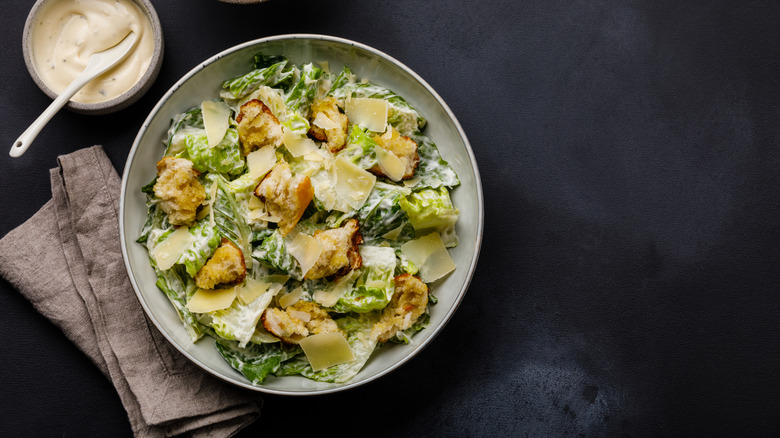
Caesar salad is one of the most classic leafy green ensembles around. Unfortunately, though, not everyone can sink their fork into this popular dish. Despite what some may think, not all salads are vegan-friendly. There are many ways to spruce up a bowl of Caesar salad so that it tastes restaurant-worthy, but sometimes the next step is adjusting the recipe so that it caters to all dietary requirements. Your vegan guests will thank you for it, and you might even love it enough to add it to your list of go-to meals.
Those who follow a vegan diet often have to skip past the classic Caesar salad on the menu because the ingredients usually include a range of items that aren't suitable for vegans, like buttery croutons, anchovies, eggs, and cheese. Whether you are looking to perfect your vegan Caesar salad skills or are just curious and want to try a plant-based version of this classic dish, the best way to nail the alternative is to lean into the original flavors. Caesar salad is characterized by its combination of crunchy and creamy textures paired with intense garlic notes. This dish's fans love the richness from the olives and dressing, the saltiness and umami flavor from the anchovies, and freshness from the romaine lettuce.
What are the best alternatives for a delicious vegan Caesar salad?

Finding the perfect bottled Caesar dressing is like striking a pot of gold, but it also takes away the fun of creating your own with fresh ingredients. Your own DIY dressing can easily be made with a vegan-friendly ingredient for well-balanced flavor: tahini. Tahini works well in salad dressings because the sesame seed paste is often praised for its delightful roasted, nutty taste and creamy texture. As a base, it isn't overpowering when combined with other ingredients like olive oil, black pepper, and garlic, which are all included in traditional Caesar salads.
Anchovies are sometimes considered to be integral to the taste of Caesar salads, but are sometimes left out of the conversation altogether (which could be because they may have never been intended to be a part of the original recipe). Worcestershire sauce, alongside Dijon mustard, is sometimes added to the dressing in modern recipes to mimic the missing anchovy taste. A vegan sauce-based substitute is possible by using miso paste, which has a similar flavor profile. Shiro (or white) miso is best for salad dressing because it is one the milder pastes, yet still acts as a powerful umami enhancer. Combining miso paste with roasted ground nori sheets is another way to pack in the fuller flavor.
More substitutes for your vegan Caesar salad
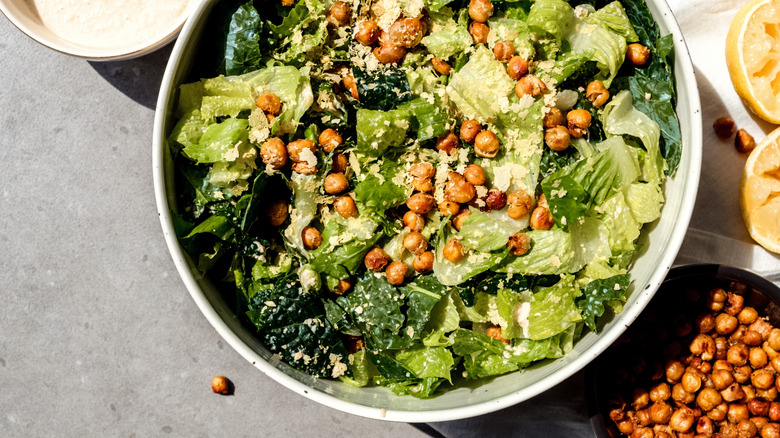
Chickpeas are the ideal vegan swap for croutons in a Caesar salad. Not only are they often paired with the aforementioned tahini, but they are also very filling and have a similar effect to snacking on heavy croutons. When roasted and topped with garlic, sea salt, cayenne pepper powder, and olive oil, the flavor palette elevates the salad with strong aromatic seasonings. To complete the salad, garnish with some vegan Parmesan. You can make your own batch at home using a combination of cashews, garlic cloves, garlic powder, hulled hemp seeds, olive oil, and nutritional yeast in a food processor. The end result is delicious and crumbly 'cheese' to sprinkle over the salad. Just remember to keep in mind the dos and don'ts when dealing with vegan cheese.
Since chicken is also a common addition in Caesar salad, a great alternative could be store-bought substitutes like vegan chicken or tofu. The best way to ensure that tofu has the texture that is most similar to chicken is by using the freezer trick. Freeze the tofu for 12-24 hours and allow it to defrost before pressing it and cooking in the oven, air fryer, or over the stove for a delicious chicken-like texture that will add some succulence to your Caesar salad.