

The Brining Technique That Makes Fermenting Your Own Hot Sauce Much Safer
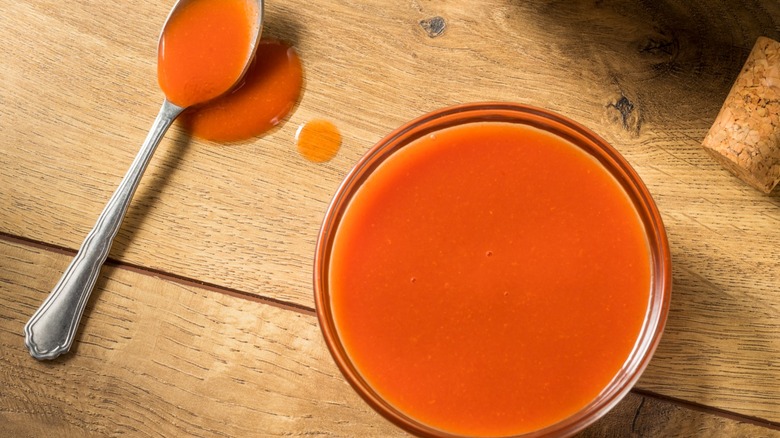
You can make awesome hot sauce at home by simply cooking and puréeing a mix of fresh peppers, onion, and garlic with water and vinegar. But, if you want a serious depth of flavor, turn to the vast selection and versatility offered by dried chilies — and use the process of fermentation.
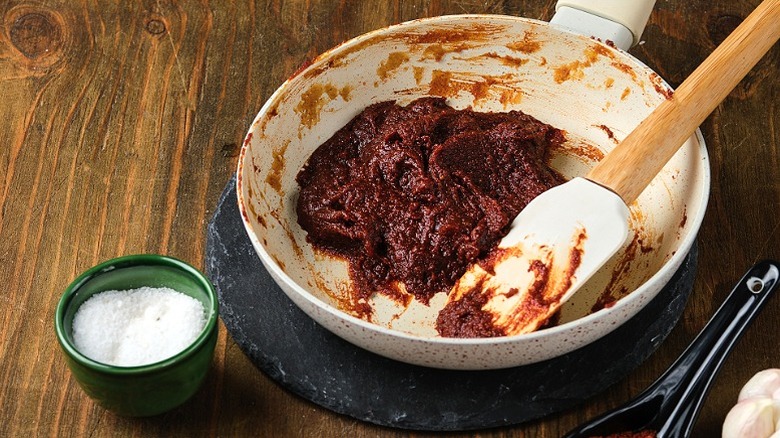
Fermentation is a preservation technique that breaks down sugars to create an acidic tang and a range of savory complexity. However, this ancient cooking method comes with an element of risk a lot of home cooks are reluctant to take on without guidance. That's why Chowhound reached out to Mary Bryant Shrader, creator of the Mary's Nest YouTube channel, author of "The Modern Pioneer Pantry," and a traditional cooking expert, to discuss how to safely ferment a hot sauce from dried chilies. Shrader says the key is to rehydrate your dried peppers, mash them with a little salt, then submerge the pepper paste in a saltwater brine. "Adding a saltwater brine over the mash — instead of just mixing salt into the paste — has distinct advantages," Shrader says. "The brine helps keep the mash safely submerged, reducing the risk of mold or bad bacteria during fermentation. This is especially helpful since rehydrated dried chilies can be a bit firmer and don't always produce enough liquid as compared to their fresh counterpart."
How to know your hot sauce ferment is safe (and when to worry)
Once your pepper mash is inside a sanitized jar or crock, and weighed down in a 2% to 3% saltwater solution, it takes about one to two weeks to fully transform. During this time, some weird-looking things might happen, but Mary Bryant Shrader advises not to fear. She says to expect a slightly cloudy liquid, bubbles, and maybe some separation between the mash and brine. Even a white film of kahm yeast on the surface is harmless.
Burp your ferment every day so the jar doesn't explode, and watch out for the signs of bad bacterial or fungal growth. Relying on the smell test might not help determine if the milk in your fridge is still good, but in a ferment, harmful microorganisms make themselves known with a rotten odor, fuzzy mold, or slime. If the flavor is off in any way, don't risk it; dump the batch and try again. If you're still nervous, try transforming leftover wine into red wine vinegar as a beginner's project. Most importantly, be patient with the sauce and yourself. "I'm fond of saying that ferments can be persnickety, so go easy on yourself if your first few ferments aren't perfect," Shrader says. Who knows? Maybe that first batch leads to one or more hot sauces worthy of your pantry space.