

The Pantry Staple That Makes Disposing Of Used Cooking Oil A Breeze
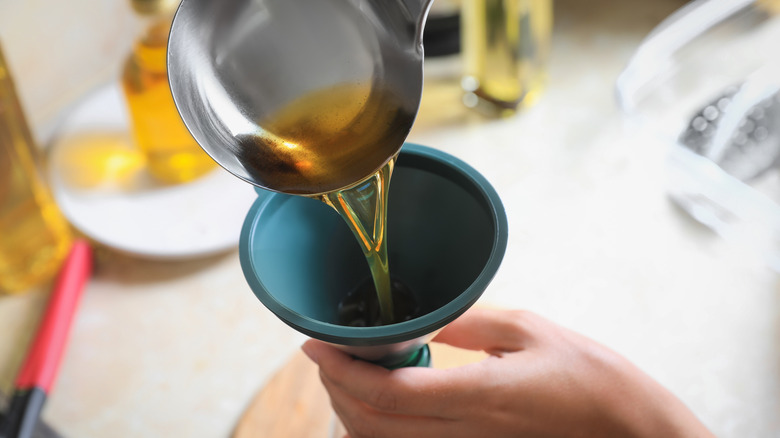
Let's be honest, there's nothing better than a plate of crunchy, golden-brown, deep-fried Jalapeño poppers full of gooey cheese or a juicy, mouthwatering piece of fried chicken to satisfy your late-night cravings. There's something about the crispy texture and the rich, fatty flavor that makes deep-fried food so undeniably addictive. That is, until you finish dinner and find yourself stuck with a full pot of cooking oil that needs to be disposed of.
Now, pouring it down the sink might be the first thing that pops to your mind, but it's actually the worst choice you could make. Not only does this practice contribute to water pollution, but it can also cause serious plumbing problems. This is because, as the oil cools and solidifies, it can cause severe drain blockages that could end up costing you thousands of dollars in repairs. That said, there are far better and more reasonable ways to dispose of cooking oil. In case you weren't aware, one of the best solutions for this is a kitchen staple that's most probably sitting in your pantry right now. You guessed it — it's baking soda.
Baking soda is an incredibly versatile household item. Not only does it boast more than a dozen unexpected uses — whether to deodorize the fridge, tenderize meat, or clean pots and kitchen silverware — but when mixed with used cooking oil, it creates a semi-solid paste that can go straight to the trash without turning your kitchen into a complete mess.
Baking soda makes all the difference
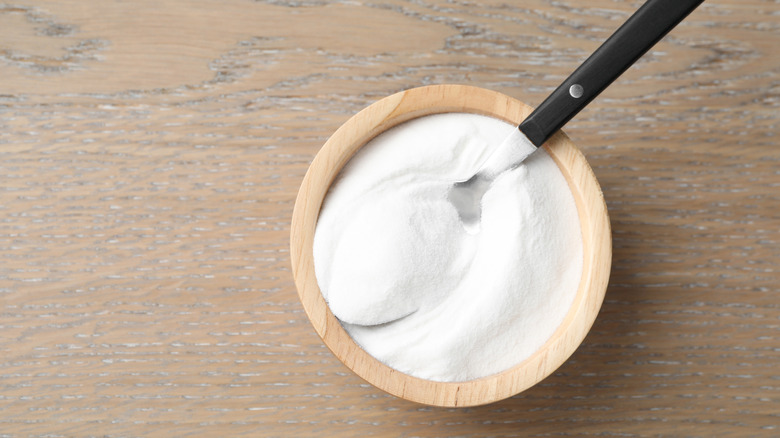
There's actually a little bit of science behind why baking soda is so effective in tackling grease, and hence, used cooking oil. And it all narrows down to its chemical properties and its ability to react with both fats and acids. The reason why you can dispose of used cooking oil faster with baking soda is that baking soda — also known as sodium bicarbonate — is a base. Its pH is approximately 8.5, making it alkaline.
When an alkali, such as our ingredient of choice, reacts with grease — which is predominantly made of fatty acids — it triggers a chemical reaction known as saponification. As a result of this process, the oils and fats get converted into soap and glycerin, which is a colorless, odorless sugar alcohol. While baking soda isn't a strong alkali capable of turning used cooking oil into soap, it forms a paste that binds with the oil, making it much easier to clean up and discard.
To try this method, simply remove the pot of oil from the stove once you're done cooking, and then add ¼ cup of baking soda directly into the hot oil. Then just give the mix a good stir and leave it for about half an hour until it forms a paste-like texture. After the mixture becomes thick enough, scoop it out of the pot and place it in a disposable container or a bag and simply throw it out.