

Give Chili Twice As Much Depth With A Few Splashes Of This Spice Cabinet Must-Have
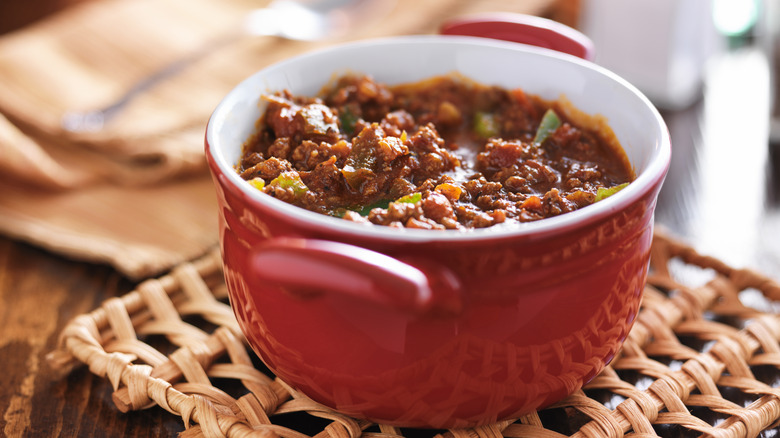
Chili is delicious any time of year, serving as a spicy Tex-Mex comfort food during the summer and a simple, savory, belly-warming treat in the fall and winter. Rather than follow a strict recipe, many home cooks start with a loose idea of the flavors they want and put ingredients together accordingly. This often involves making adjustments based on what's already in the fridge and pantry, and relying on slow cooking, such as in your favorite slow cooker spicy beef chili, to develop that deep, rich umami flavor. However, if the dish always seems to be missing that little extra "something," there's one ingredient that will quickly and easily solve all your seasoning problems: fish sauce.
For those unfamiliar, fish sauce is a byproduct of the fish fermentation process, often anchovies or other small, oily sea-dwellers, and it's used throughout Asia to flavor everything from soups and rice dishes to marinades and even cocktails. It's salty, fishy, pungent, and perfect for adding beautifully nuanced, complex umami to your next pot of black bean and sweet potato or smoky white bean pork chili. Though fish sauce and chili come from two very different culinary styles, this is one of the best secret ingredients for upgrading your chili that you can stock in your pantry. Its intense savory salinity and fishy funk are perfect for perking up the other ingredients in the pot, drawing nuances from them and helping bridge gaps among spicy, sweet, smoky, and mellow flavors. And luckily, adding it couldn't be simpler.
Fishing for big flavor in your next pot of chili
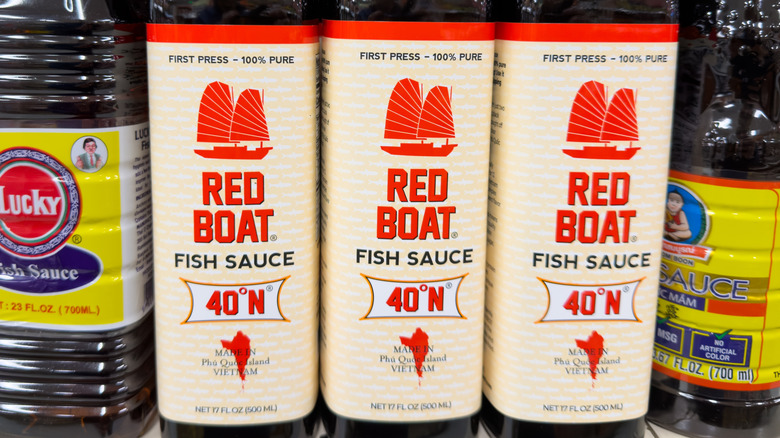
When using fish sauce in any dish, remember its flavor is intensely concentrated, so a little bit goes a very long way. Adding too much can easily tip the scale from "perfectly seasoned" to "total salt bomb." Keeping that in mind, you may want to avoid using salt in your chili altogether until after you've added the fish sauce and tasted it to check the salt level. Even with this precaution, you'll want to start with just a dash or two of fish sauce, then stir, taste, and continue until the flavor is perfect.
Since the idea is to add nuance and not make your chili taste like fish (unless, of course, it's a seafood-based recipe), you can switch to plain old salt when the flavor has the right depth but lacks just a touch more salinity. It's also important to differentiate between when your chili needs a dash more hot sauce than fish sauce. Again, once you feel the dish has the right amount of savory nuance and umami but could stand to be spicier, it's time for Tabasco, Frank's Red Hot, or even some Sweet Baby Ray's Buffalo Sauce.
Fish sauce also works best in chili with a rich, meaty base like beef, pork, or venison. You can certainly add it to a chicken version, but use a very gentle hand, as the poultry is milder than other meats and can quickly become overwhelmed. With this fish-fueled condiment on hand, chili night will never be the same.